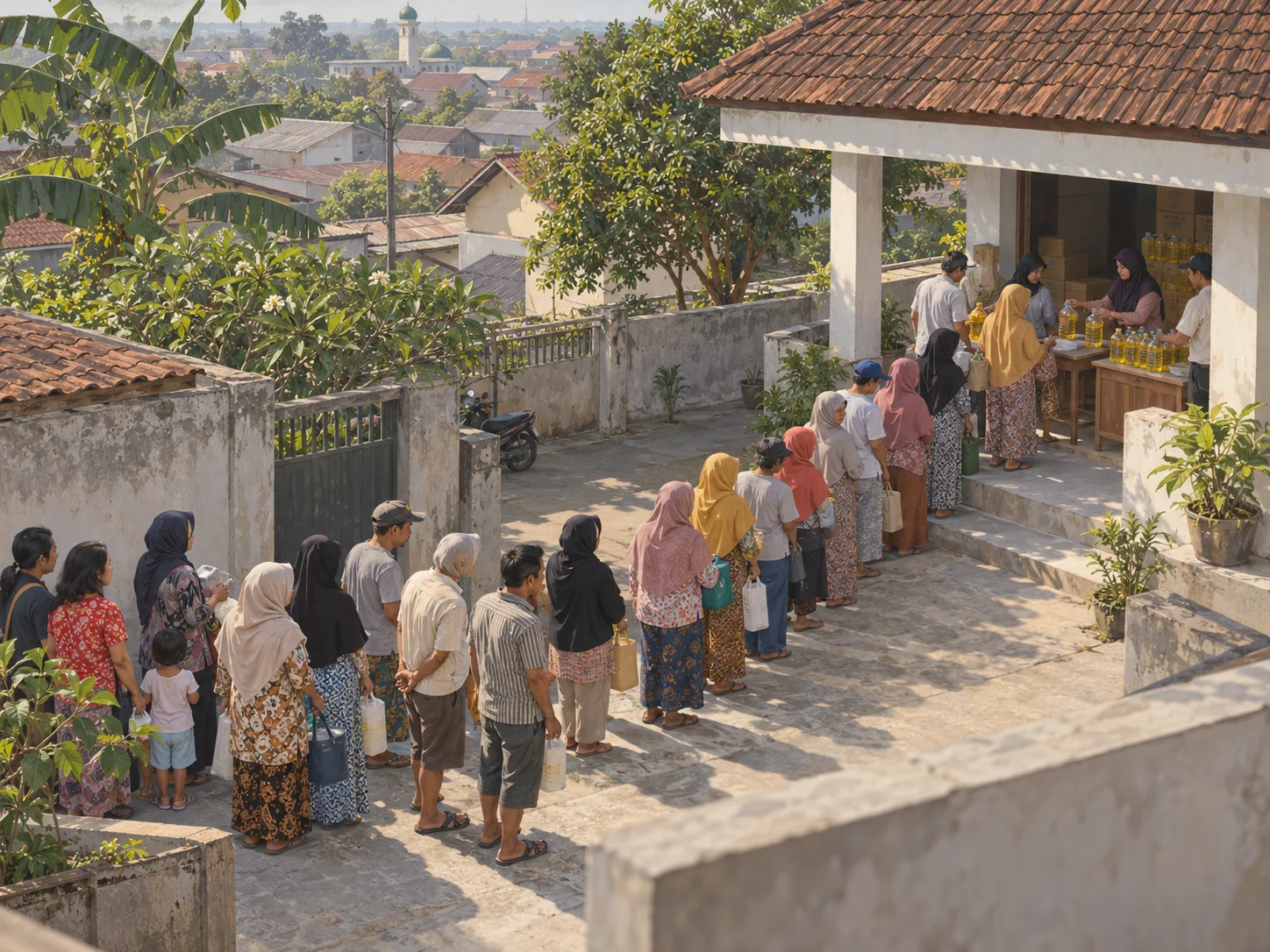
When cooking oil became scarce in Indonesia in 2022, consumers lined up for hours at retailers selling it at the government-set ceiling price. A US Department of Agriculture field report records that media showed these lines during the introduction of domestic-market obligations and price controls. The shortage produced a striking contradiction in one of the world's major palm-oil-producing countries.
What distinguishes this queue is that it formed at the junction of exports, compulsory domestic supply and a controlled retail price—not simply from a lack of production. With limited quantities reaching shelves at the official price, waiting time became an invisible extra cost of obtaining affordable oil.