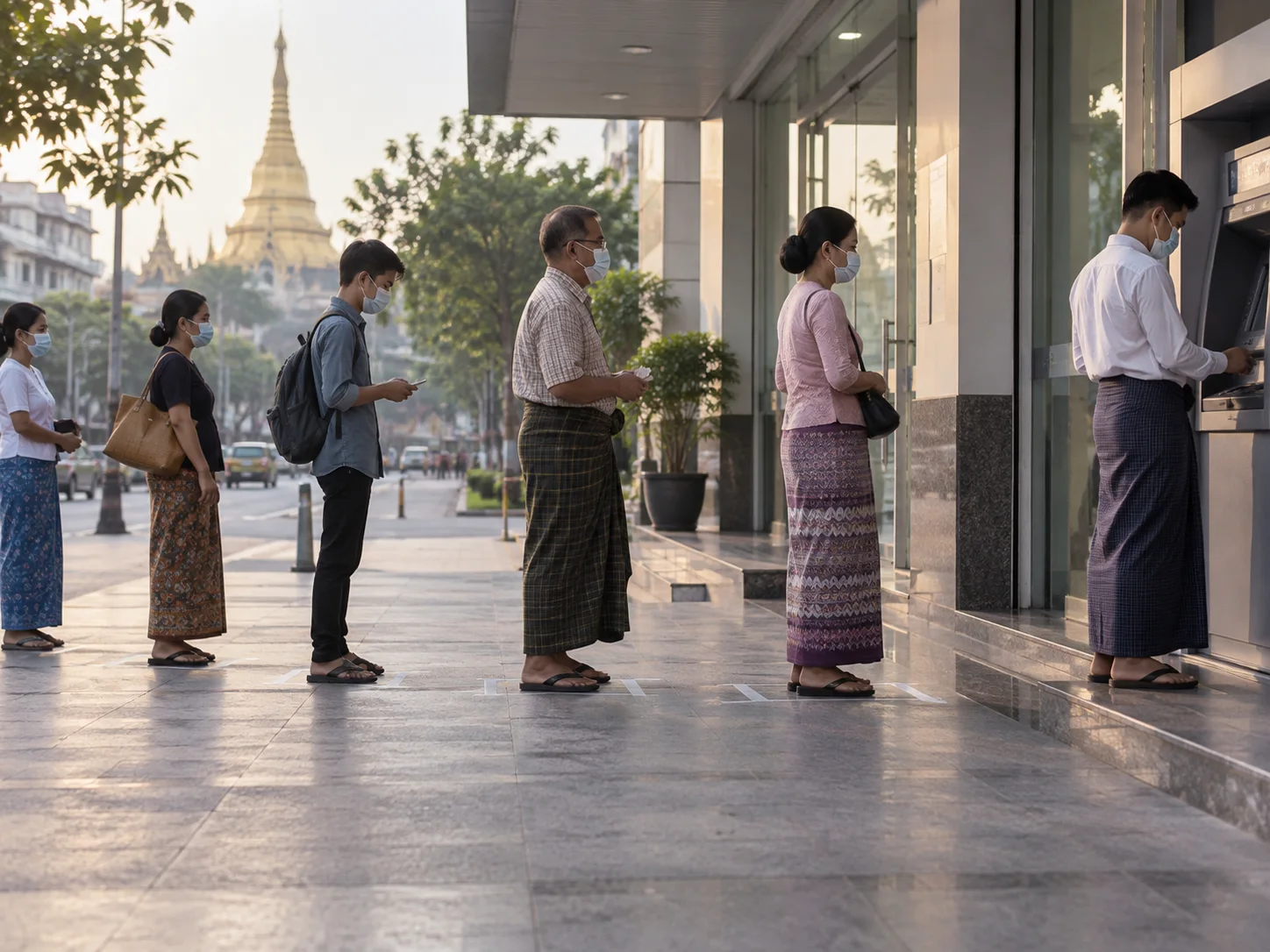
At roughly four in the morning, people were already queuing outside banks in Myanmar. A Reuters investigation published in May 2021 described customers arriving hours before branches opened at 9:30 a.m. Only the first fifteen or thirty, according to the accounts gathered, would receive plastic tokens admitting them to withdraw cash. The queue did not reward an enthusiasm for early mornings. It was a way of turning lost sleep into the possibility of paying for ordinary life.
The context was the disruption following the military coup of February 1, 2021. Banks were short of banknotes and operated irregularly; communication outages compounded difficulties with electronic payments. Those who missed out on a token could wait for hours at one of the few working ATMs, or turn to unofficial cash brokers charging substantial commissions. Reuters reported the predicament through interviews. It would be wrong to assign everyone in those lines a single political allegiance or personal story.
A bank balance is usually treated as money available to spend. Here the distinction between a figure on an account and notes in a hand became painfully visible. Opening hours, the supply of cash and a limited number of tokens stood between the two. A token can organize access in an orderly fashion. When there are too few tokens, however, a tidy sequence is not the same as a solution.
Some queues are formed by people hoping to buy something new. This one was formed by people trying to obtain money they had already deposited. The movement of a line may look familiar anywhere in the world; what is at stake in the waiting is not.
Those arriving at 4 a.m. were anticipating not merely the bank's opening but whether cash would remain for them. Anxiety about inventory, rather than official hours, set the start of the day.