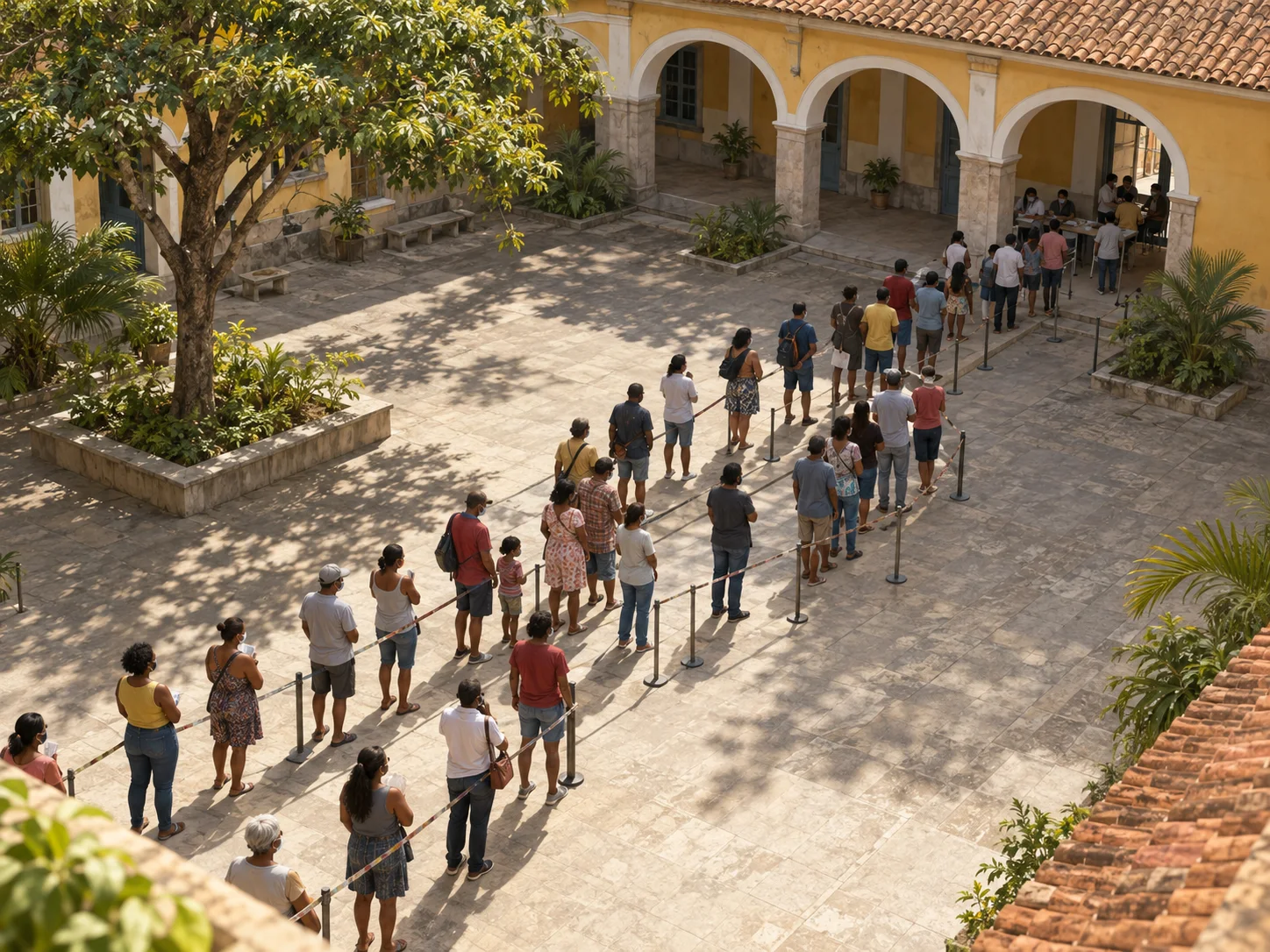
South African recipients faced both advice to stay home and the need to collect living expenses.
The benefit was intended for informal workers and households whose income had collapsed. Failed applications, inaccessible account details and the continuing need for cash nevertheless pushed recipients towards branches. A programme may be designed digitally while the lives of its users still require physical money and face-to-face help.
Staggered dates could not remove crowding when transport, cash and shopping converged.
In the spring of 2020, enormous queues formed outside branches of Brazil's state-owned Caixa bank as people sought emergency aid. Reuters reported that the monthly payment of 600 reais was launched amid app and registration problems, bringing crowds to bank doors at precisely the time public health rules called for distance.
Income support meant to help people stay home created congregation at the point of collection. That contradiction was not simply a failure by customers to understand the system. It arose where the policy's purpose met the design of its entrance. The queue showed that delivering aid includes every step between approval and money that a household can actually use.
Attendance was not proof of carelessness; the benefit system had summoned bodies.
Source check: Reuters' report of 8 May 2020 directly connects enormous lines outside Caixa branches with emergency-benefit payments and the resulting demand for cash.