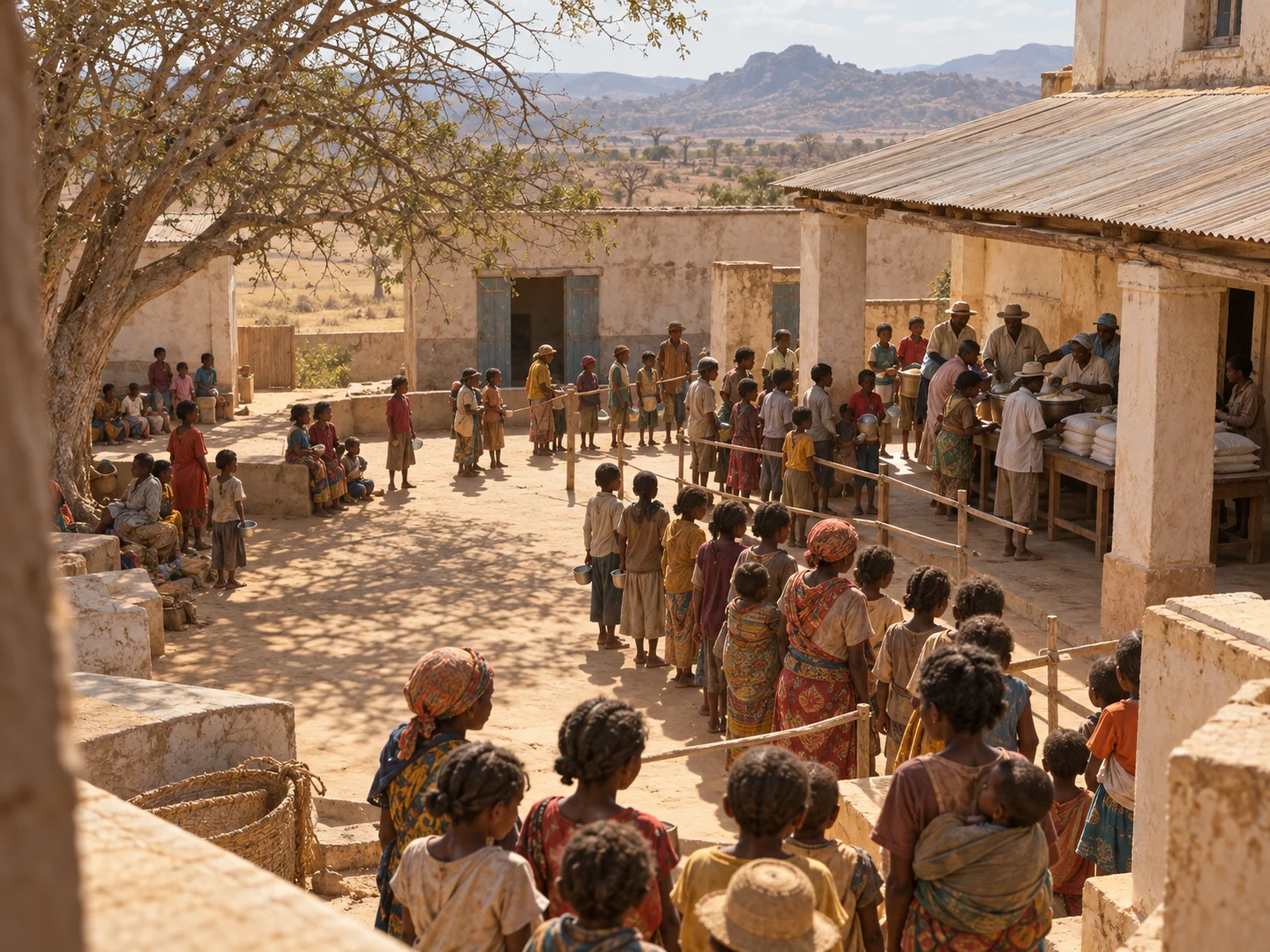
On 29 September 2021, in southern Madagascar, children waited for a food distribution as prolonged drought deepened the region's food crisis. The dated photo caption identifies the country and the purpose of the wait. It is not merely evidence that an aid programme existed; it directly records recipients waiting at the point of assistance.
Reporting from the same period described mobile clinics where nurses and aides identified urgent cases among the waiting crowd and guided them toward the front. Children were measured and screened for malnutrition, and families received food according to the number of children in the household. Order at this site was therefore not a simple first-come sequence. Triage could move a child forward when the danger was greater.
A distribution line cannot explain a drought by itself. Beyond the frame were families who had walked for hours, people unable to reach the site, and the fear that assistance might run out. Yet the act of waiting remains specific: in a different place and a different emergency, people still had to wait for their turn to carry home the next meals their families needed.