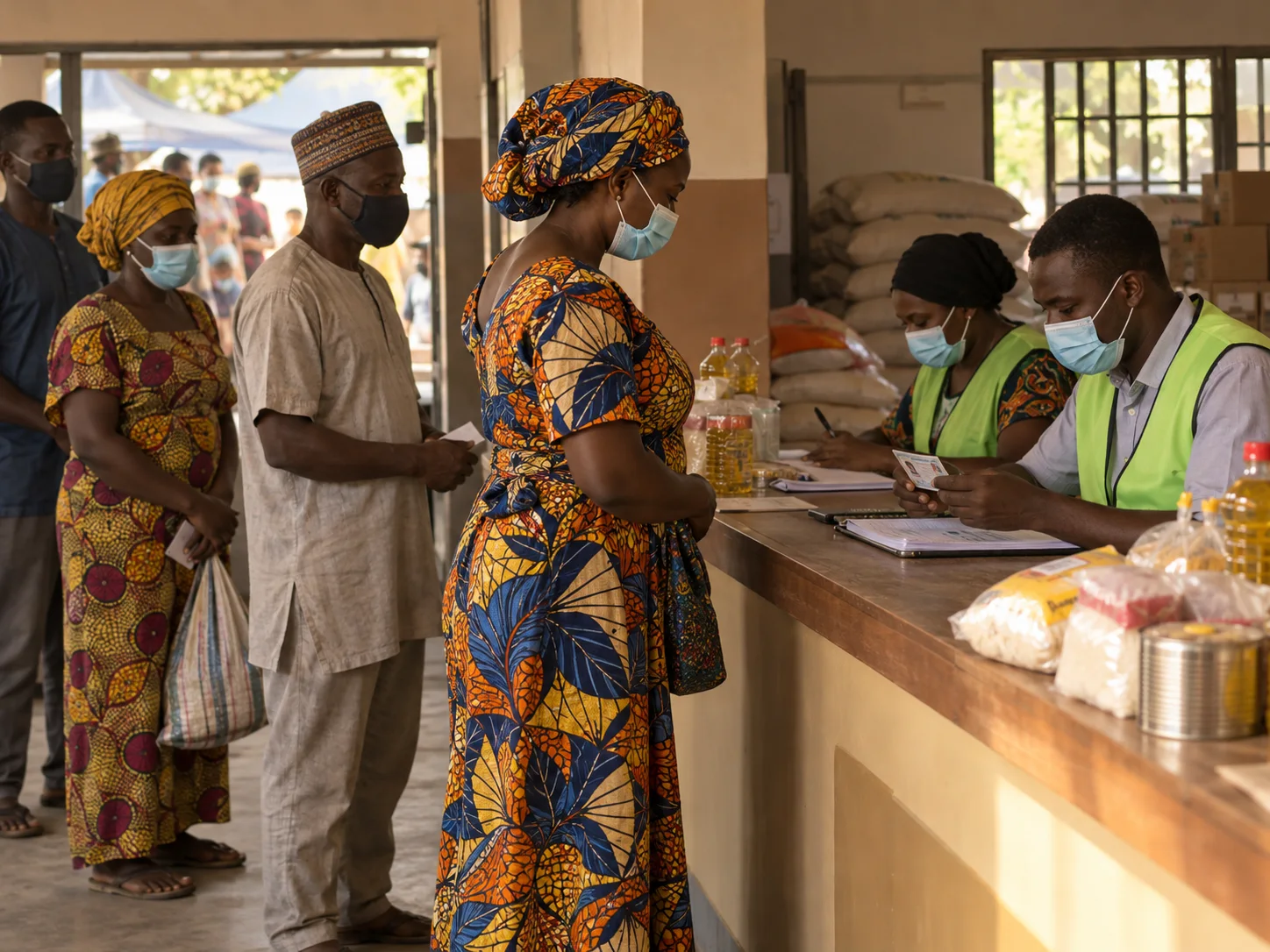
In April 2020, Nigeria's COVID-19 lockdown cut off daily earnings while food assistance was distributed to households in need. On 3 April in Abuja, Channels Television photographed people queued for aid from the Al-Habibiyah Food Bank Programme. On 18 April in Lagos, another dated record shows people waiting in line to collect food distributed by the state government.
The lockdown was intended to keep people apart. But when food could be obtained only at limited places and times, recipients had to converge. Packages of rice, beans, garri and other staples were meant to support a household for a set period, yet community testimony also records deliveries far smaller than the number of families needing them. Joining the line meant facing the risk of infection and the risk of hunger at once.
This is not a scene that can be reduced to people ignoring public-health rules. It records a collision between the safety of staying home and the necessity of feeding a family. Across different worlds, limited access points still make people gather and wait their turn. What gives this wait its weight is that many had no safer alternative.