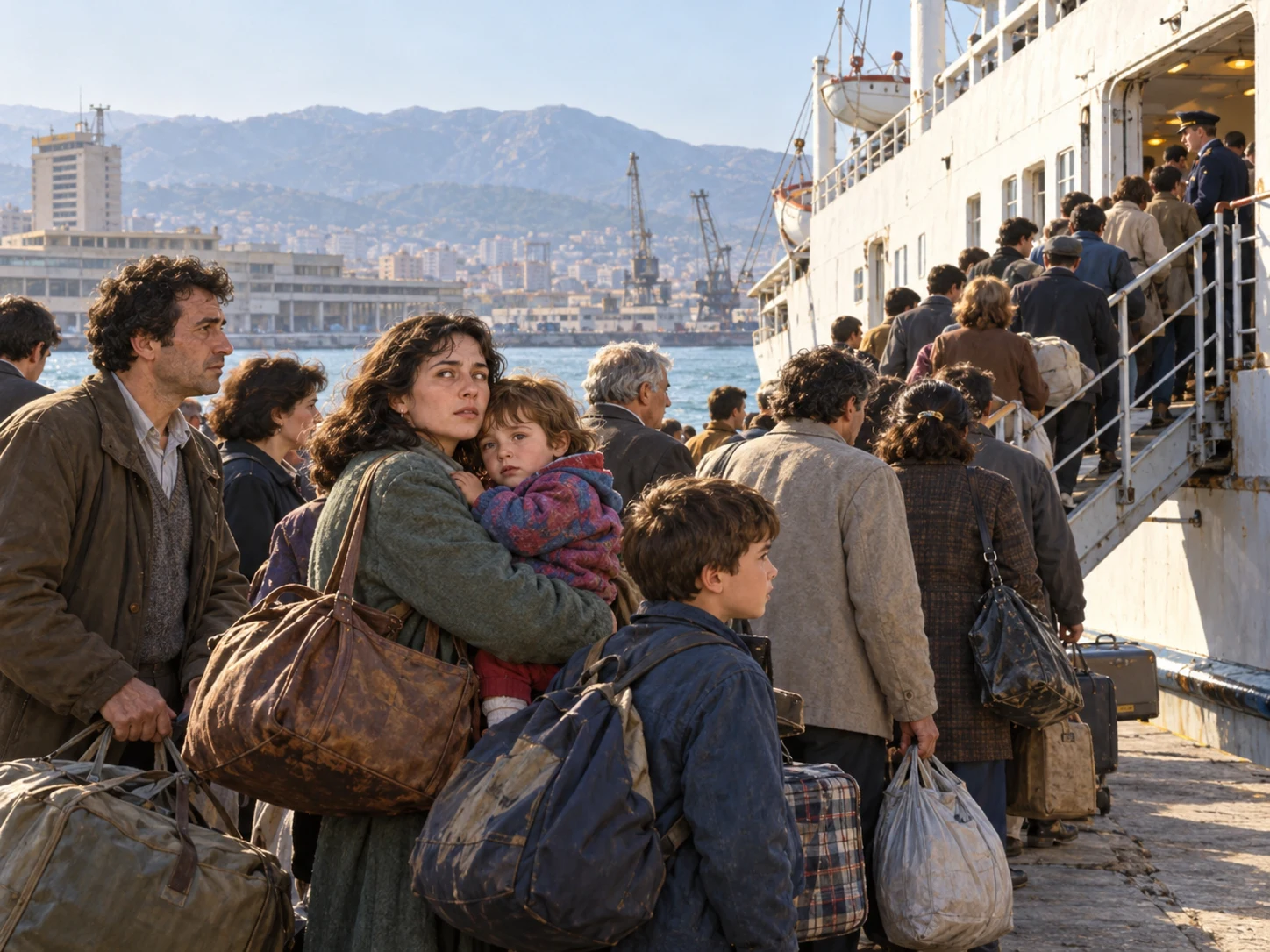
In March 1991, people gathered at the Albanian port of Durrës seeking ships to Italy. A contemporary wire report published by the Los Angeles Times said about 5,000 people packed the port, while an opposition leader estimated that roughly 30,000 were still waiting after all available ships had departed.
This was not a neat line guided by barriers but a vast crowd ordered around a single hoped-for event: the next departure. Economic crisis, food shortages, unemployment and political upheaval near the end of communist rule made the opposite shore appear to be an exit into another life. People remained despite soldiers firing warnings and announcements that Italy would reject further arrivals.
What distinguishes this wait is that it was not for a counter or a commodity, but for the next ship—one that was not yet there. The number left in the port measured more than the scale of migration; it also revealed the depth of anxiety about remaining at home.