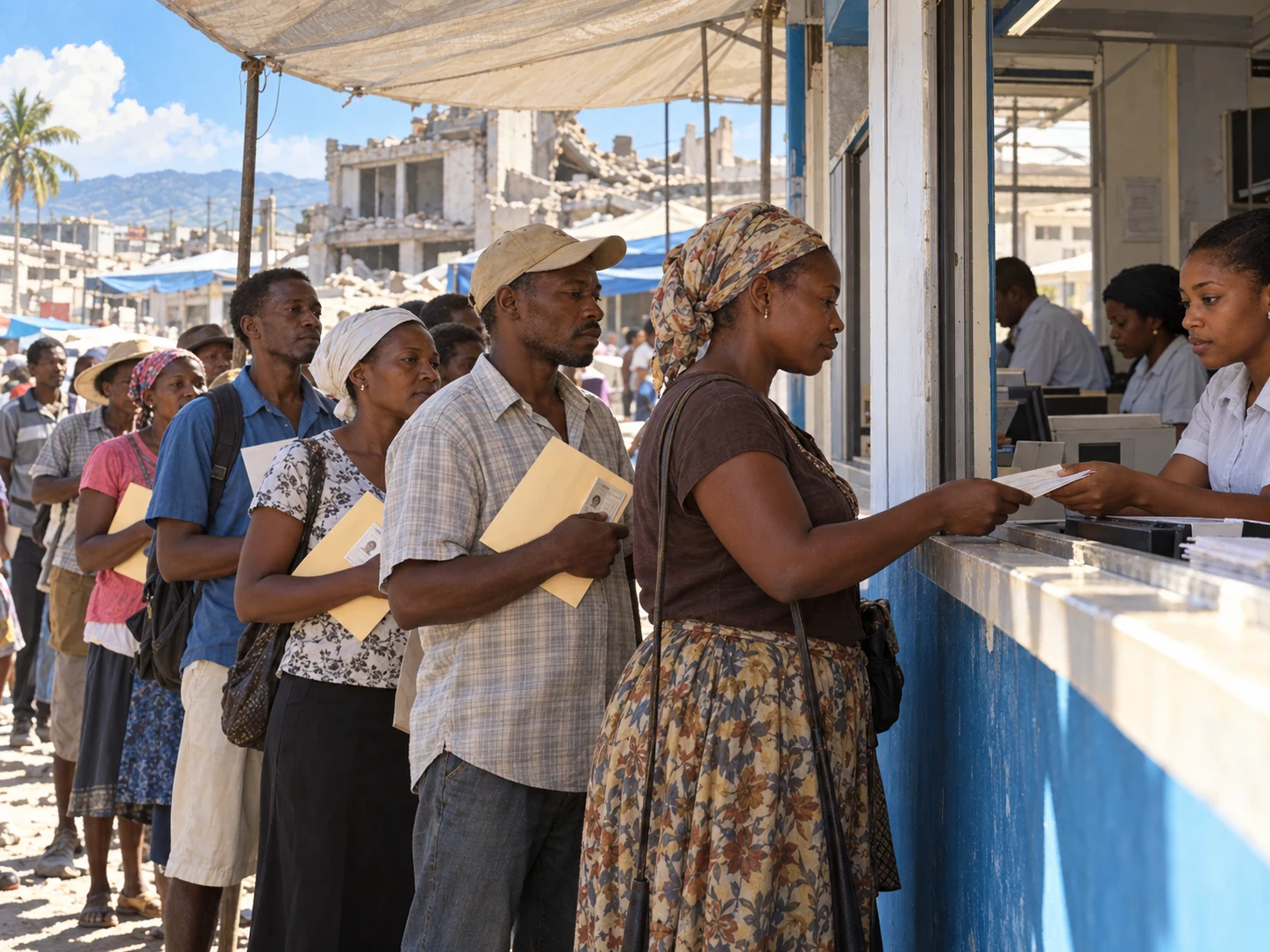
On 23 January 2010, when a handful of banks and money-transfer offices reopened for the first time after Haiti's earthquake, people in Port-au-Prince lined up to receive cash. With the ordinary financial network damaged, remittances from relatives abroad were crucial for buying food and necessities.
What distinguishes this queue is that people were not waiting for donated goods, but for access to money their families had already sent. The disaster reduced not only income but also the number of counters able to deliver it, concentrating demand at the few that remained.