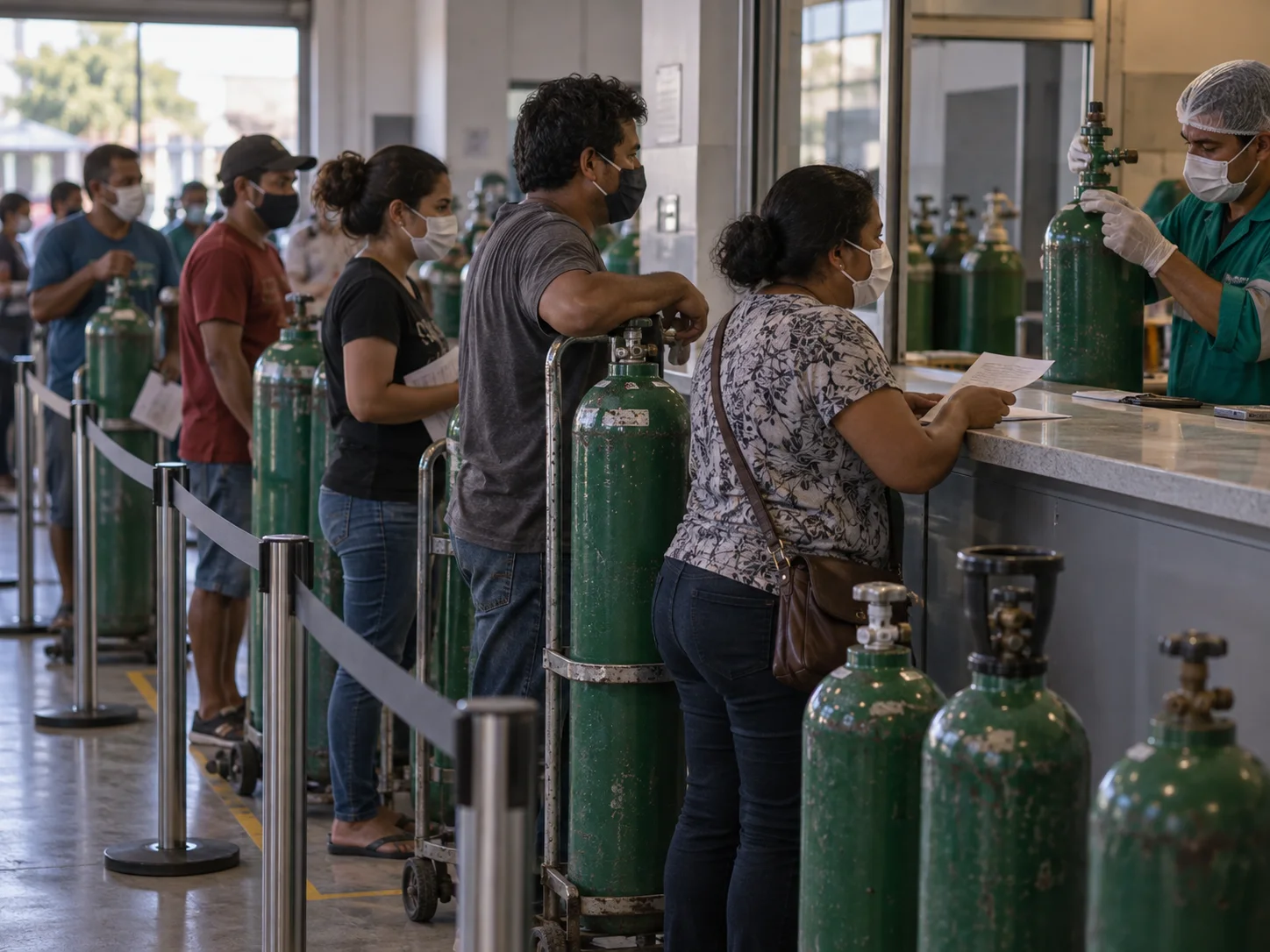
On January 15, 2021, relatives of patients gathered at a private company in Manaus, northern Brazil, to buy medical oxygen or refill cylinders. A Reuters photograph by Bruno Kelly identifies people seeking oxygen for family members in hospitals or receiving care at home. Another image from January 16 shows a man sleeping inside his car as people waited. The person standing in a queue was not necessarily the person whose life depended on it.
Manaus was experiencing a devastating COVID-19 surge and an acute shortage of medical oxygen. What should have been available through the healthcare system became something families urgently searched for, purchased, carried and replenished. Brazilian newspaper Folha de S.Paulo reported on January 15 from a queue at an oxygen facility in the city's industrial district, describing people waiting to refill cylinders for relatives. The supply crisis was not an abstract shortage on a chart. It had become a route that families had to travel.
In an ordinary line, reaching the front usually means the task is nearly finished. Here there was no such assurance. Someone needed a cylinder; it needed filling; someone had to transport it; and the patient needed it in time. Illness did not pause while those stages were completed. To present the waiting as an uplifting lesson in patience would hide the danger that made it necessary.
This queue also unsettles a simple assumption: that the person waiting and the person receiving are the same. Beyond the camera frame was someone trying to breathe. The distance between that unseen patient and the person standing in line is part of the story.
Patients who needed oxygen could not stand in the queue themselves. The hours undertaken by relatives beside cylinders became part of medical care displaced beyond the hospital.
A Reuters image dated 14 January 2021 identifies people with empty cylinders waiting outside an oxygen supplier in Manaus. Each place in the line represented not only the person present but also a patient elsewhere waiting to breathe.