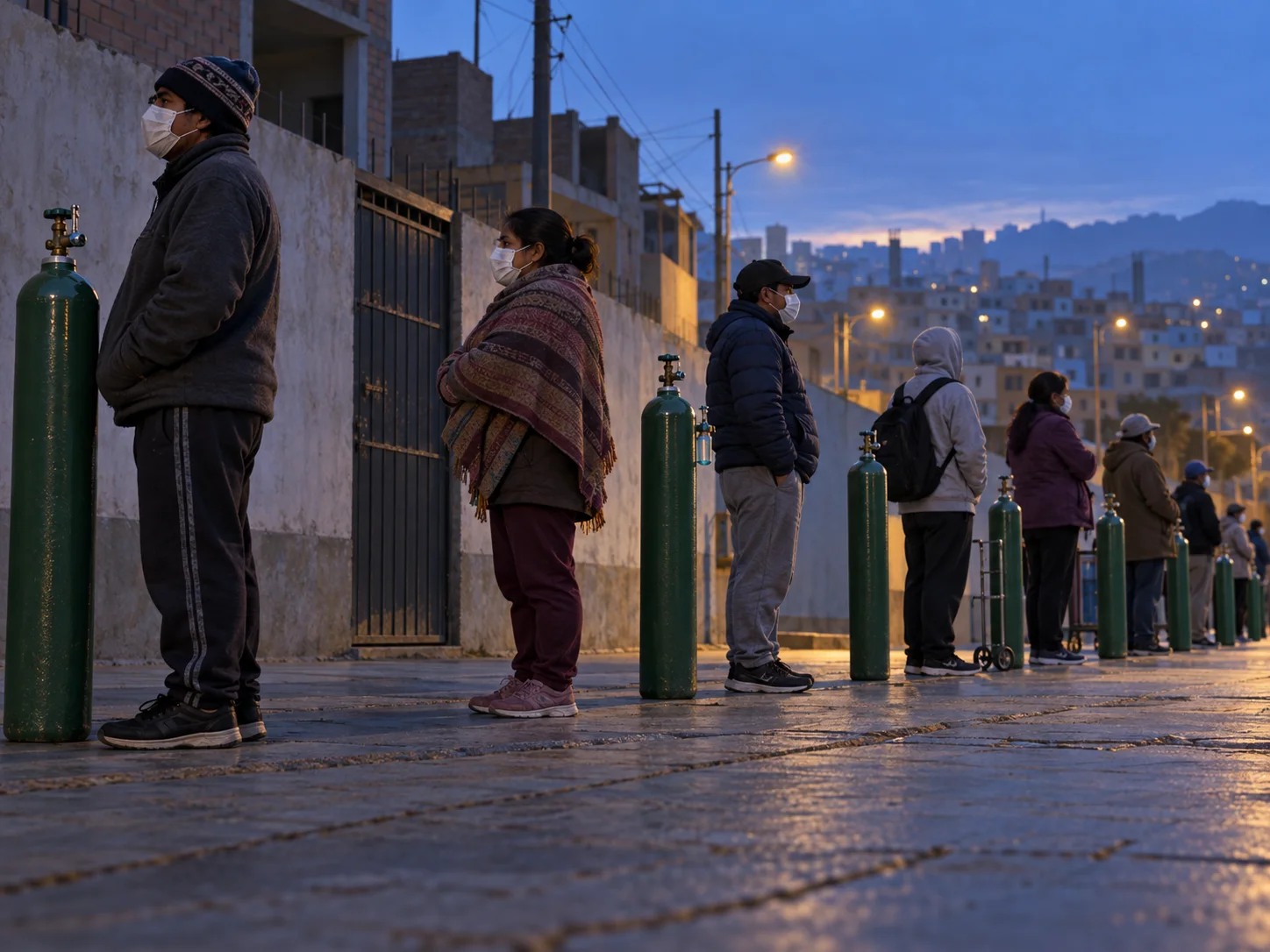
At Lima filling plants, relatives took the patient’s place in line before dawn.
Those waiting were rarely ordinary consumers purchasing for themselves. They were substitutes for relatives struggling to breathe in hospitals or at home. The speed of the line had no relationship to the speed of a patient's decline, while inflated prices made even access to waiting unequal.
When treatment depends on household cylinders, care and procurement become the same family’s work.
In June 2020, people in Peru queued from before dawn to buy medical oxygen. Reuters reported television images of long lines and customers paying three or four times the usual price for a ten-cubic-metre cylinder. The government declared oxygen supply a matter of national interest and sought industrial production and imports.
Oxygen is present in the air, yet medical delivery requires production, purity controls, cylinders and transport. When that chain breaks, the most universal human need becomes a competition for one container. The queue was not merely a symbol of shortage. It was the point where an industrial failure reached the time, money and bodies of individual families.
A healthy person’s wait remained directly connected to breathing in a sickroom.
Source check: International reporting in February 2021 documents families in Lima waiting their turn to refill medical-oxygen cylinders amid pandemic shortages.