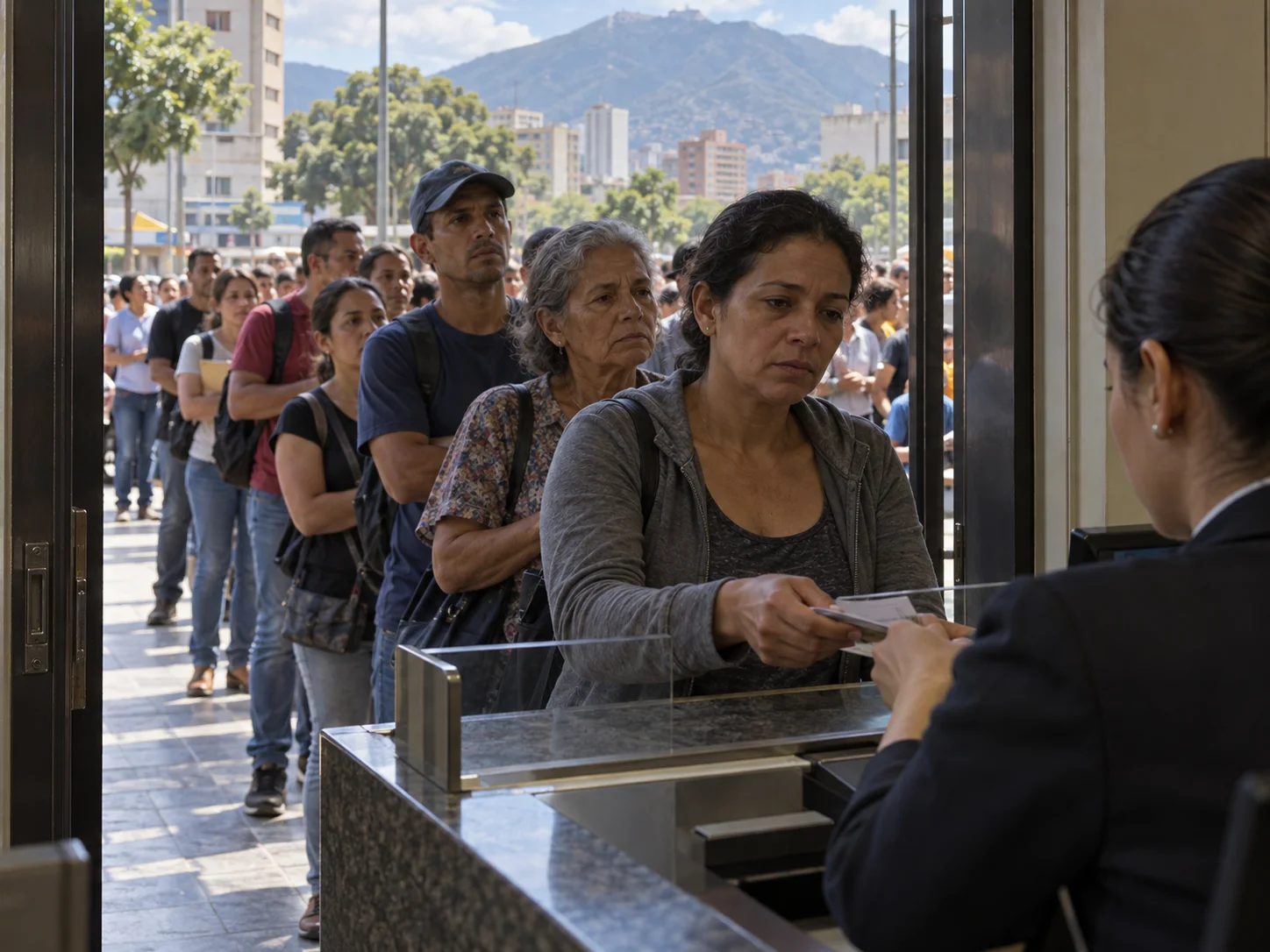
On 5 February 2019, an unusual line formed outside currency-exchange houses in Caracas, Venezuela. Contemporary Reuters reporting and a dated photograph show people waiting to convert foreign currency sent by relatives abroad into bolivars. The central bank had raised the official rate until it briefly became more attractive than the black-market rate, drawing customers back to authorized exchange houses that had often stood nearly empty.
The queue connected Venezuelans who had left the country with relatives who remained. One woman had visited twice in a week to collect money sent by her daughter; a student said support from abroad would help her buy medicine. Exchange rates can look like abstract numbers. At the counter, the difference became a place in line—and the practical question of whether a family could pay for what it needed.