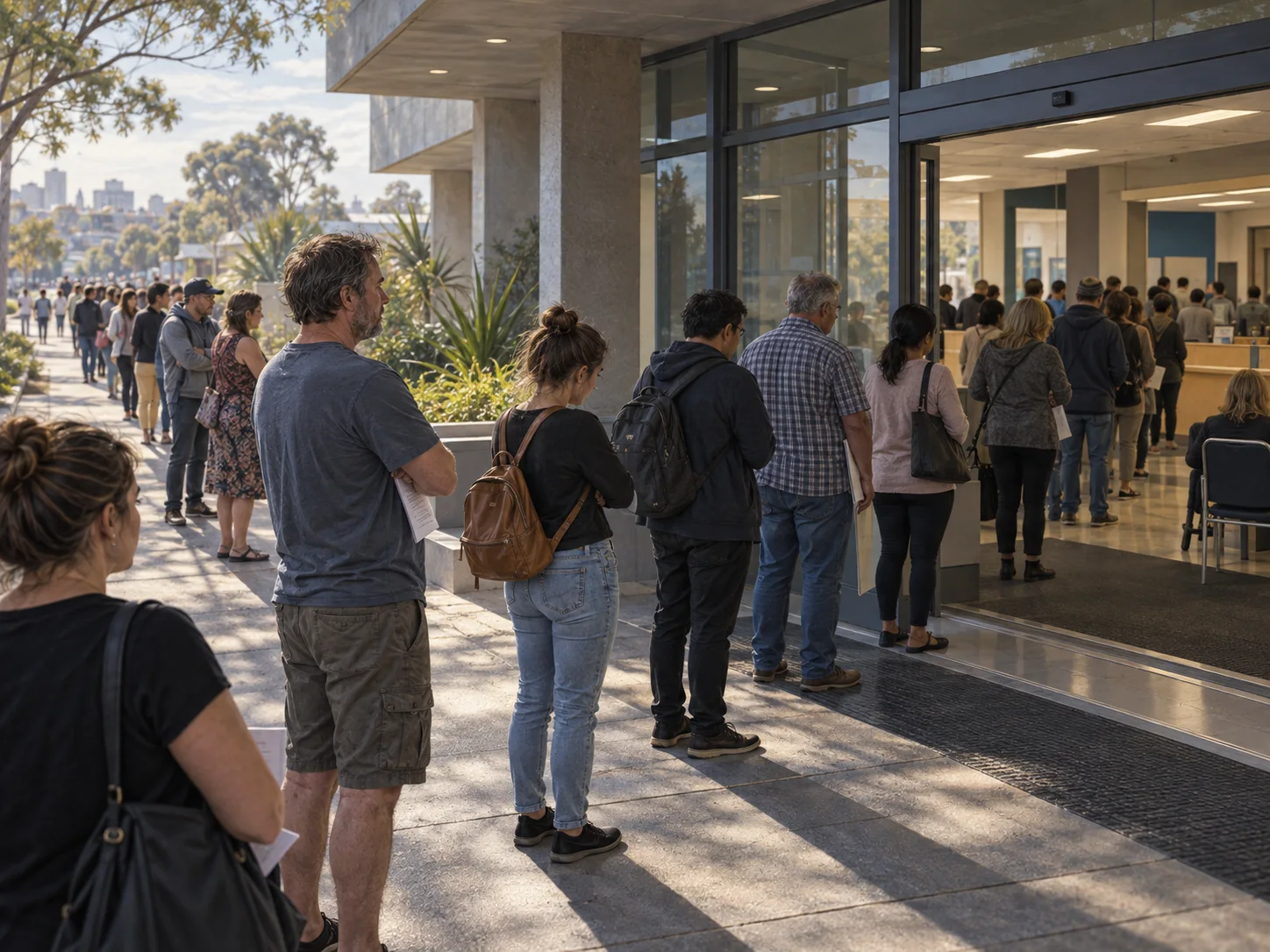
In March 2020, as pandemic restrictions abruptly destroyed jobs across Australia, lines formed outside Centrelink welfare offices. A Senate Select Committee report recorded queues snaking around blocks in cities and regional areas as newly unemployed people tried to register. Before they could receive income support, applicants first had to gain entry to the system.
At the same time, heavy demand struck the government’s myGov online service. Digital applications were supposed to reduce the need for a physical counter, but outages and uncertainty about unfamiliar procedures pushed people back towards branches. The contradiction was stark: at the moment Australians were being told to avoid close contact, those who had suddenly lost income had reason to share the same pavement.
The parliamentary record does not provide one waiting time for every office, and people in line did not all have identical circumstances. It does establish the connection between the queues and a period when unemployment-payment recipients doubled across March and April. The economic shock therefore appeared not only in national statistics but in the order of people who had not needed the system yesterday and were trying to find its entrance today.