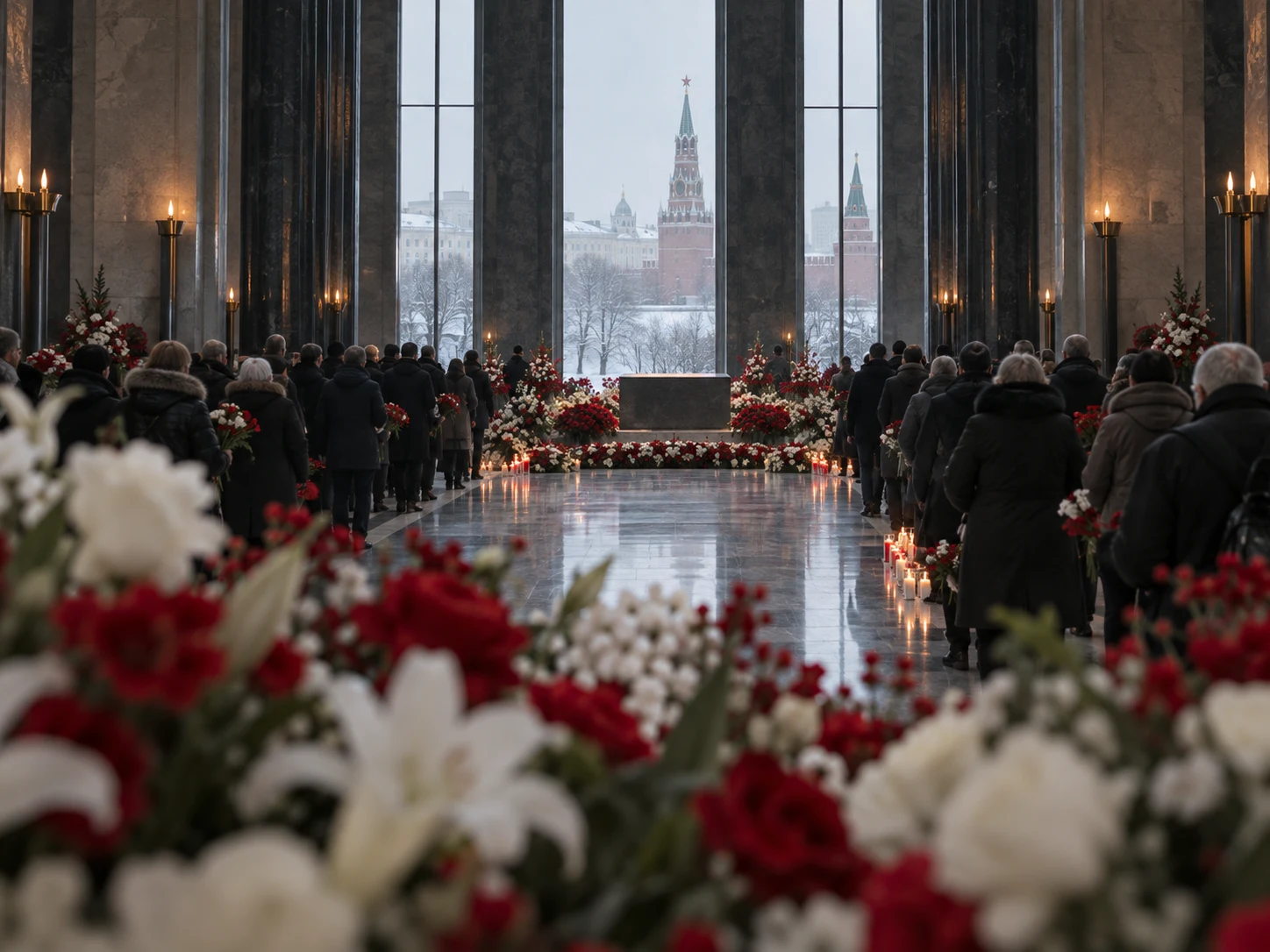
On 3 March 2015, mourners waited outside Moscow’s Sakharov Center to say farewell to opposition politician Boris Nemtsov. Reuters reported that the queue to enter stretched for about a kilometre through nearby streets. Nemtsov had been shot dead days earlier on a bridge close to the Kremlin. The distance was not a measure of entertainment demand; it inscribed the scale of public mourning after a political assassination into the city.
The line led to an open memorial with Nemtsov’s coffin. Capacity inside the hall and the pace at which people could lay flowers and leave controlled movement at the entrance. Press photographs recorded many red carnations, but they cannot tell us every mourner’s politics or personal connection. The responsible claim is narrower: a public place of farewell generated a documented, kilometre-long queue.
Because Nemtsov had become a persistent critic of state power, waiting to enter was itself a visible act. The kilometre figure describes more than the size of a ceremony. It also describes a setting in which mourners did not disappear into an anonymous crowd; on the street, each person could be observed while taking a turn.