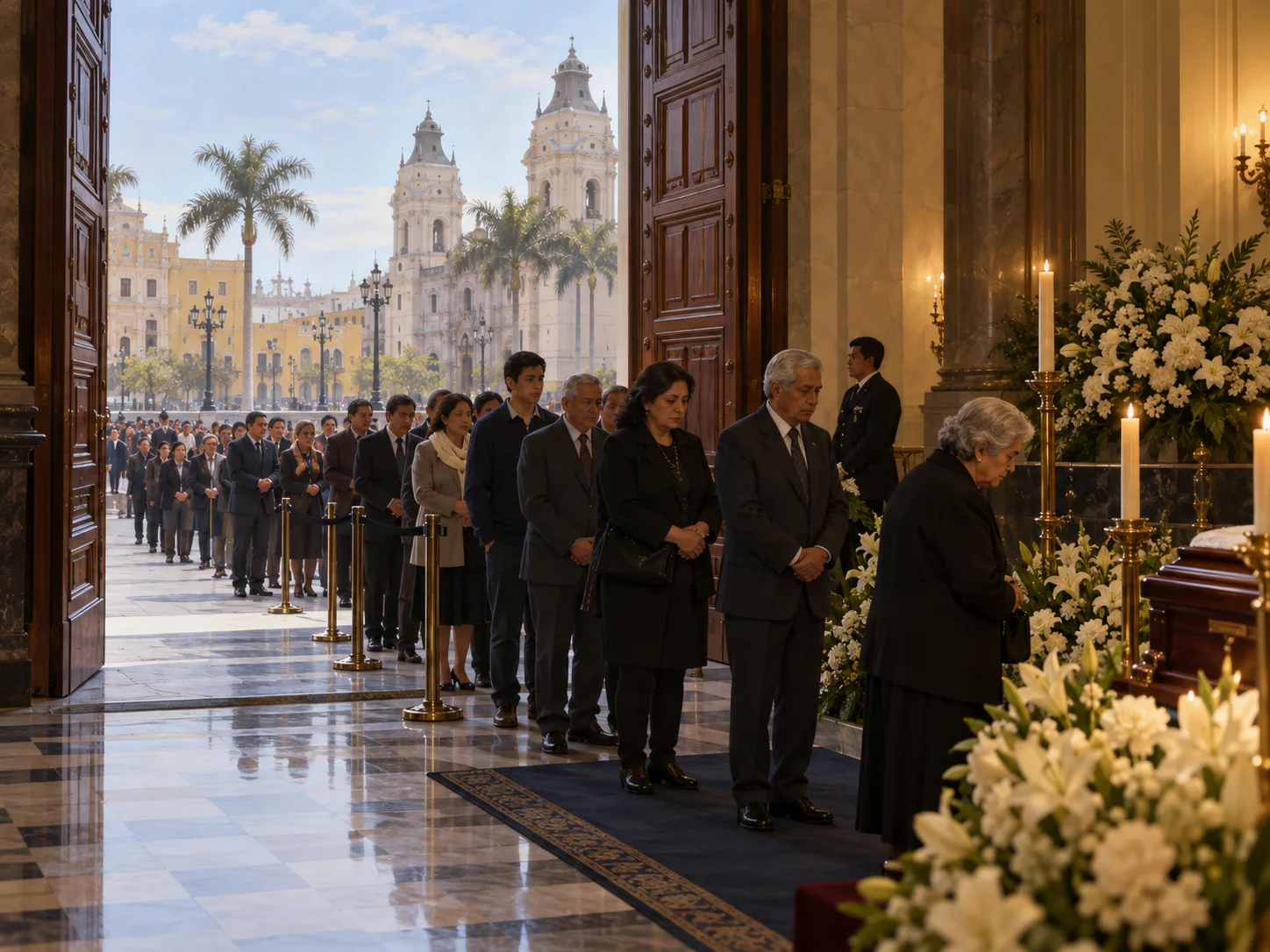
On 12 and 13 September 2024, people lined up outside Lima’s Museo de la Nación to pay respects to former president Alberto Fujimori. Le Monde, drawing on AFP reporting, said thousands queued during the two days of lying in state. They were not waiting for ordinary museum admission but for their turn to pass the coffin.
It would be misleading to describe the line as uncomplicated national mourning. Fujimori retained supporters who credited his 1990s government with confronting hyperinflation and armed insurgency. He was also condemned for closing Congress, authoritarian rule, corruption and human-rights abuses, and later served prison time after conviction in human-rights cases. The sources cannot assign one motive to every mourner, but the turnout showed that his political constituency did not disappear with his death.
A museum usually displays a past whose interpretation has acquired some distance. For these two days, a still-divisive figure occupied the centre of the building. The queue did not gather only people who agreed on history’s verdict. What it did establish was a controlled sequence for a last approach: one person after another passing a coffin that remained politically charged.