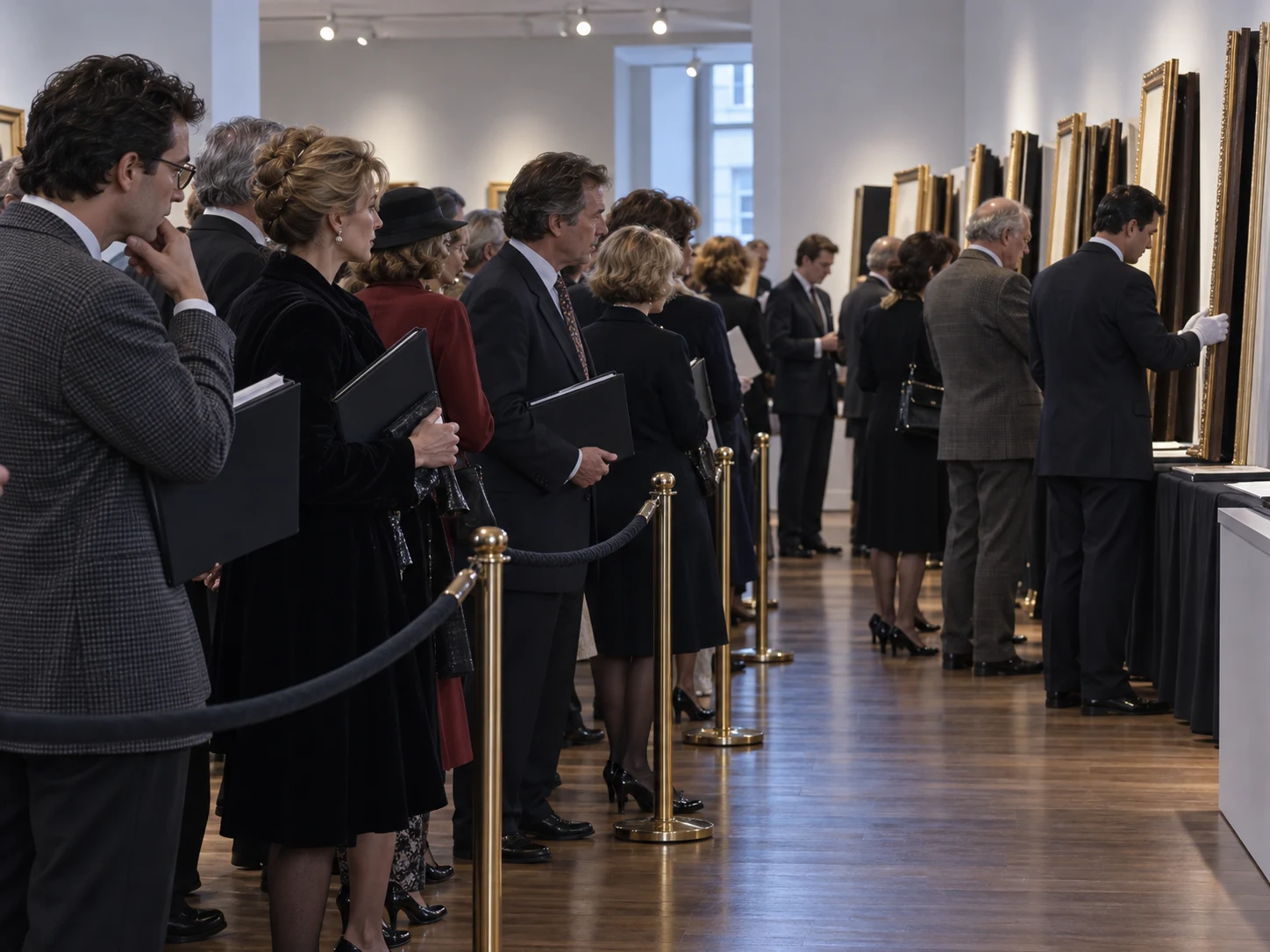
At Jack Vettriano’s first New York exhibition, buyers flew from Britain and queued around the block for first choice of the paintings. Dealer Tom Hewlett described a ticket system: the first person in line received the first opportunity to buy, and the second could not choose until the first had completed a purchase. This was therefore more than an entrance queue. Every decision at the front changed the inventory available to everyone behind. Vettriano was already commercially popular—his print The Singing Butler was a bestseller and his paintings typically sold for about £40,000—while receiving little attention from the critical establishment. The New York show reproduced that divide: critics largely ignored it, but buyers travelled across the Atlantic and lined up. The numbered ticket did not merely manage a crowd; it converted position in a queue into priority within the art market.
United States · 1990 (period details in article)
The Ticket That Determined Who Could Buy the Painting