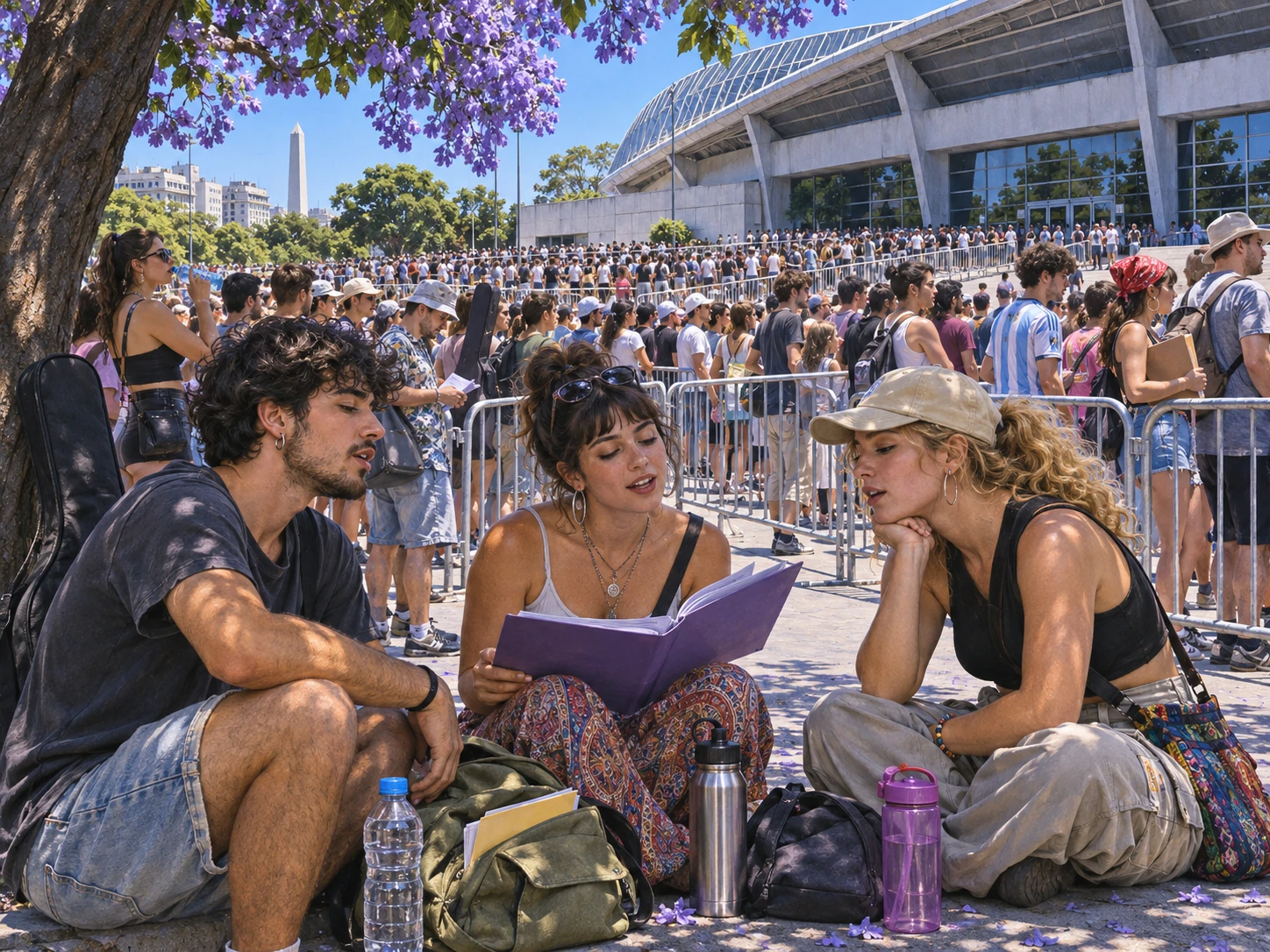
On 7 February 2022, Nicolás Giménez Riveros arrived at a Buenos Aires casting call for La Voz Argentina at 10:45 a.m. He did not sing until 7:30 p.m. In an interview with the local newspaper Pilar a Diario, he estimated that 8,000 people were at the venue and described standing in line with another applicant until 2 p.m., when that person was pulled from the queue for a camera audition. This was not an audience line for a broadcast. It was the order of access to the chance to become a performer.
Applicants were processed in groups of about fifty, and each person initially had roughly twenty seconds to sing. After hours of waiting, the performance window was startlingly brief. The line taught practical lessons about sun, water and preparation, while conversation with neighboring applicants helped contain the nerves. Giménez Riveros remembered the people he met while waiting as one of the experience's consolations.
A second participant told Tiempo de San Juan that he had queued for more than four hours with roughly 3,000 people at a Córdoba casting in January and received a number around 1064. Before an audition designed to reward individuality, numbers and a physical line placed everyone in the same sequence. Behind television's promise of discovery, waiting could feel like the first test.