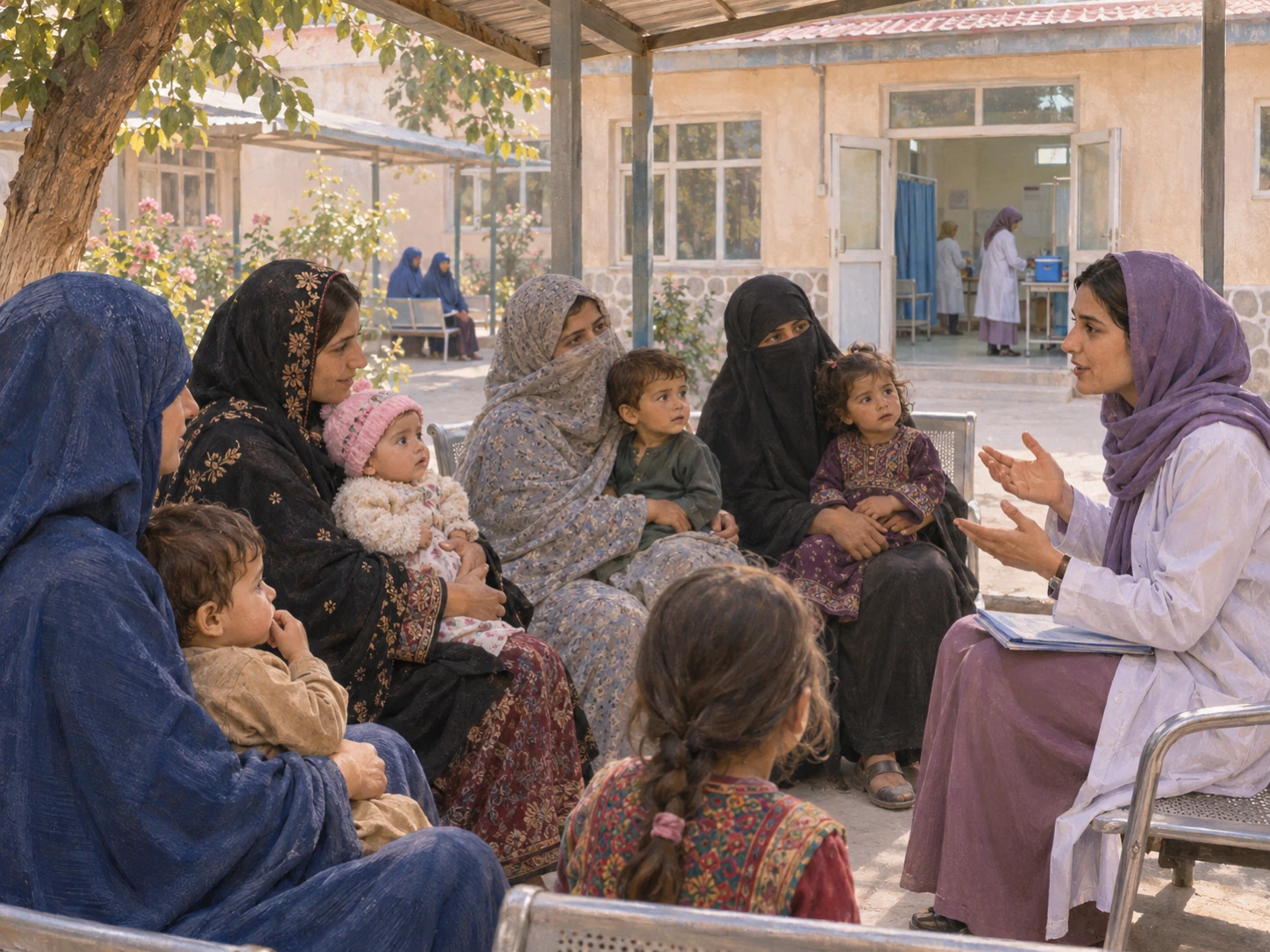
In October 2020, a large crowd of mothers queued for routine immunisation at Mirwais Regional Hospital in Kandahar, southern Afghanistan. UNICEF recorded female mobiliser vaccinators using the waiting period to explain the importance of health care for young children. The hospital received about 180 to 200 mothers a day, and many children were vaccinated without the knowledge of family members who opposed immunisation.
One mother said she waited for her husband to leave for work before secretly bringing their child. Security fears, poverty, misinformation, and restrictive customs all complicated polio vaccination in Kandahar. Female workers could enter homes and speak directly with mothers, giving them a role that extended beyond administering doses.
This queue was not created by clinic capacity alone. Some mothers had already negotiated or evaded opposition at home before they reached it. The waiting area became both an entrance to medical care and a place where women could hear explanations and support one another's decisions.