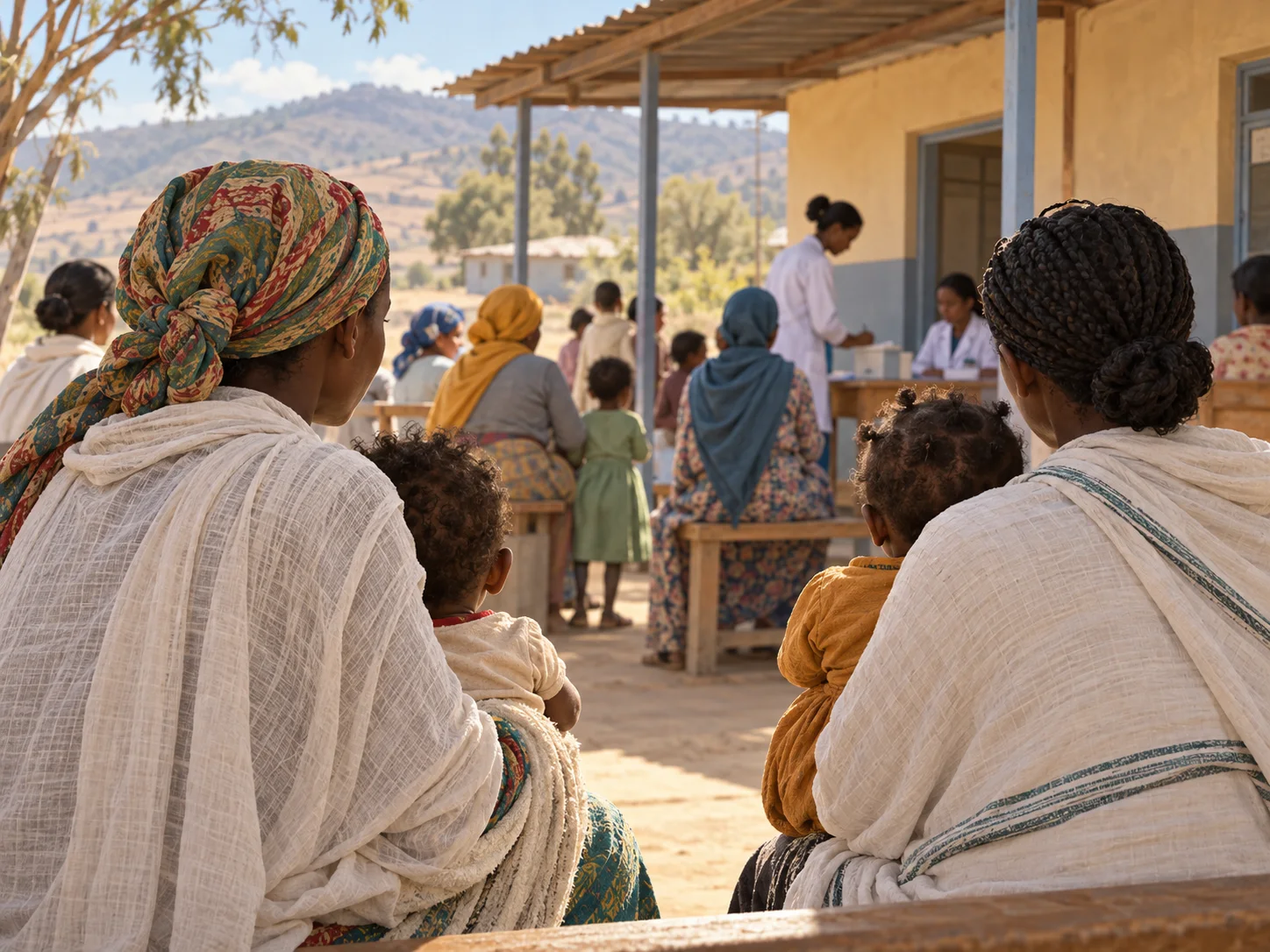
In 2023, mothers formed a large queue for infant nutrition screening at the Dubluk displacement camp in Ethiopia's drought-stricken Borena Zone. More than 50,000 displaced people were living there after families lost livestock and livelihoods.
Under UNICEF's Find and Treat campaign, health workers used colour-coded mid-upper-arm circumference tapes to identify acute malnutrition early. Twenty-two-year-old Dabo Boru arrived in the morning with her one-year-old son Wako. His measurement was red, indicating severe malnutrition and the need for urgent treatment.
This was not a line created by the popularity of medical care. It was an order for measuring the drought's effects on children's arms and connecting the most urgent cases to treatment.