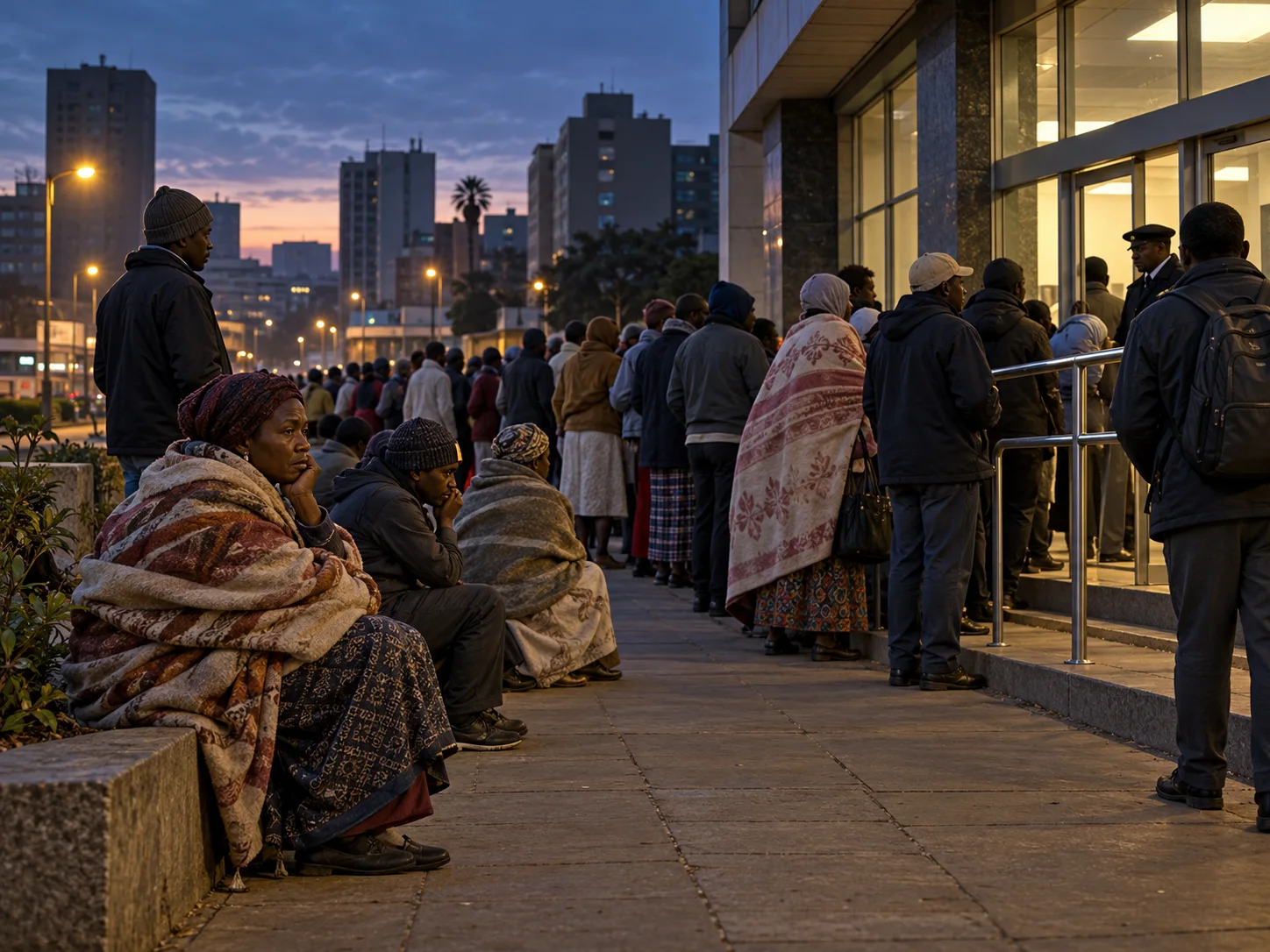
In August 2019, a line spilled on and off the pavement outside a Harare bank as residents tried to obtain scarce Zimdollar notes. One elderly man had queued since 6 a.m. and still received nothing, leaving him short of bus fare home. The government had made the Zimdollar the sole legal tender in June, yet banks were rationing the physical currency. The central bank allowed weekly withdrawals of up to 300 Zimdollars, while many banks imposed a daily maximum of 60.
Cash developed a price of its own. Notes carried a 45 per cent black-market premium, and some retailers made cash purchases roughly 45 per cent cheaper than payment by card or EcoCash. A bank balance therefore did not guarantee usable money for transport or small purchases. The queue occupied the gap between possessing money electronically and being able to spend it physically—and after hours of waiting, the amount dispensed could still be zero.