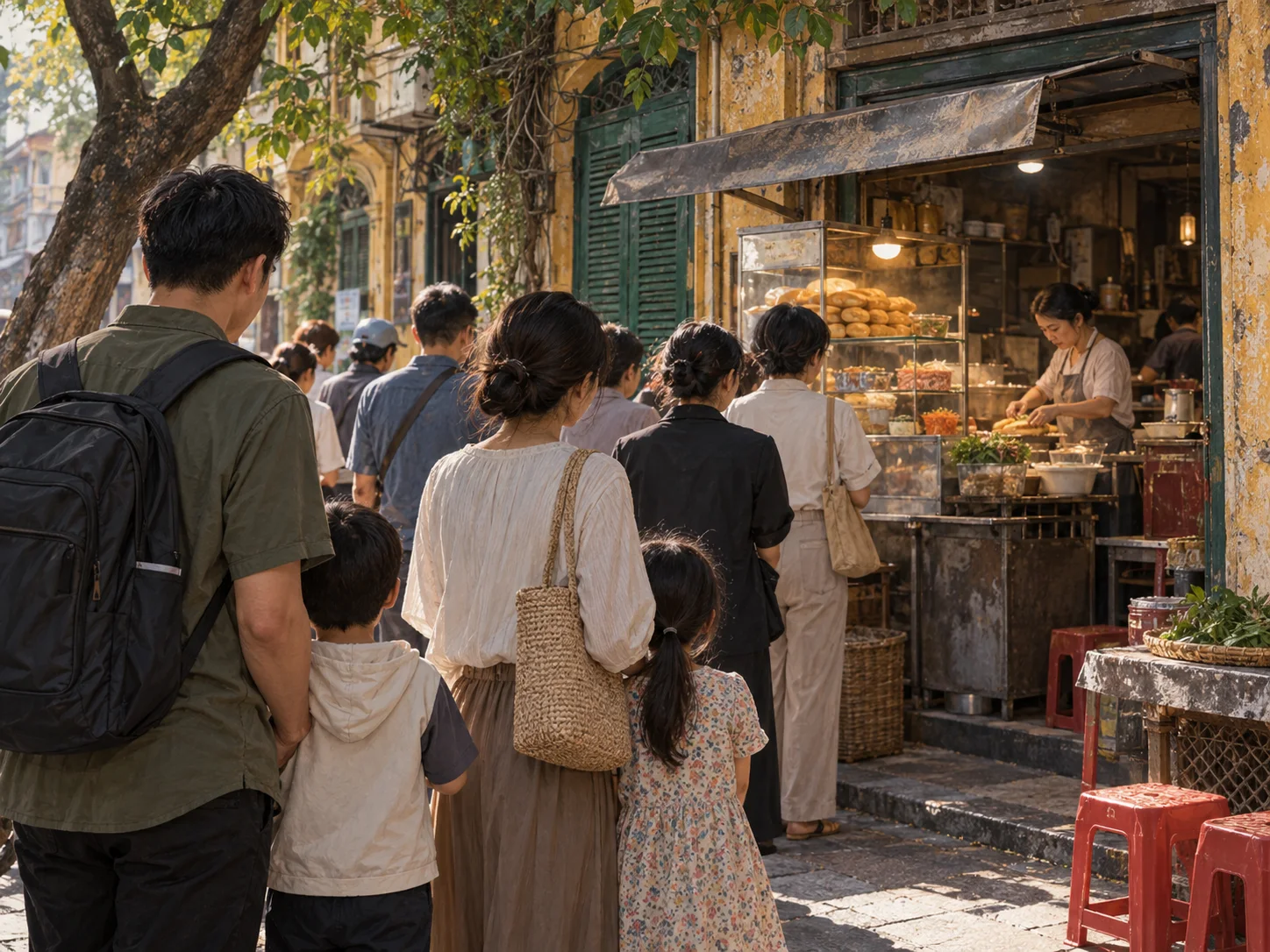
Each morning from 7 to 9, customers queue at a pavement bánh mì stall on Hàng Gai Street in Hanoi’s Old Quarter. Three workers divide the rush into a continuous sequence: warming bread, adding fillings, then wrapping orders and taking payment. Founded in 1979, the business moved a few dozen metres after Typhoon Yagi in September 2024. Over more than forty-five years it has changed location five or six times while remaining in the same neighbourhood.
A standard sandwich costs 12,000 dong, rising to 15,000 or 20,000 with extra filling. Pâté, char siu and pork floss are joined by a distinctive red sausage made from pork and skin steamed for five hours. The stall sells 700–800 sandwiches a day and operates from 5:15 to 10:30 a.m. With seating for only about ten people, many customers take their breakfast away. The queue is sustained by more than price: it joins a portable family recipe to a three-person production line built for the morning commute.