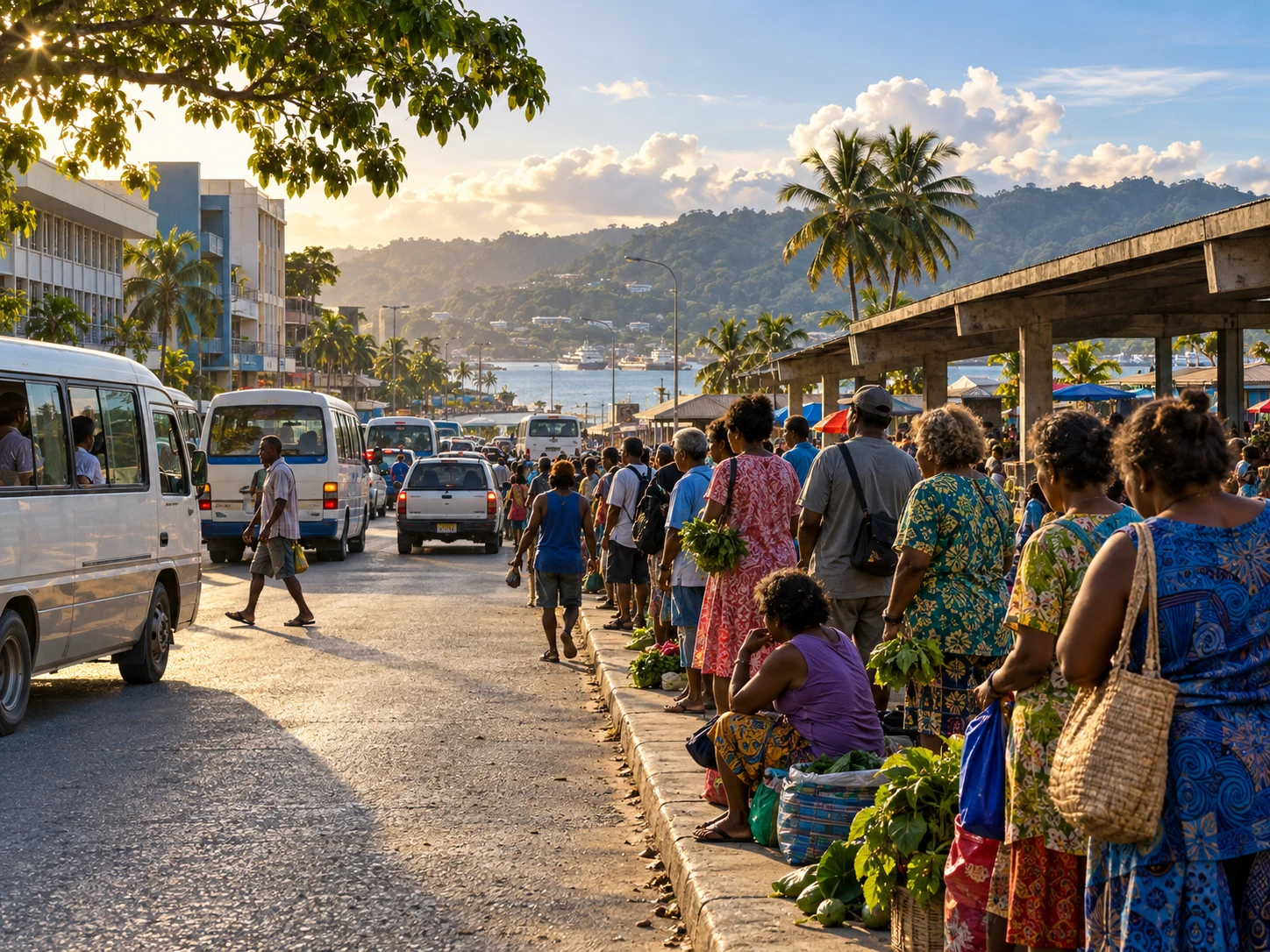
In April 2015, Honiara City Council closed its central market indefinitely for repairs. The building, constructed by Japan and handed to the city roughly fifteen years earlier, had not undergone a major refurbishment; its toilets, fish area, and paintwork needed attention. But closing the market did not make queuing disappear. It moved the queue onto the road.
Many vendors shifted to the Fishing Village market. Solomon Star reported that traffic queues on Kukum Highway stretched from the western side of that market toward the Bahá’í area farther west. Fishing Village had begun as a roadside vending site and, over time, had come to function as a public market. Its small plot sat immediately beside the highway. Moving a large share of the central market’s activity there concentrated vendors, customers, commuters, and school traffic at the same narrow point. The newspaper called for police traffic control, council limits on vendor numbers, and wider use of satellite markets when Fishing Village was overcrowded.
The people waiting in this case were not only market customers. Residents with no intention of shopping were made to wait because the city had rerouted part of its food-distribution system. Repairing the original building was necessary, but the closure created a long, temporary waiting room elsewhere—one made of vehicles. The record shows that managing a market queue and managing the flows toward a market can be the same urban problem.