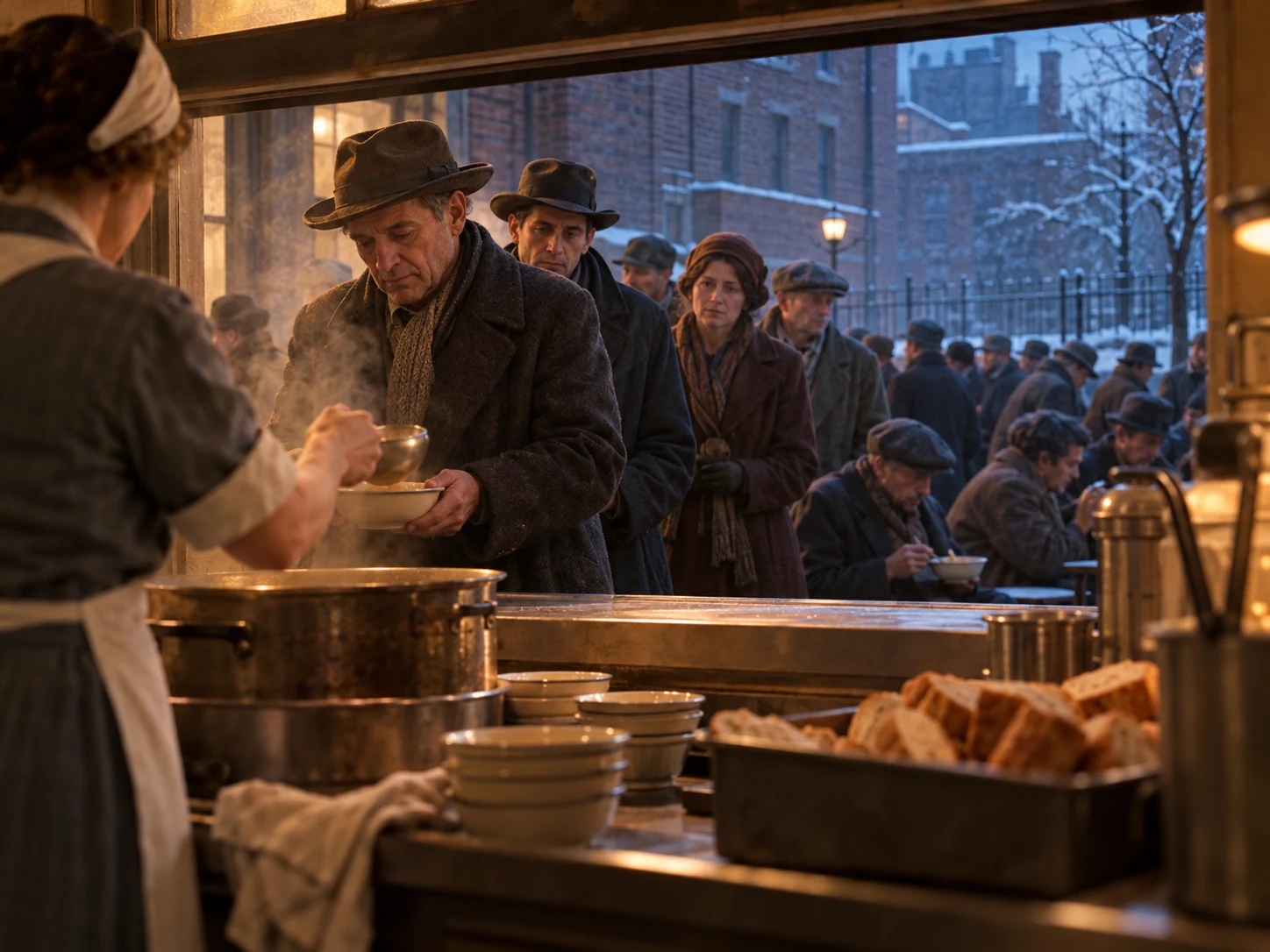
In Depression-era Chicago, lines for free meals became one of the most recognizable images of economic collapse. Unemployment figures and falling share prices could describe the scale of the crisis, but not the practical question facing someone who had lost an income: where would today's meal come from? Outside a food-relief operation, an economic statistic became time spent standing and waiting.
Charitable and privately organized meal services operated in the city. One famous Chicago soup kitchen is associated with Al Capone, the gangster whose name often dominates retellings of the period. That association needs care: not every photograph of a Depression breadline shows Capone's operation. Identifying a particular image requires a date, location, and photographic provenance. Nor can we assume that everyone in a line had the same occupation or life story.
The order in which people received soup was not a ranking of their hardship. Each serving allowed one more person to move forward. An immense failure of the economy was experienced, at that doorway, one human step at a time.