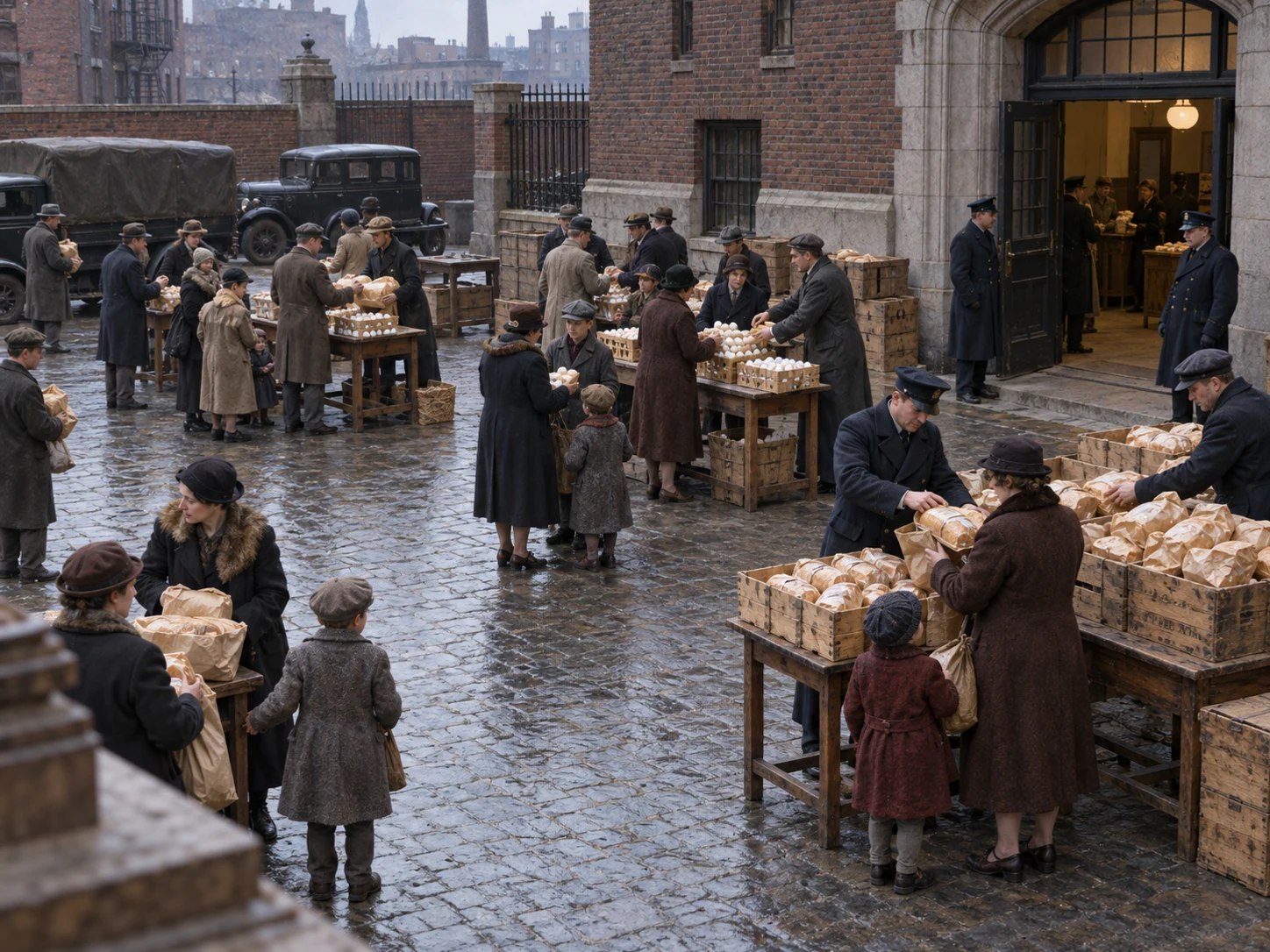
In 1930, police officers distributed eggs and bread to unemployed people in need at the East 104th Street station house in New York. A New York World-Telegram staff photograph described the occasion as the city’s first relief doles.
A police station was not an ordinary destination for collecting food. Faced with mass unemployment, however, the city used an existing public building and its personnel as a distribution point. The catalogue identifies both the goods—eggs and bread—and the location. It gives no headcount, waiting time or individual allotment, so those details remain unknown.
What distinguishes this queue is less the food than the institution handing it out. Before a specialised relief infrastructure was established, a police station became an entrance to material assistance. A counter associated with public order was turned into a food counter, and people waited there not to report an incident but to receive part of their next meal.