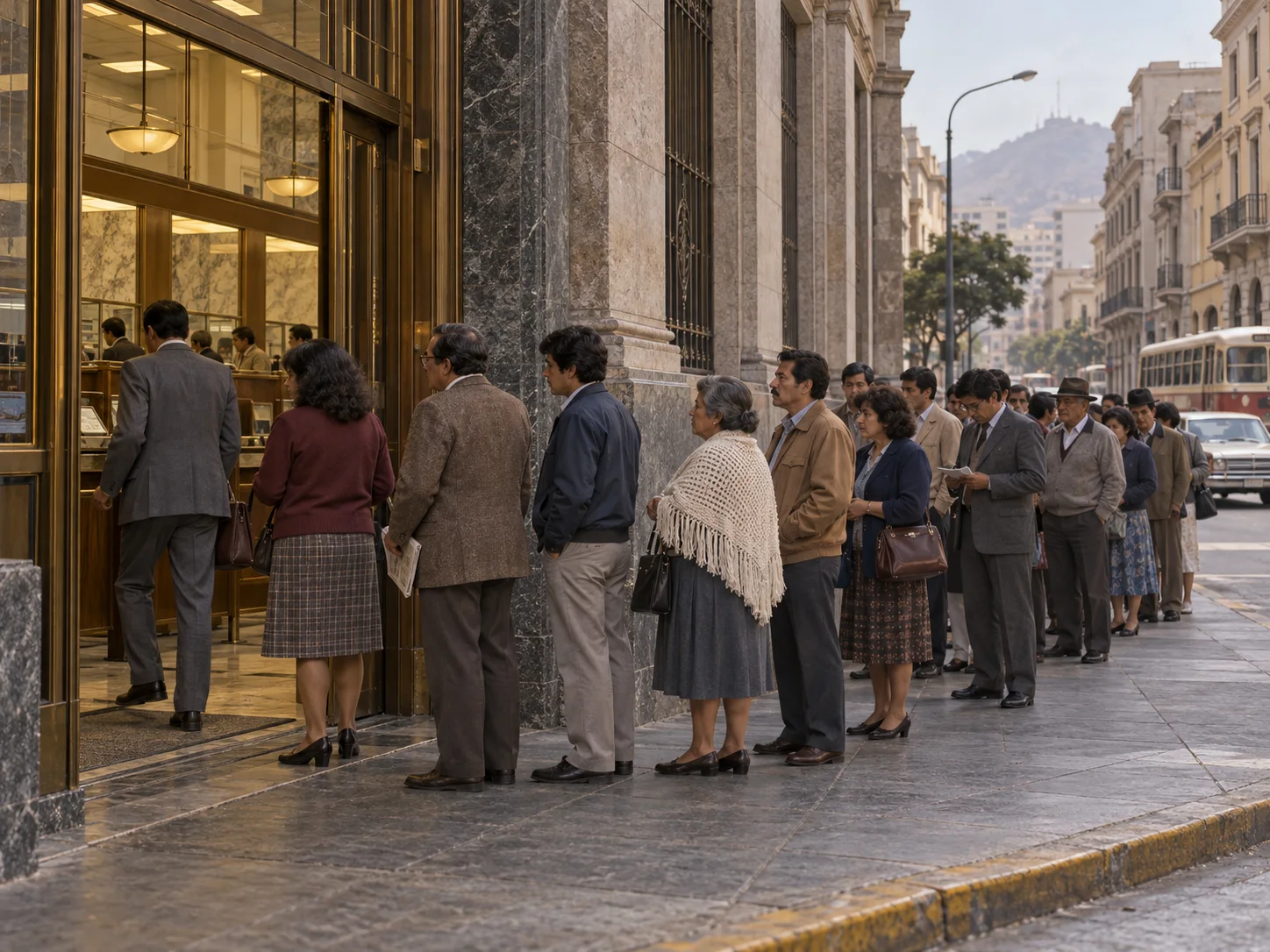
On 5 August 1989, long lines were visible at bank branches in Peru. A retrospective by the historical archive of El Comercio identifies the immediate cause: a shortage of high-denomination banknotes. Hyperinflation was eroding the purchasing power of the inti by the hour. A 10,000-inti note had entered circulation only that May, yet the supply of usable cash still lagged behind everyday needs. Customers therefore had to wait their turn at bank counters to gain access to physical money.
This was not simply a picture of a banking system that had stopped. It shows how waiting can accumulate even while institutions remain open: when the notes to be handed over are scarce, time gathers in front of the counter. The archive does not identify every transaction made by every person in the line, so this article does not claim that all were making withdrawals. It does, however, directly document an ordered physical wait at bank branches caused by the shortage of cash denominations.
For people living through Peru's crisis, the balance recorded in an account was only part of the story. What mattered was whether usable notes could be obtained before prices moved again. Waiting was therefore more than inconvenience. It was a pressured step between savings or income and the next purchase. In a different currency and a different emergency, the scene reveals a familiar human pattern: when access is limited, a queue becomes the social mechanism that turns scarcity into turns.