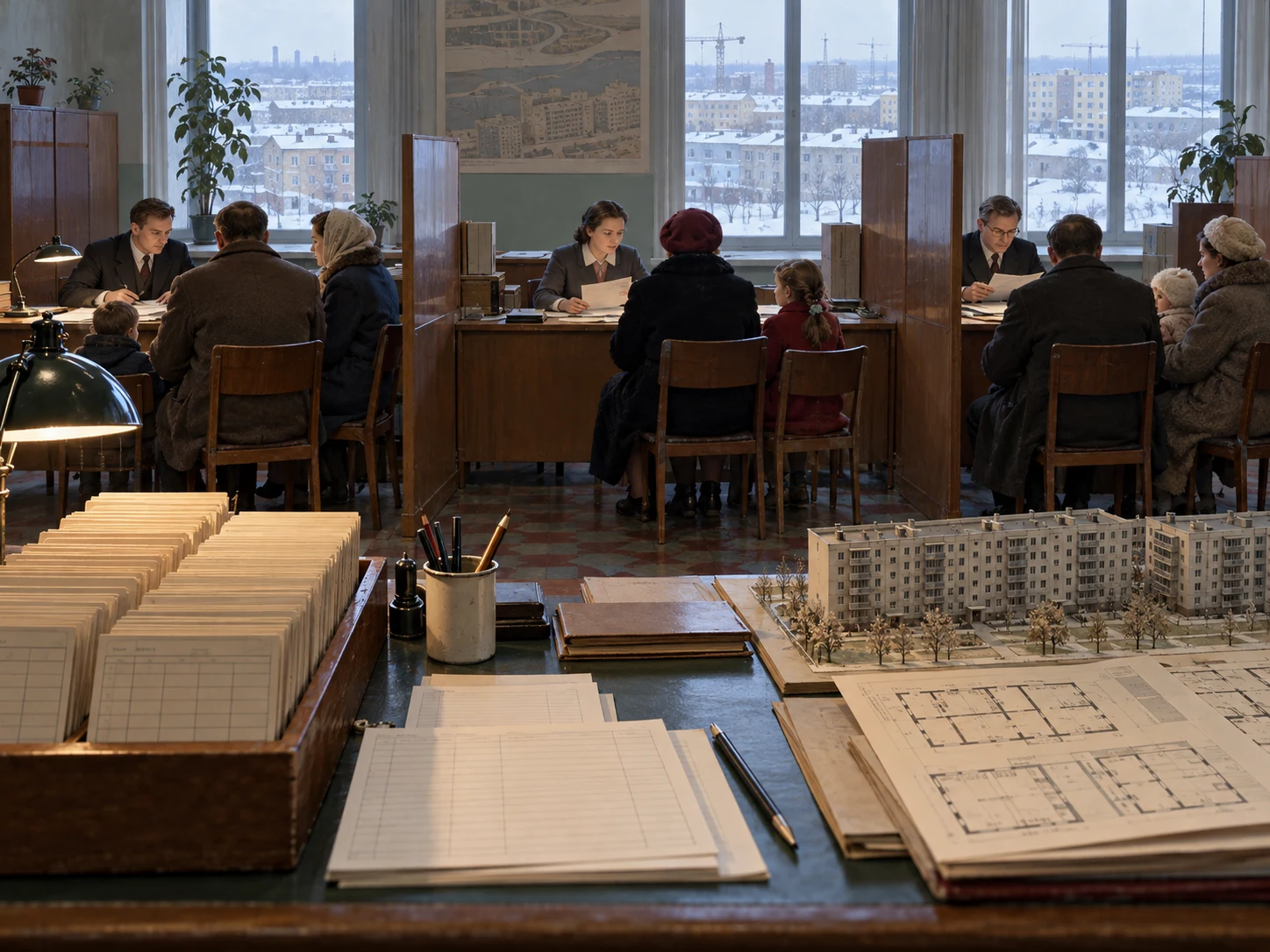
During the 1950s and 1960s, public housing in Novosibirsk was allocated through waiting lists. Archival research shows municipal lists existing alongside workplace and factory lists, with hierarchies of power, need and eligibility producing multiple sub-queues.
Khrushchev's campaign built on an immense scale—38 million apartments across the USSR between 1956 and 1965—yet order was not simple first-come, first-served. Institutional affiliation, family need, petitions and personal connections could affect position. Applicants were waiting not only for a room, but for an official ranking of whose need counted first.