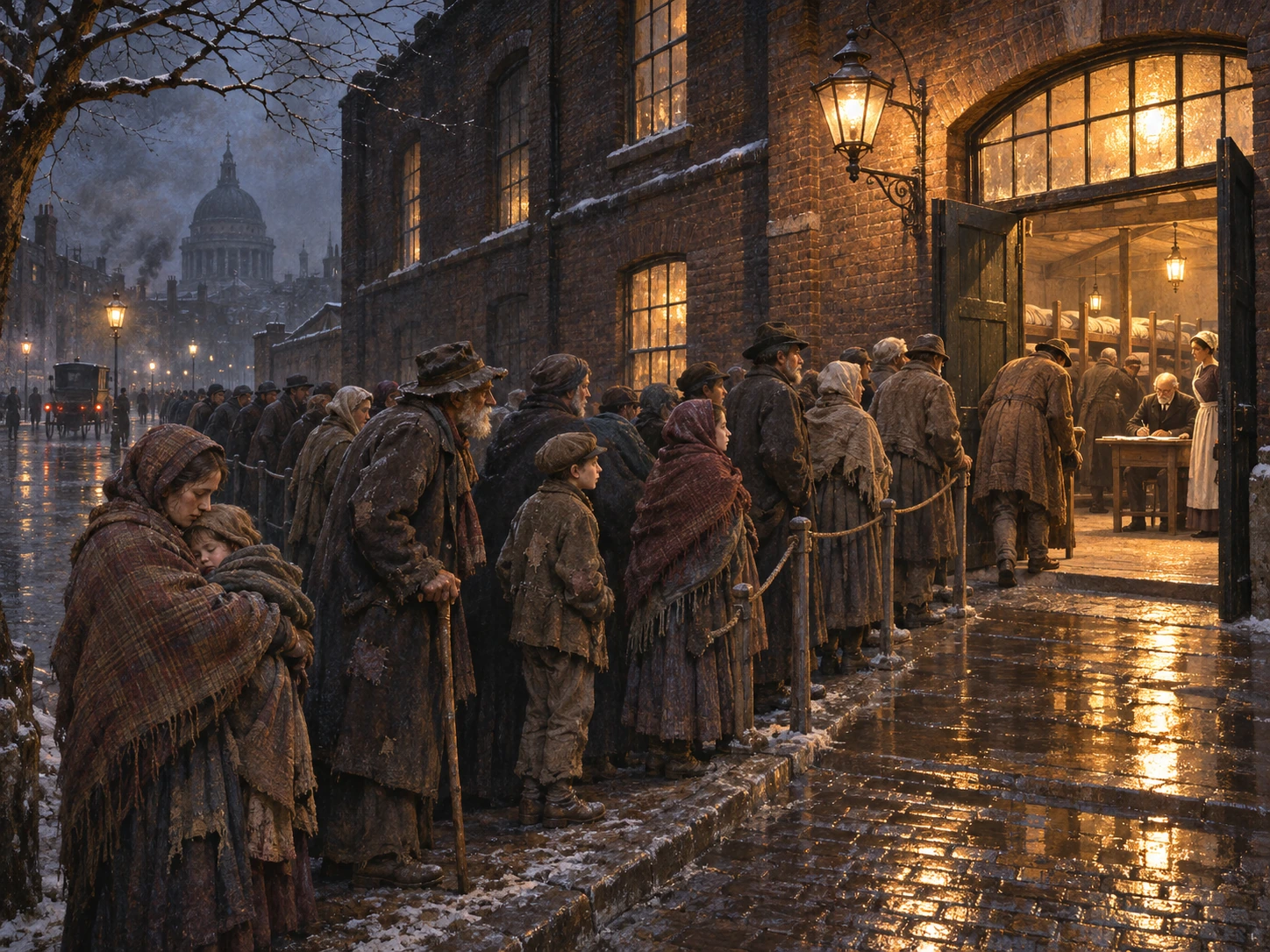
In late nineteenth-century Britain, unhoused travellers and people in extreme poverty seeking shelter for the night presented themselves at workhouse casual wards in the late afternoon. A specialist history of the workhouse states plainly that the routine began by joining the queue for admission. Beds were limited, and late arrivals could be turned away. Visual records survive of applicants in 1874, a London casual ward in 1887, and people waiting at the Whitechapel ward entrance in 1902.
The doors commonly opened at five or six in the evening. Entrants were searched, made to bathe, and issued a nightshirt and blanket; supper might be no more than bread and thin gruel. The line was therefore more than an orderly entrance into a building. A person's place in it, and the hour of arrival, could determine whether a bed was available at all. Relief existed, but discipline and selection stood at its threshold.