The surviving candidate description does not, on its own, establish the number of people in a particular line or how long they waited. Those details require comparison with contemporary photographs, reporting or records. Separating what is documented from what remains uncertain is essential to describing the people involved without inventing their experience.
Smallpox eradication depended not only on doses delivered but on knowing who had not been reached. CDC photographs show mass vaccination as a surveillance and record-keeping operation, not merely repeated injections.
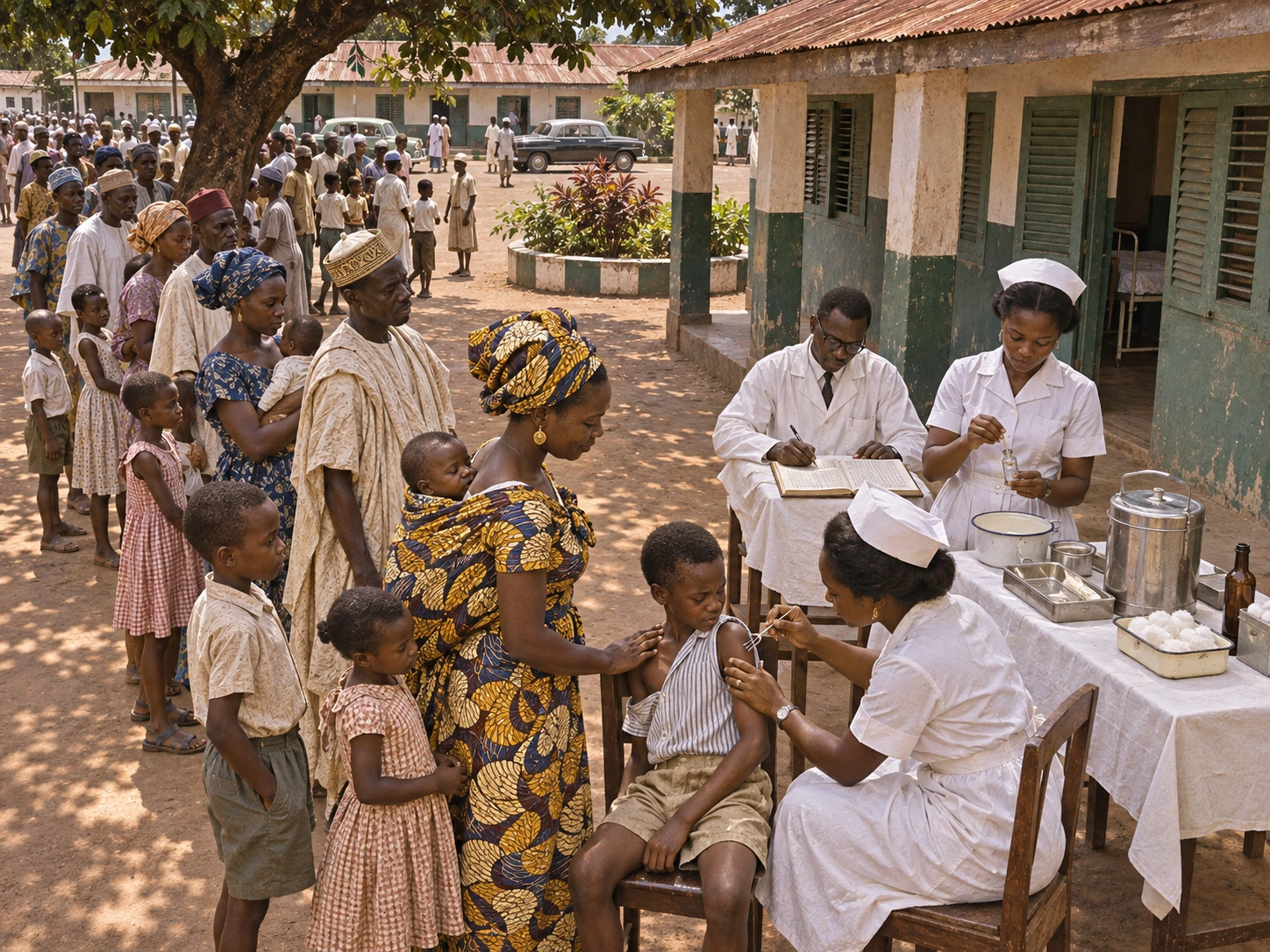
A photographic record identifies men waiting for smallpox vaccination in Nigeria in 1967. The global campaign against smallpox is often told through international programmes and statistics. Yet a vaccination is administered to one person at a time. A line at a vaccination site makes visible the ordinary, repeated acts through which an immense public-health ambition could become reality.
Smallpox eradication is described in global statistics, but at a vaccination site it advanced from one arm to the next. The photographed queue shows the smallest unit processed by a worldwide campaign.