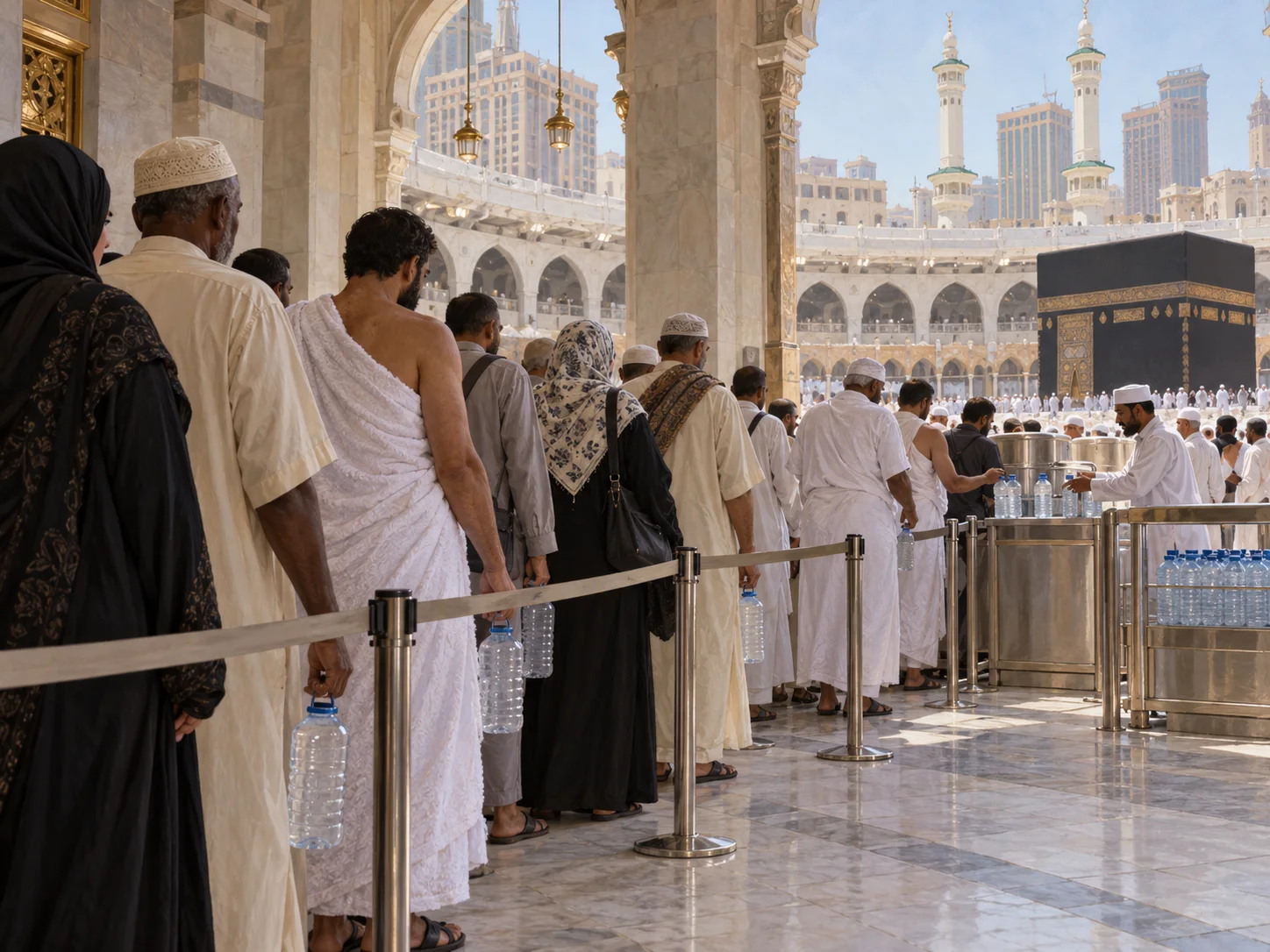
During Ramadan in 2014, pilgrims at Mecca’s Grand Mosque could drink Zamzam water but struggled to find sealed bottles to take back to hotels or homes. Arab News reported daily consumption of about 1,200 cubic metres inside the mosque and 486 cubic metres in surrounding courtyards—roughly three million cups. Bottled supplies, however, were concentrated at a filling station unfamiliar to many foreign pilgrims. One Indian pilgrim said he felt unable to refill an empty bottle from a cooler because so many people were queued behind him to drink. Official coupons cost five riyals for a ten-litre container, while brokers offered to buy coupons at twice the price and authorities seized fake bottles. The confirmed queue in the report is the line to drink at the coolers, not necessarily a retail line for take-home bottles. The revealing contrast is between abundant water for immediate consumption and scarce, portable packaging. That gap created waiting, embarrassment and an unofficial market around a sacred resource.
Saudi Arabia · 2014
When Pilgrims Could Drink Zamzam but Not Buy a Bottle