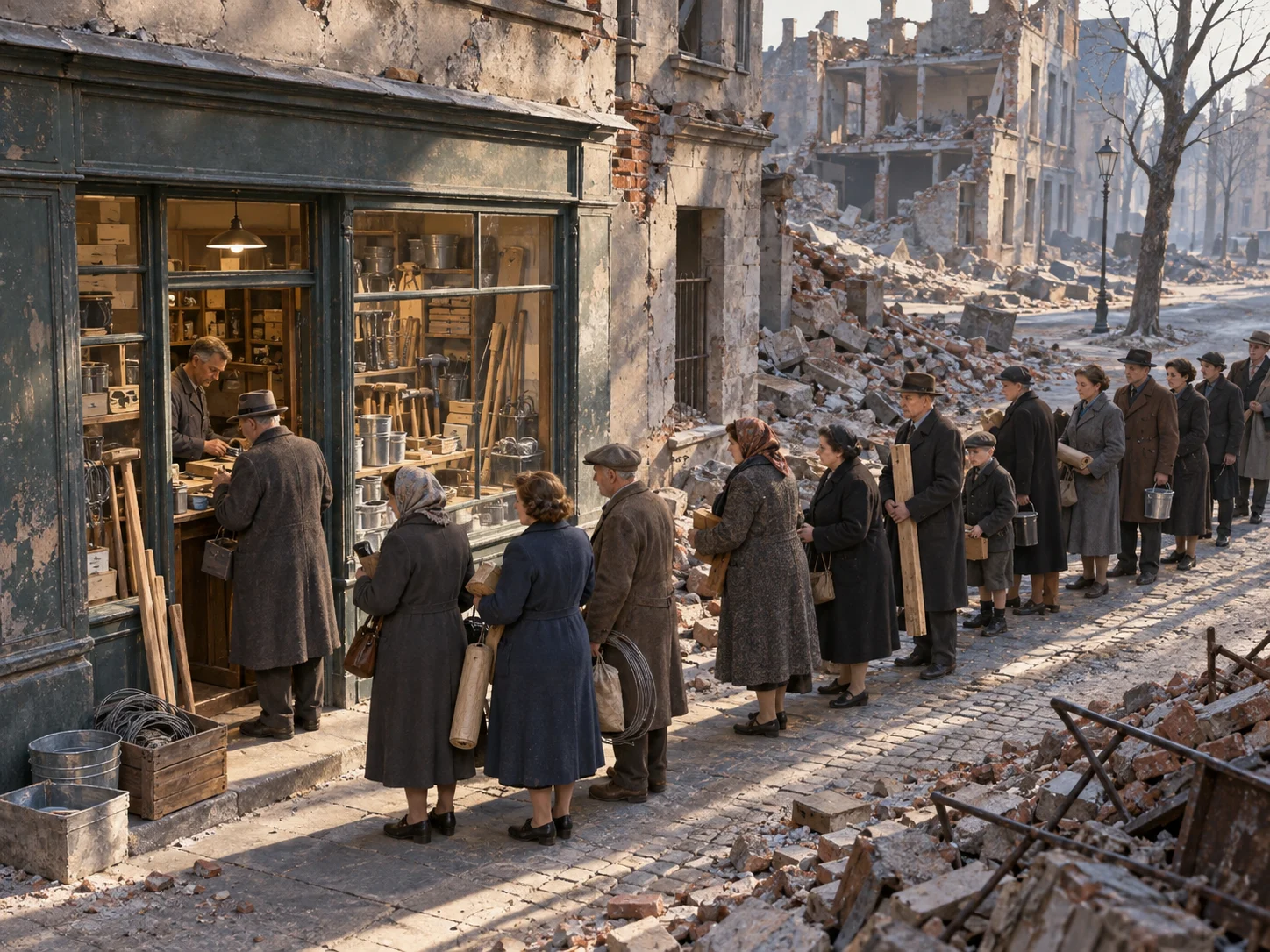
Between 1940 and 1945, men and women queued outside an ironmonger's shop in Berlin. A photograph held by the Australian War Memorial carries a Royal Air Force caption describing residents waiting for materials needed for repair work after air raids. The shop windows are boarded, and signs advertise kitchen utensils, ironware, and razor blades. Sales were restricted to emergencies.
The image is not a neutral street record. It was a German propaganda photograph captured by the RAF and supplied with an Allied caption. Its provenance matters: the photograph cannot establish the number of people, their waiting time, the scale of damage, or the original photographer's purpose. What it does document is a line for scarce repair materials rather than ordinary browsing at a hardware shop.
Recovery after bombing depended not only on large construction projects. Nails, fittings, and simple tools were necessary to cover broken windows and make damaged homes usable. The queue preserves that less visible stage of war damage: after destruction reached domestic life, even the practical work of repair acquired an emergency order of waiting.