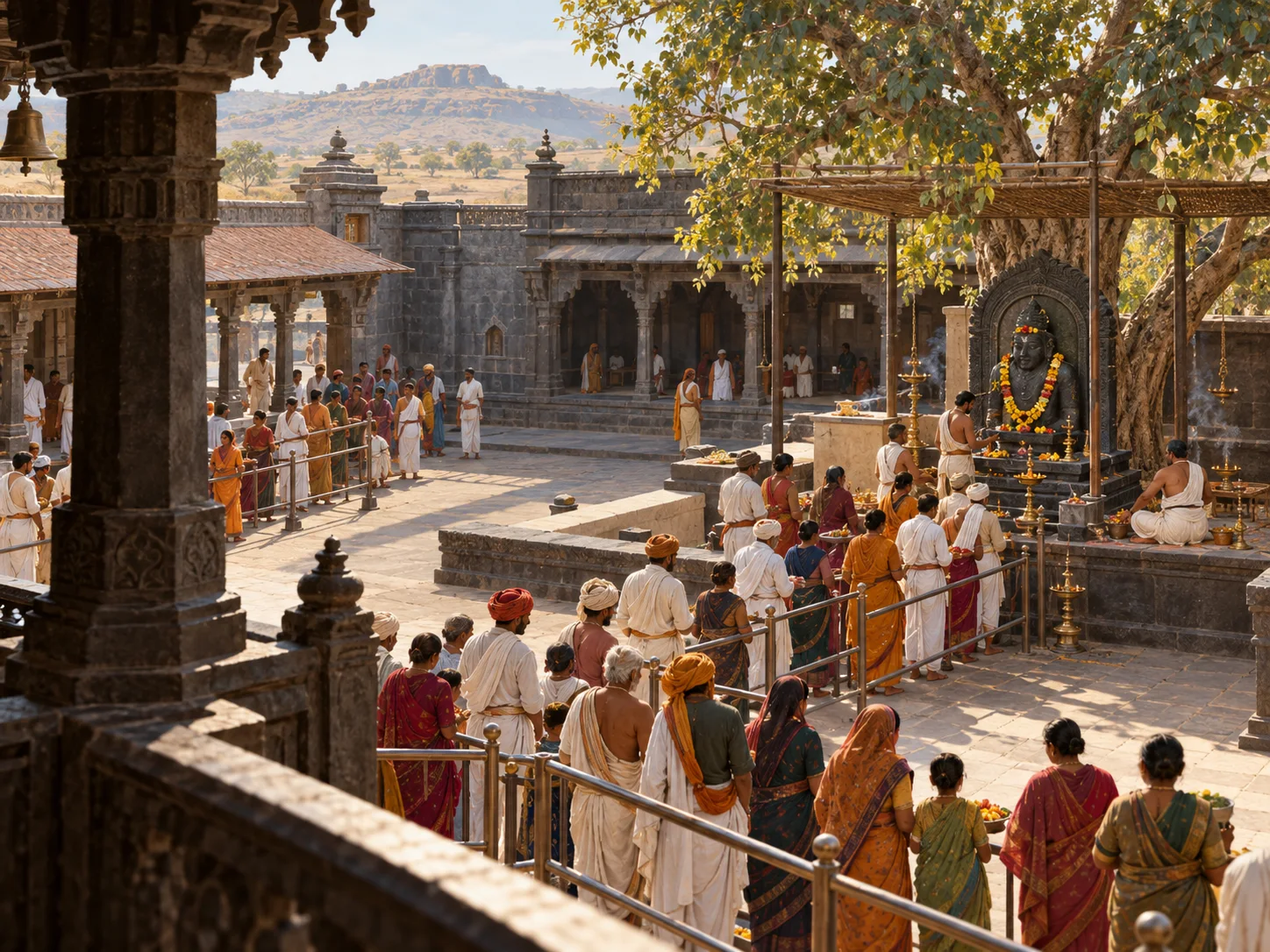
At Shani Shingnapur in Maharashtra, the focal image is not enclosed in a roofed inner sanctuary. Maharashtra Tourism describes a black stone image of Shani, the deity associated with Saturn, standing in the open air. The site is an important pilgrimage destination, especially busy on Saturdays and new-moon days. Devotees bring offerings such as oil, black sesame, and flowers, while the surrounding village is famous for a tradition of using few doors or locks.
A visitor guide for the shrine gives the crucial evidence that distinguishes an organized queue from a crowd. It instructs pilgrims to follow the queue system and directions from temple staff, and says that offerings are checked at a security point. The waiting here is therefore attached to a specific route: devotees advance in order, pass a check, and approach the image. Because the shrine is described as open around the clock, this is not principally a line for gates to open. It is a line for one’s turn before an already accessible sacred object.
That contrast is what makes the queue distinctive. The deity remains under the sky, without the architectural enclosure that usually defines a temple’s innermost space, while the human approach is carefully ordered. Openness does not eliminate sequence. Instead, the queue and security check create a temporary structure around an open-air shrine, allowing a large flow of pilgrims to reach the same point without treating a religious gathering as if it were automatically an orderly line.