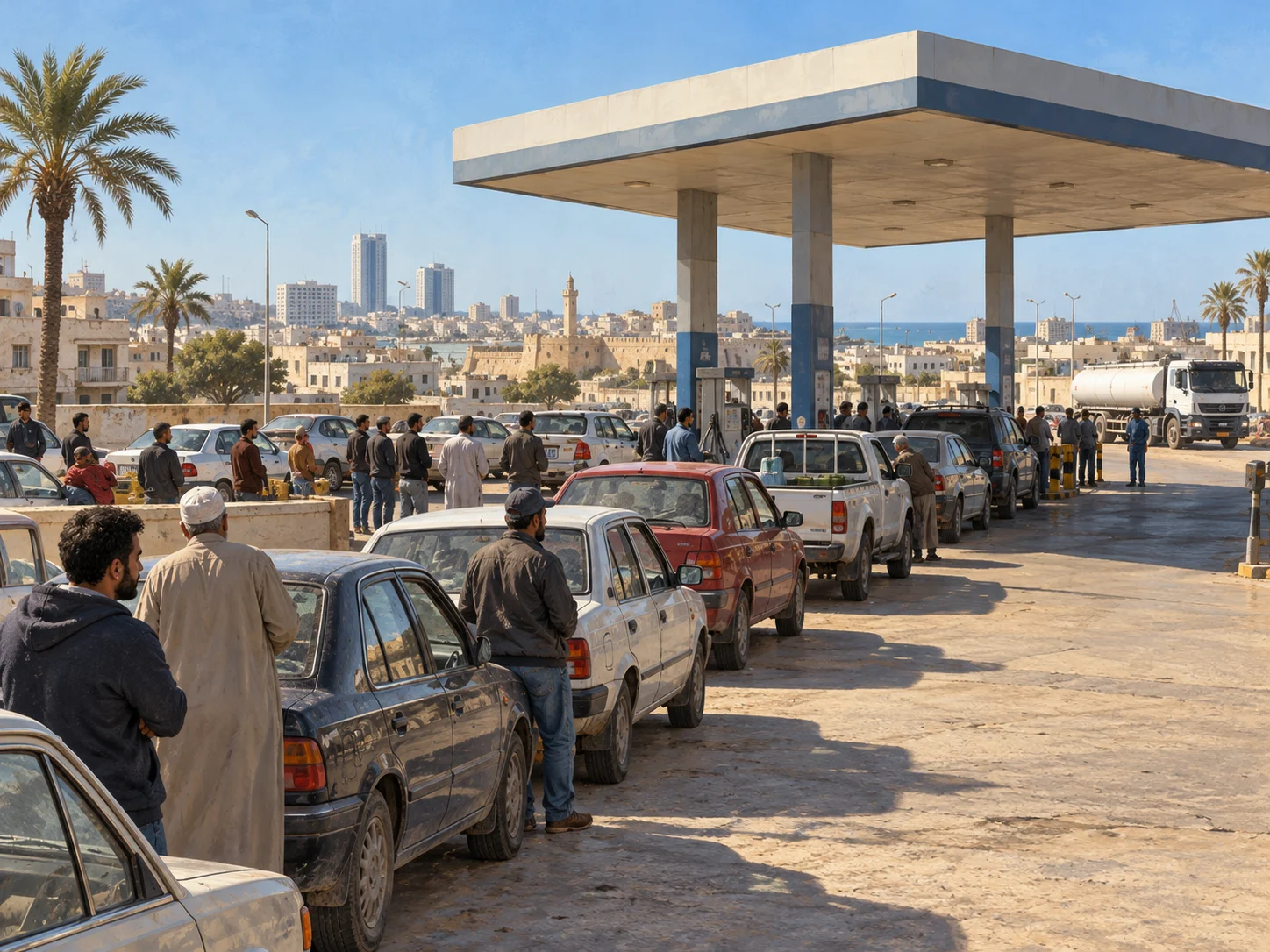
On September 5, 2011, vehicles and people were waiting at a filling station in Tripoli. Reuters footage records a long line of cars, people gathered at the station barrier, vehicles at the front of the queue, and a tanker arriving to deliver petrol. It also shows fuel being transferred from a large jerry can into a bottle. The object of the wait was therefore not an abstract promise that supplies would improve, but fuel being divided and moved in front of the camera.
The station owner, Shauqy Mohammed, said he hoped the crowds and queues would end within two or three days and that other petrol stations would reopen. His explanation reveals the mechanism behind the bottleneck. Faster service at one forecourt was not enough; demand had to be distributed among more operating stations. As long as nearby outlets remained closed, motorists converged on the places where a delivery might actually arrive.
The clip cannot explain every dimension of life in Tripoli during Libya's 2011 conflict, and this article does not use it to do so. What it preserves directly is a fuel shortage as an ordered sequence: vehicles waiting, people watching the barrier, and a tanker connecting its pipes. At the front of this queue, the decisive object was not a symbol of patience but a hose carrying petrol into the station.