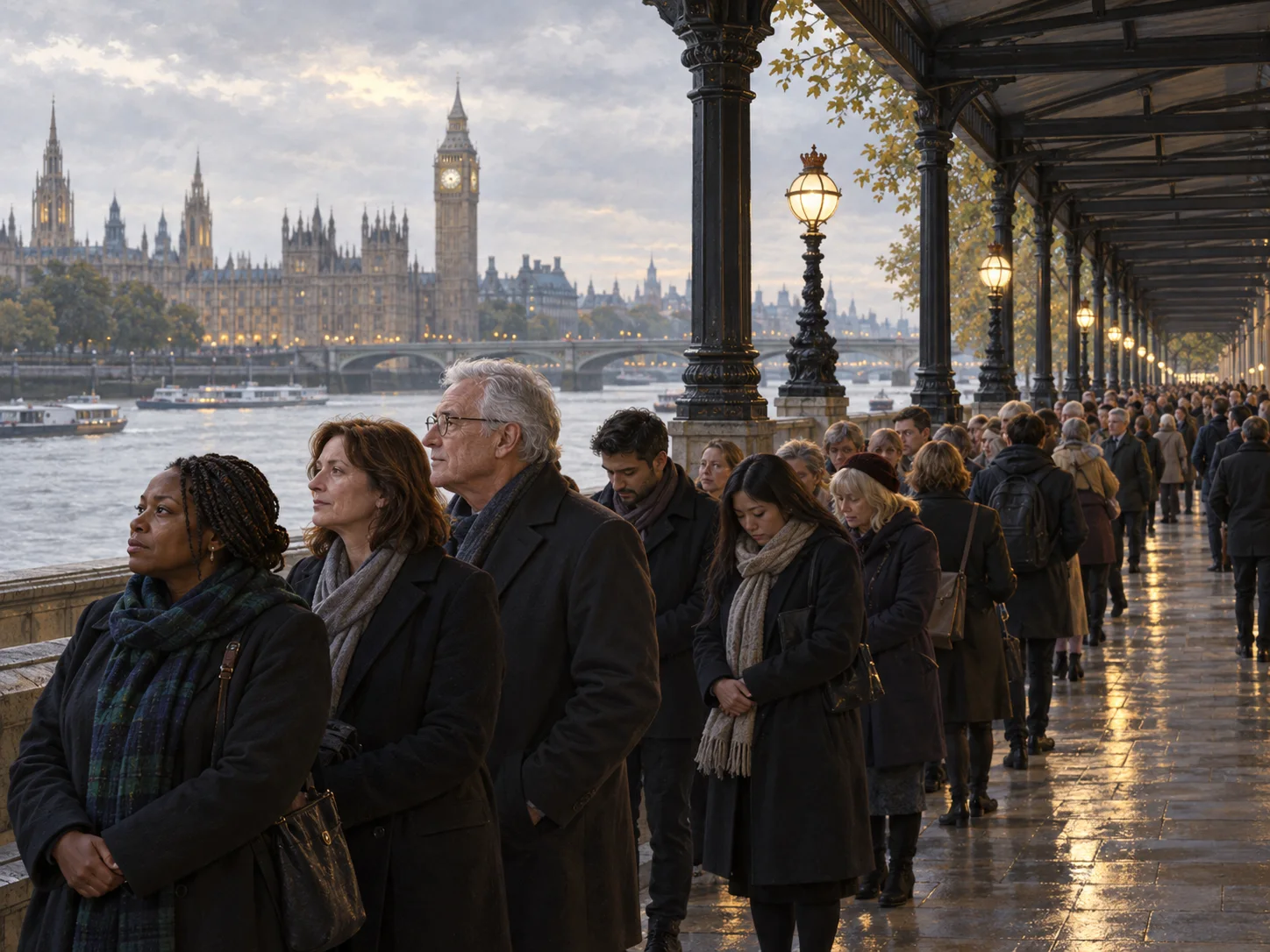
In September 2022, after Queen Elizabeth II's coffin was placed in Westminster Hall, mourners formed a long line along the Thames in London. Soon known simply as “The Queue,” it was more than a way of managing entry. People accepted hours of walking, stopping, and starting again for a brief opportunity to pay their respects.
Security checks and crowd management were essential, but the logistics had a human cost. Estimated waiting times shifted. Cold weather, overnight travel, fatigue, and access needs made the experience unequal even when the formal rules were shared. An open public ceremony does not mean that everyone has the same ability to reach it.
Remarkably, the line became a story in its own right. People watched other people waiting to see the coffin. Those who joined did not necessarily share one view of the monarchy or one kind of grief. Yet the slow, one-person-at-a-time movement translated a national event into a series of private farewells.
The destination of the mourning queue was not a long visit but a brief passage past the coffin. To allocate that moment fairly, London streets and parks became kilometres of waiting space.