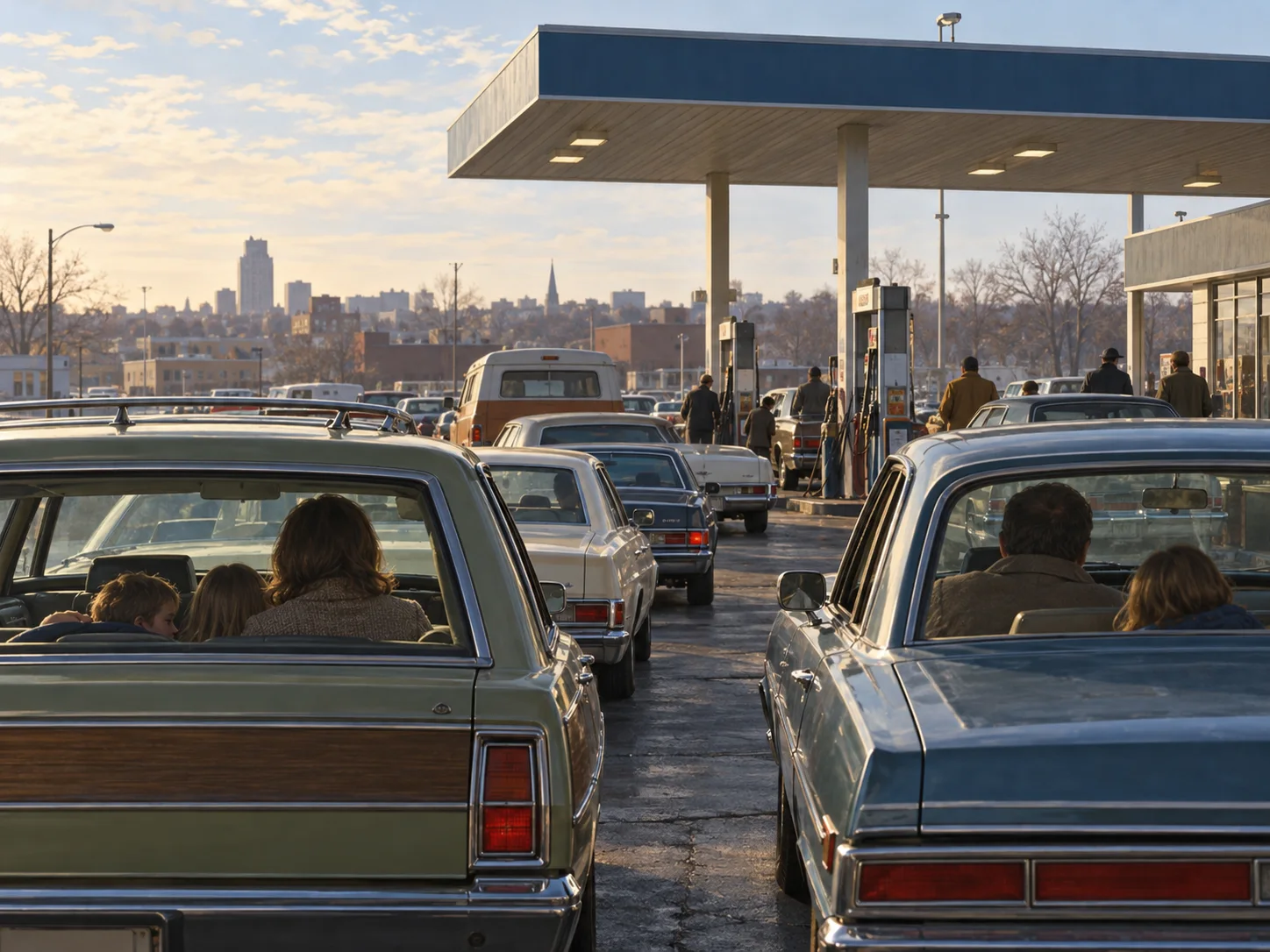
The 1973 oil crisis turned American gas stations from ordinary stops into visible stages for an economic shock. As anxiety about supply grew, lines of cars waiting for gasoline were reported across the country. The automobile symbolized freedom of movement, but that freedom depended on fuel being available.
Drivers in the same line did not face the same stakes. A commuter, a delivery worker, and a parent taking children to school could all need gasoline for different reasons. Information about opening hours and purchase limits became almost as valuable as the fuel itself. Rationing measures and odd-even license-plate rules, introduced in some places during the broader energy crises of the 1970s, showed how scarcity could turn everyday purchasing into a question of allocation.
The line was not only for gasoline. It was also for the reassurance that tomorrow might still resemble yesterday.
The defining feature of The Nation at the Gas Pump is the way a specific procedure turned 石油危機の給油列 into ordered waiting. The line was not background scenery: it determined access, timing and the burden placed on the people involved. The revised account keeps those mechanics visible and separates the documented scene from assumptions that the source does not support.