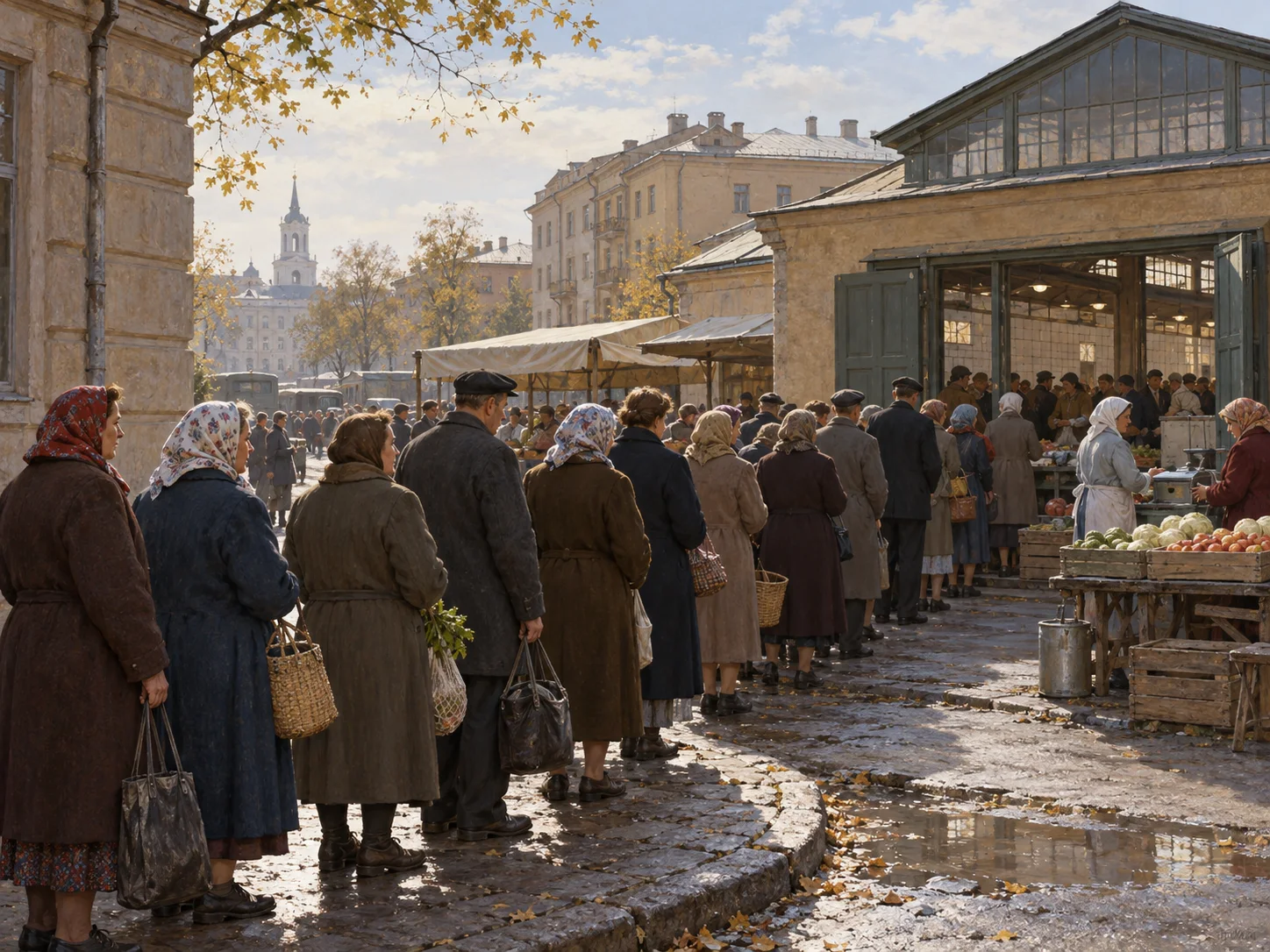
In provincial Soviet cities of the 1950s and 1960s, women commonly spent hours in grocery-store queues. Research based on diaries, memoirs and regional archives records lines for meat, vegetables, cereals, butter, bread and sugar. Even when goods appeared, a shopper without enough cash had to consider whom to borrow from in order to buy while supplies lasted.
Shortage meant more than an empty shelf. It required learning what had arrived, travelling to the shop and sacrificing work or domestic time until one's turn came. The labour of maintaining a household table accumulated outside stores as unpaid hours borne disproportionately by women.