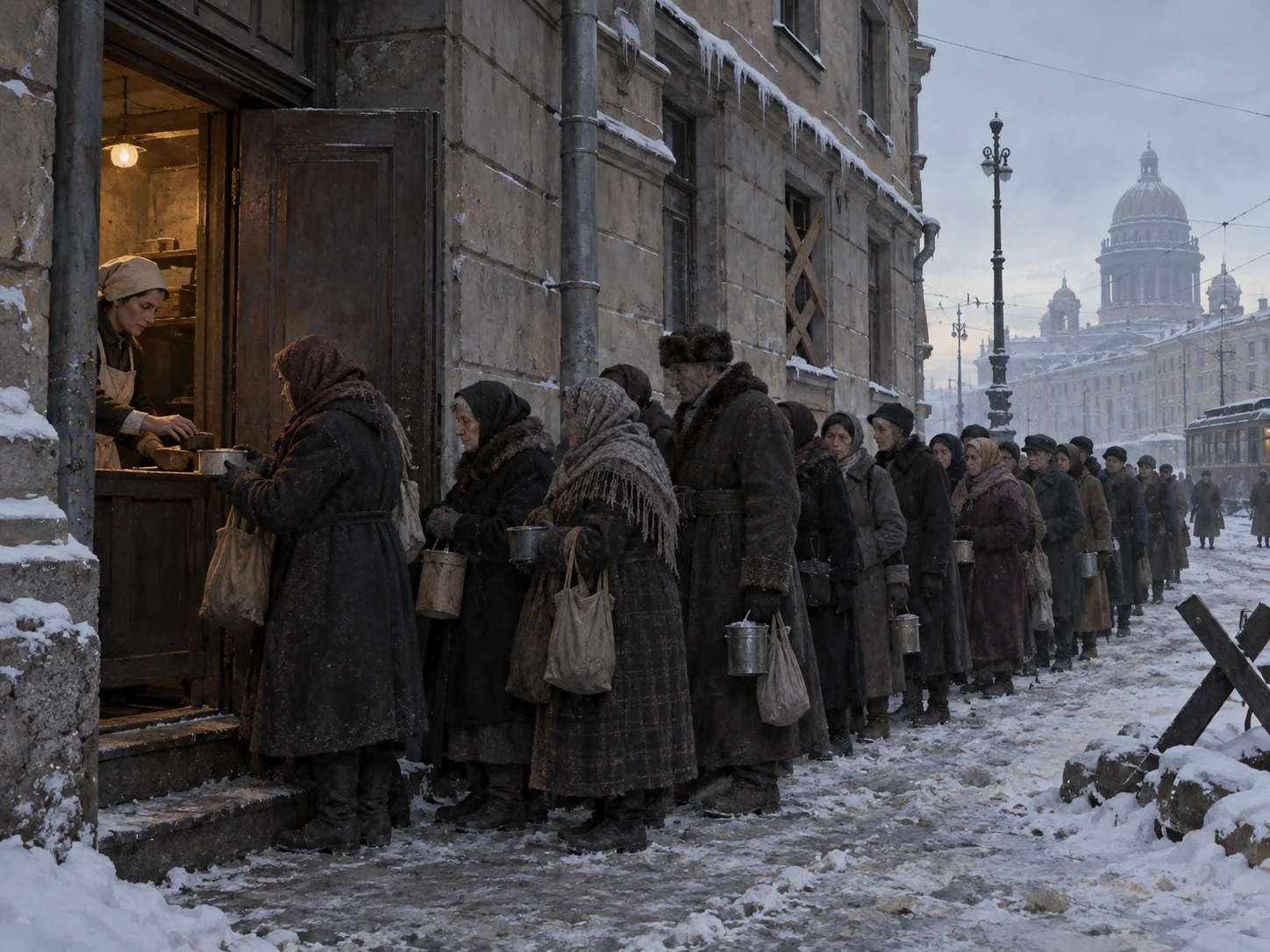
During the siege of Leningrad from 1941 to 1944, the practical point of entry to cafeterias, food shops, and public bathhouses was the line. A University of California historical study, drawing on wartime diaries, records that during the first year residents commonly woke before dawn to queue. Diarists compared the line to a 'many-headed monster' or a long tapeworm. When ration quantities determined survival, waiting was not a preliminary inconvenience before obtaining food; it was the institution through which scarce provisions could be reached. This record does not turn endurance into an uplifting story. Military encirclement and the severing of supplies forced civilians' time and bodies into food queues. What made these lines distinct was not commercial popularity but the replacement of ordinary entrances to essential services with compulsory waiting across the besieged city.
Former Soviet Union · 1941-42
Besieged Leningrad | The Queue Became the Entrance to Food