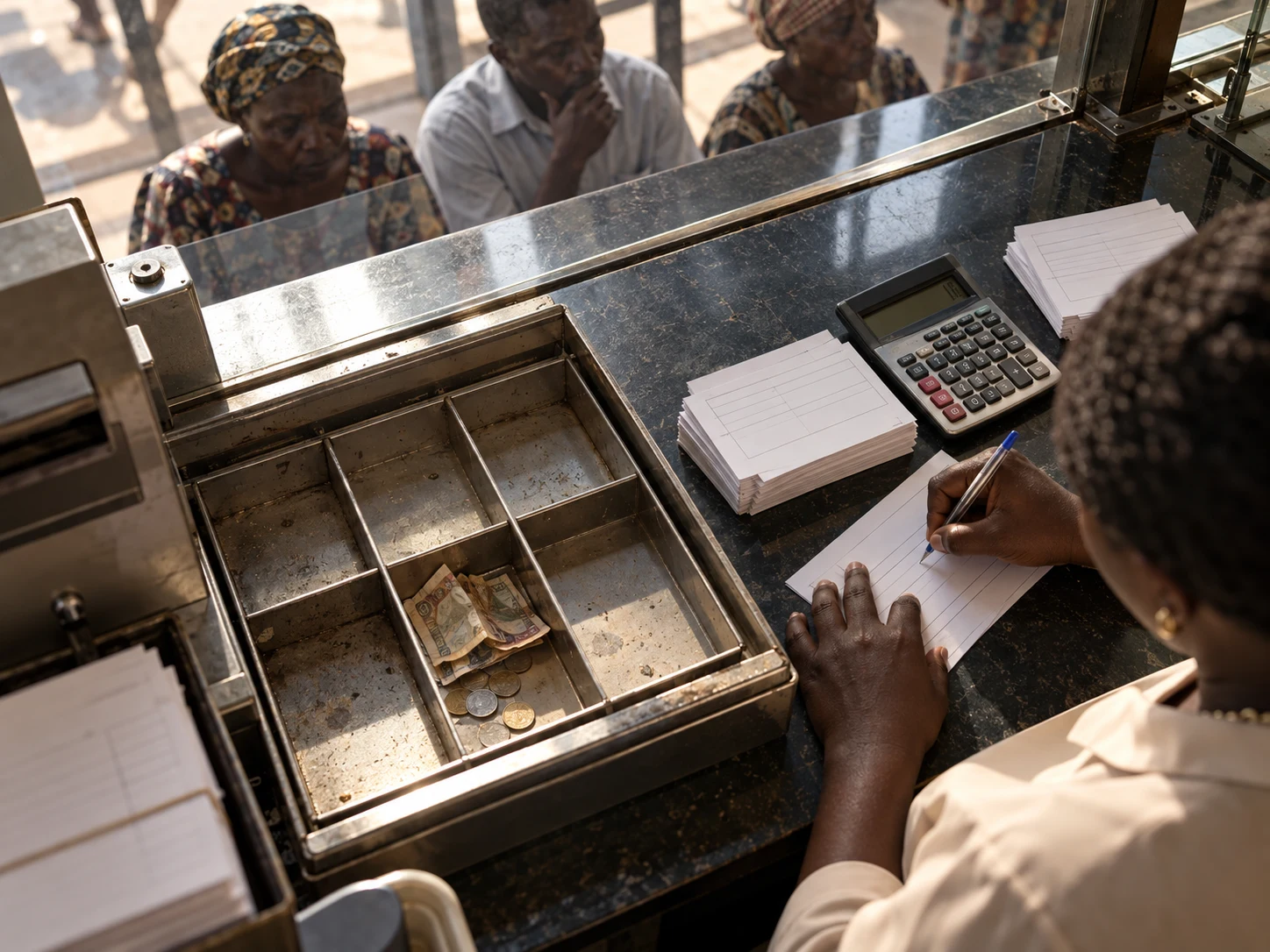
In Zimbabwe in 2008, prices rose at extraordinary speed, unsettling the relationship between the number printed on a banknote and what it could buy. Having money in an account did not guarantee immediate access to cash: withdrawal limits and shortages stood in the way. Waiting outside a bank was not merely a matter of slow service. It could determine whether a household could turn its savings into something usable that day.
Even receiving banknotes did not necessarily end the uncertainty. Prices might change before a customer reached a shop. The account balance, the cash in a pocket, and the price on a shelf could move according to different clocks. Under such conditions, time spent waiting could carry a direct economic cost.
The revealing reversal is that a bank, normally imagined as a place to keep money, could become a place where people waited to obtain their own. The source inventory identifies the 2008 crisis, but does not by itself establish the length of a queue at a named branch or what individual customers said. Those details require a dated report or photograph before publication.
Contemporary reporting directly records bank queues during Zimbabwe’s 2008 cash shortage and hyperinflation.