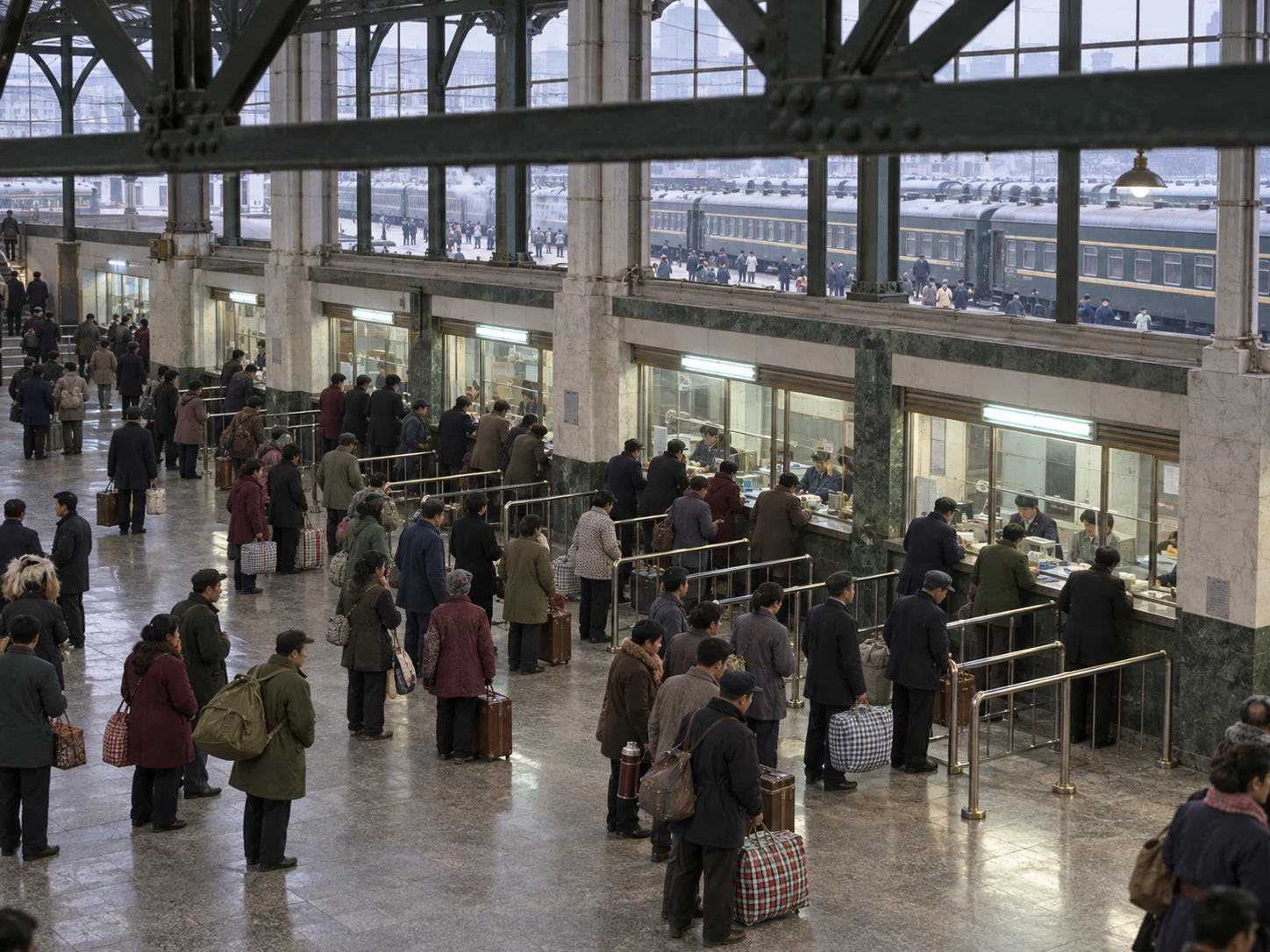
From the 1980s through the mid-1990s, crowding and waiting at Beijing Railway Station's ticket counters became a familiar part of travel. A historical account marking almost fifty years of the station describes a period when demand expanded during the reform era faster than seats and ticket-selling capacity. The queue for a ticket was the entrance to a family visit or an opportunity to work elsewhere.
Tracks, carriages and counters could not grow as quickly as the number of people who wanted to travel. At the window, a limited supply of seats was distributed one passenger at a time. People were not waiting only for a paper ticket, but for the reunion, job or journey that lay beyond it.
Reform and opening set a country in motion, but that movement still had to pass through a small station window. The Beijing queue was where the speed of social change met the slower process of issuing tickets one by one.