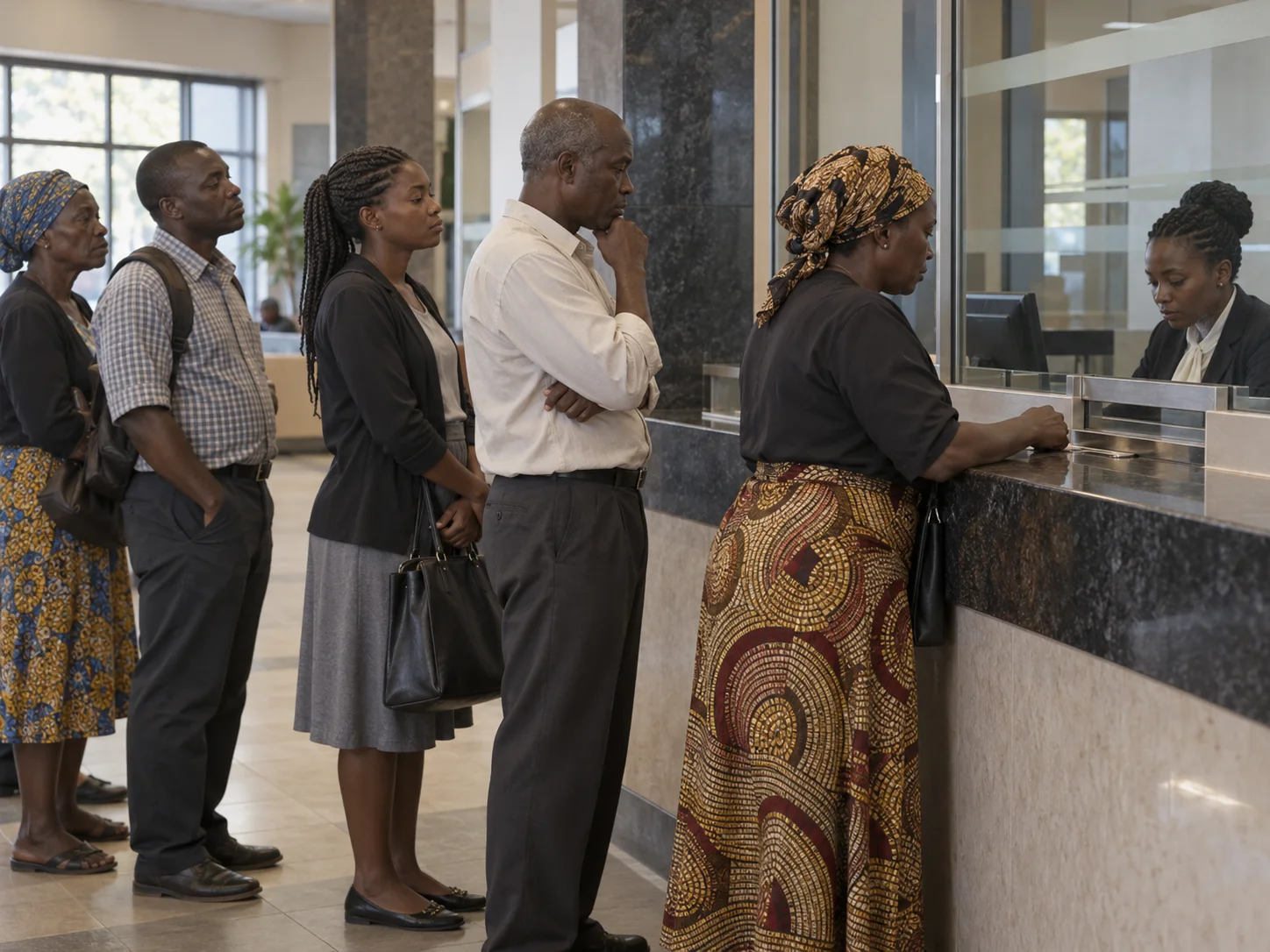
In August 2019, people queued outside banks in Harare for physical Zimbabwean dollars. One man interviewed by Al Jazeera had waited since 6 a.m. and received nothing, leaving him short of bus fare to his rural home. The government had made the Zimdollar the sole legal tender in June, yet notes were scarce and rationed. The central bank allowed up to 300 Zimdollars a week, while many banks limited customers to 60 a day. On the black market, cash carried a 45 per cent premium and coins 35 per cent; some retailers made cash purchases markedly cheaper than card or mobile payments. A balance in an account was therefore not the same as money usable for transport or school expenses. The pavement queue converted the gap between electronic value and spendable notes into hours of personal time.
Zimbabwe · 2019
Waiting Since 6 a.m. for Sixty Dollars