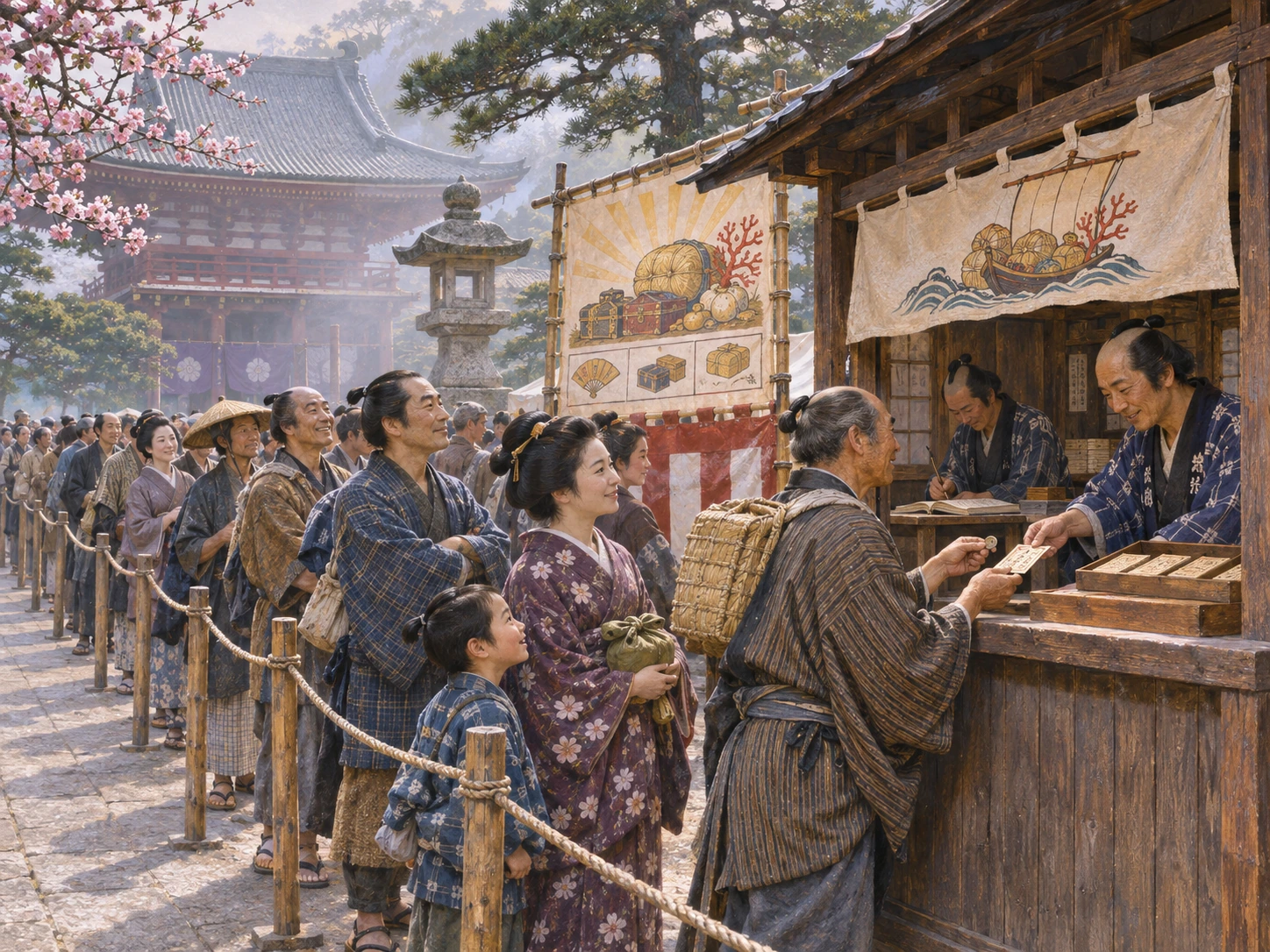
In Edo-period Japan, lotteries associated with religious institutions attracted people willing to imagine a sudden change of fortune. Buying a ticket meant taking part in a game where only a small minority could win, a recognizable feature of lotteries today. Yet the rules, permissions, and organization of these events varied by period and place; there was no single unchanging Edo lottery.
Even evidence of popular ticket sales would not be enough to draw an orderly line of buyers. A diary, illustrated record, or other contemporary source describing the sales point and the crowd would be needed. Inventing the length of the queue or conversations among customers might produce a convincing period scene, but it would not produce history.
The fascination of a lottery begins before the draw, when a small ticket starts carrying a large hope. What sort of queue, if any, did that hope create? For now, the end of this particular line remains to be found in the sources.