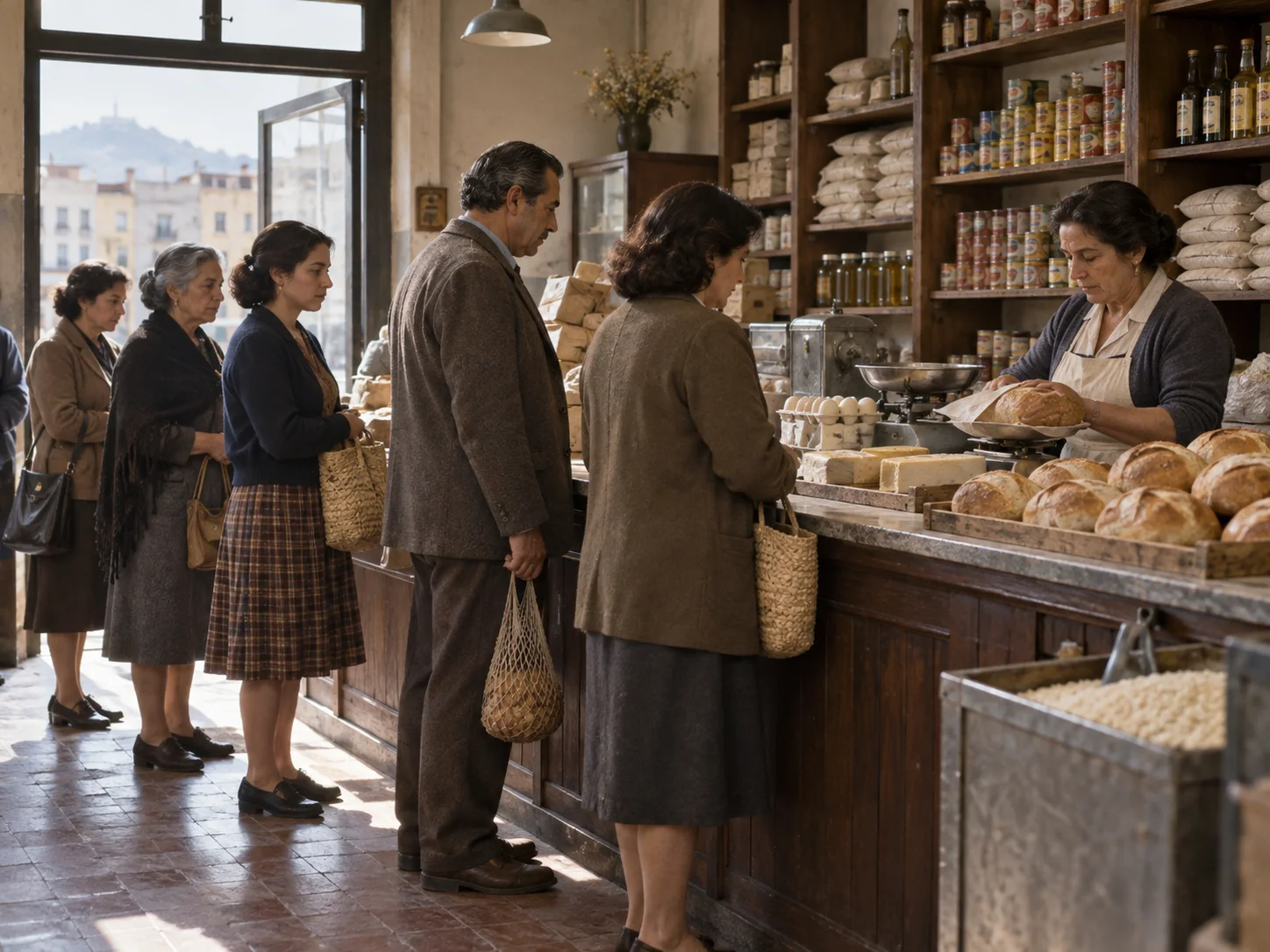
In Santiago in 1973, waiting for bread became part of urban life. A retrospective by the Chilean newspaper El Día preserves a contemporary report of a truck crashing into people who were waiting their turn for a bread ration. A historical feature by La Tercera likewise states that bakeries with flour limited sales to one kilogram per person per day and drew long lines from before dawn.
Behind the queues were shortages, disrupted transport, price controls and political conflict. Yet the immediate purpose of each person in line was simple: to secure that day's marraquetas or hallullas, familiar Chilean breads, for a household.
A national crisis becomes an individual's place in line when viewed from everyday life. People waiting from early morning might have held different politics, but they shared the hours of hunger. The bread queue reflected both a divided society and a common human need.