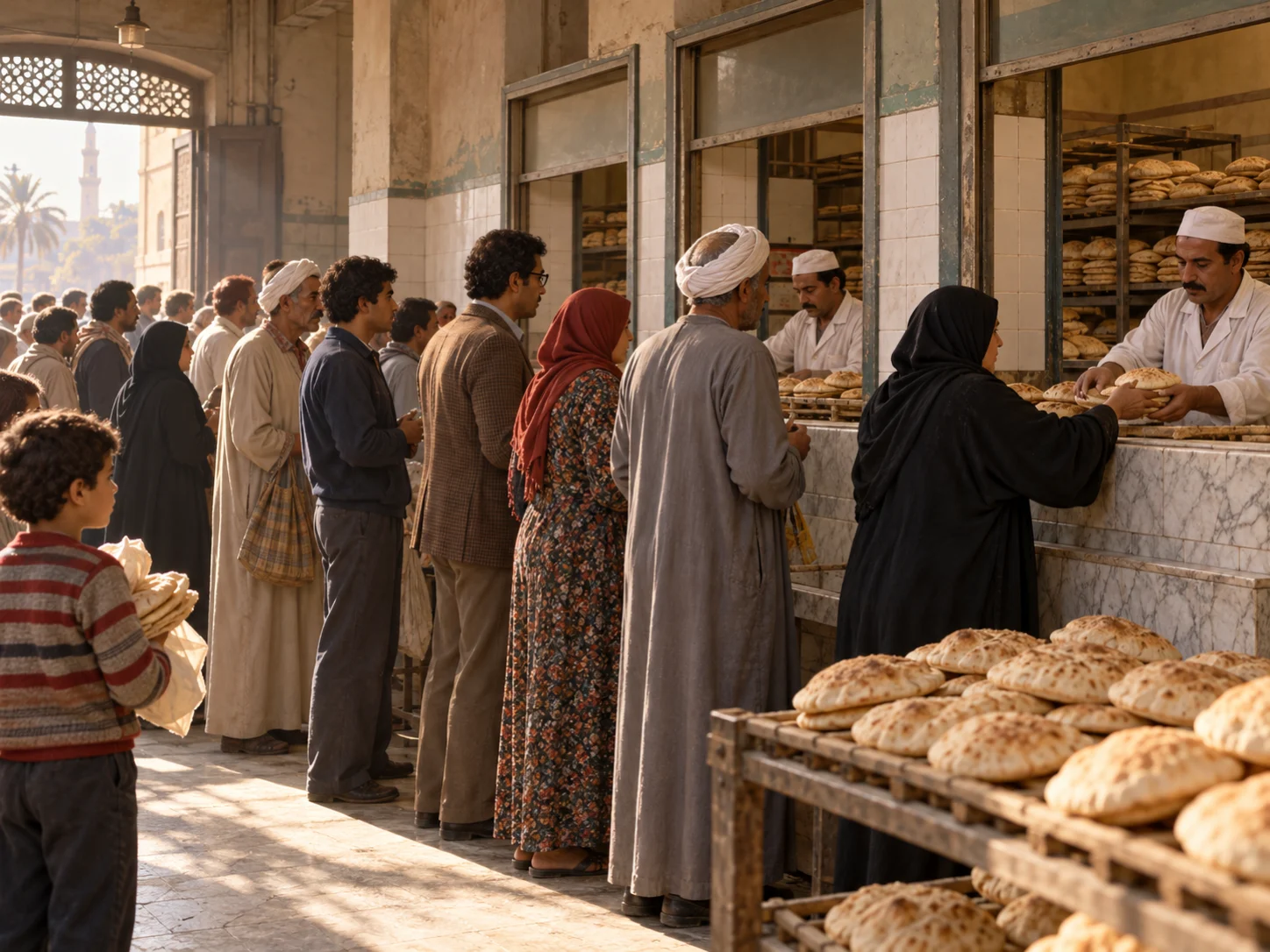
In Cairo in January 1977, long lines formed before opening time outside state-run neighbourhood stores selling subsidised food. A contemporary Washington Post report directly described the morning queues and the system that kept bread, rice, oil and other essentials inexpensive.
Subsidies made staples affordable on very low incomes, but shortages and diversion weakened supply. Everyone needed cheap bread, while each shop had only so much to sell. The queue was both an entrance to the welfare system and a place where its failures became visible.
A national argument about budgets reached ordinary people as a position in the morning line. What they waited for was not a political symbol but a loaf to place on a family table.