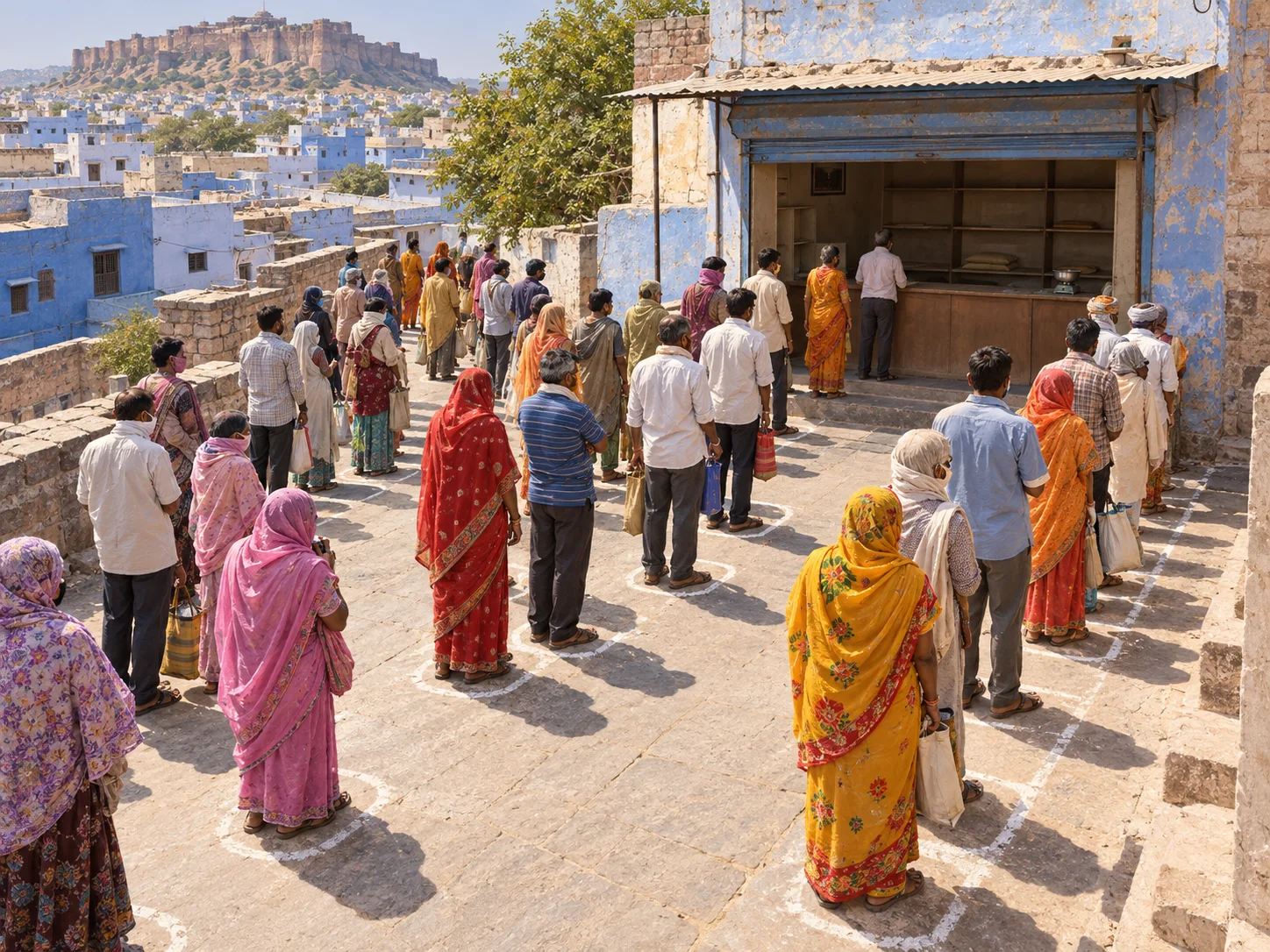
In June 2020, workers and migrants queued at fair-price shops in Jodhpur, India, for free wheat and gram—but the stock had not arrived. The plan covered two months, with five kilograms of wheat per person per month and one kilogram of gram per household, yet beneficiary surveys and deliveries were delayed.
Distribution dates circulated before dealers had reliable information. People were therefore waiting not for goods on the premises but for the possibility that they might appear. Police urged crowds to return home under Covid rules. When an administrative date and a physical delivery diverge, the queue stops allocating supplies and starts revealing the gap between them.