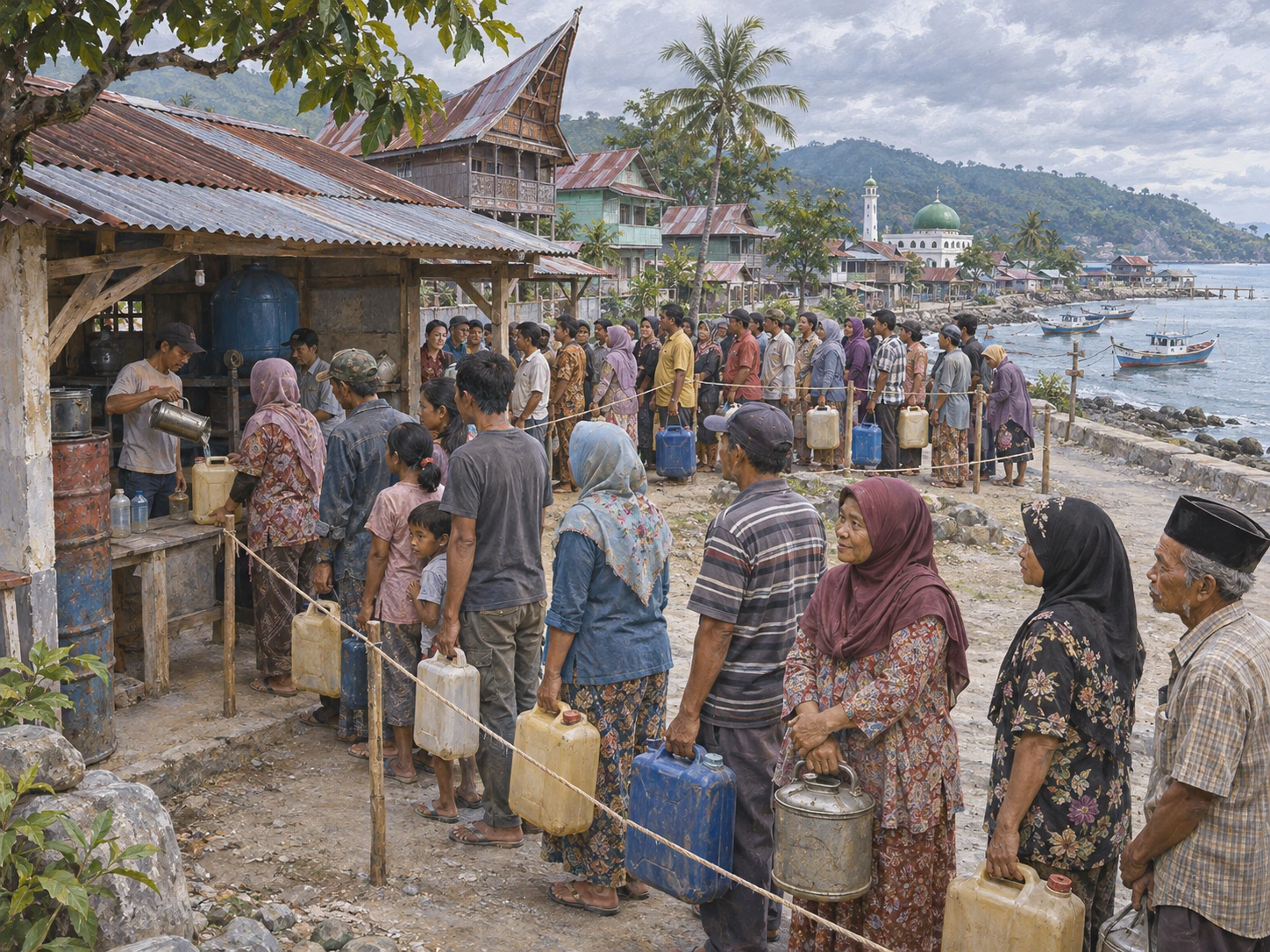
In December 2010, hundreds of residents of Tammerodo village in Indonesia’s West Sulawesi province queued at a kerosene outlet carrying empty jerrycans. Kerosene cost 7,000 rupiah per litre. The crowd and its containers spilled toward the Trans-Sulawesi road, disrupting traffic. Supply ran out before everyone was served, leaving only earlier arrivals able to buy.
The seller said deliveries from Pertamina’s Parepare depot were irregular and the outlet’s allocation had been cut from 5,000 litres to 2,500. At five litres per container, the reduction alone represented 500 jerrycans. An administrative cut in distribution thus appeared on the road as a first-come queue of households seeking cooking fuel.