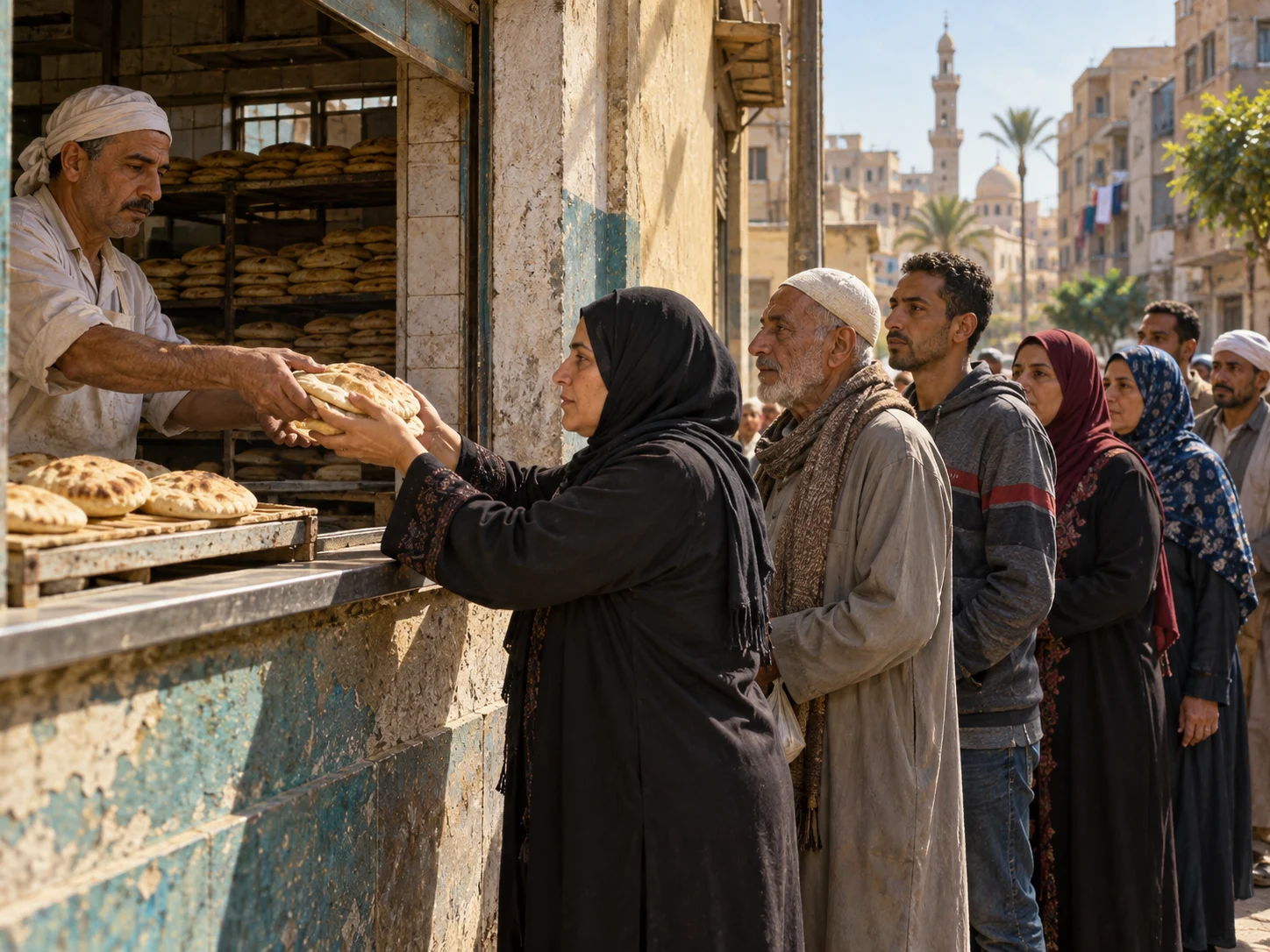
In Egypt, subsidized flatbread known as aish baladi has long connected the family table to decisions made by the state. The word aish also evokes life or livelihood. A change in the price or availability of bread is therefore more than a shopping inconvenience: it touches the question of what a household can put on the table tomorrow. In 2017, changes affecting subsidized bread supplies prompted protests in several areas.
The system has many moving parts. Flour allocations to bakeries, eligibility cards, and the number of loaves a household can obtain all shape what happens at the counter. Yet a crowd protesting a policy is not necessarily a queue waiting to buy bread. The specific location, date, and circumstances of the bread-distribution line proposed in this candidate still require verification against an original account.
A useful portrait of such a queue would ask more than how long it was. Who set the price? Who had to prove eligibility? Who left without bread? Behind one warm loaf is an intricate mechanism of public policy.