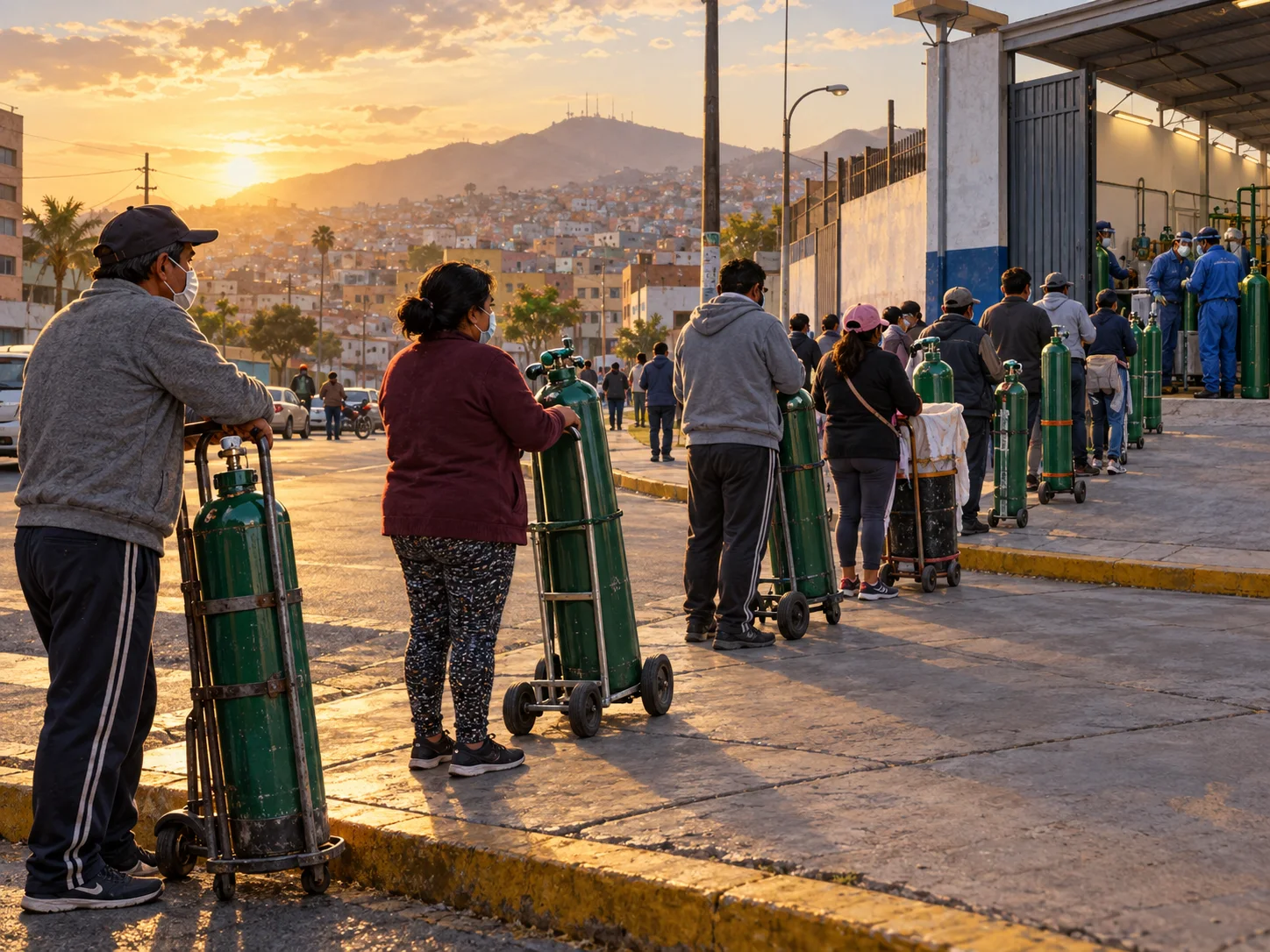
On 29 July 2020, relatives of COVID-19 patients formed a long queue in Villa María del Triunfo, on the southern outskirts of Lima, Peru, to refill oxygen cylinders. Contemporary reporting recorded dozens of people waiting for a free municipal refill. The purpose of the line was not the health of those standing in it, but the breathing of relatives at home or in care.
Medical oxygen had become scarce as infections rose. Owning a cylinder was not enough if there was nowhere to refill it. The municipal filling point therefore became a junction between households and a limited medical resource. This was less a shopping line than an order for using scarce equipment one person at a time.
Queues may share the same outward shape while the meaning of waiting changes completely. Here, delay could bear directly on a family member's condition. The cylinders visible beside the people in line made the pandemic's shortage tangible: part of the burden of supplying medical care had moved into the street and onto families.