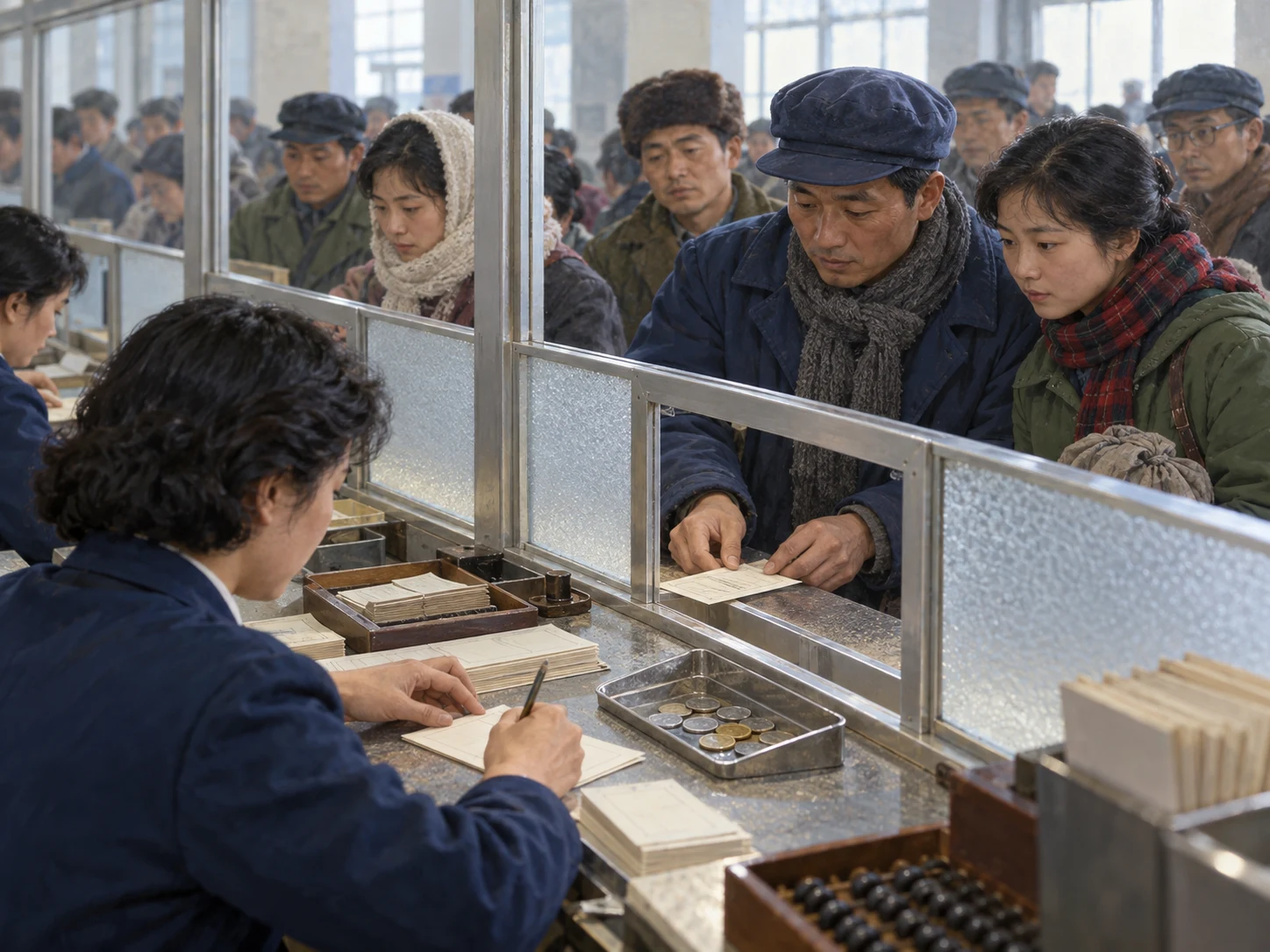
From the 1980s to the mid-1990s, Beijing Railway Station handled far more departing passengers than it had been designed for. A China News Service retrospective records that pressing crowds at ticket counters were common during this period. A contemporary 1987 caption likewise describes overflowing waiting halls and travellers lining the station corridors.
A railway ticket could not yet be bought from a phone or from any convenient location. A journey began by reaching a staffed counter and fitting one's plans to the movement of the line and the seats that remained. During concentrated travel periods such as Spring Festival, the station's processing capacity helped determine who could travel home and when.
An inherited claim about a roughly five-kilometre line in Guangzhou is not used here because it does not simultaneously match this candidate's Beijing location and 1980s period. What the sources directly support is a Beijing station where ticket-counter crowds were routine and where, in 1987, passengers overflowed into lines along the corridors.
This was more than an undifferentiated crowd. Travellers were moving towards ticket windows and waiting for their turn to obtain access to a train. The record shows that mass rail travel generated another journey before departure: the ordered wait to secure a ticket.