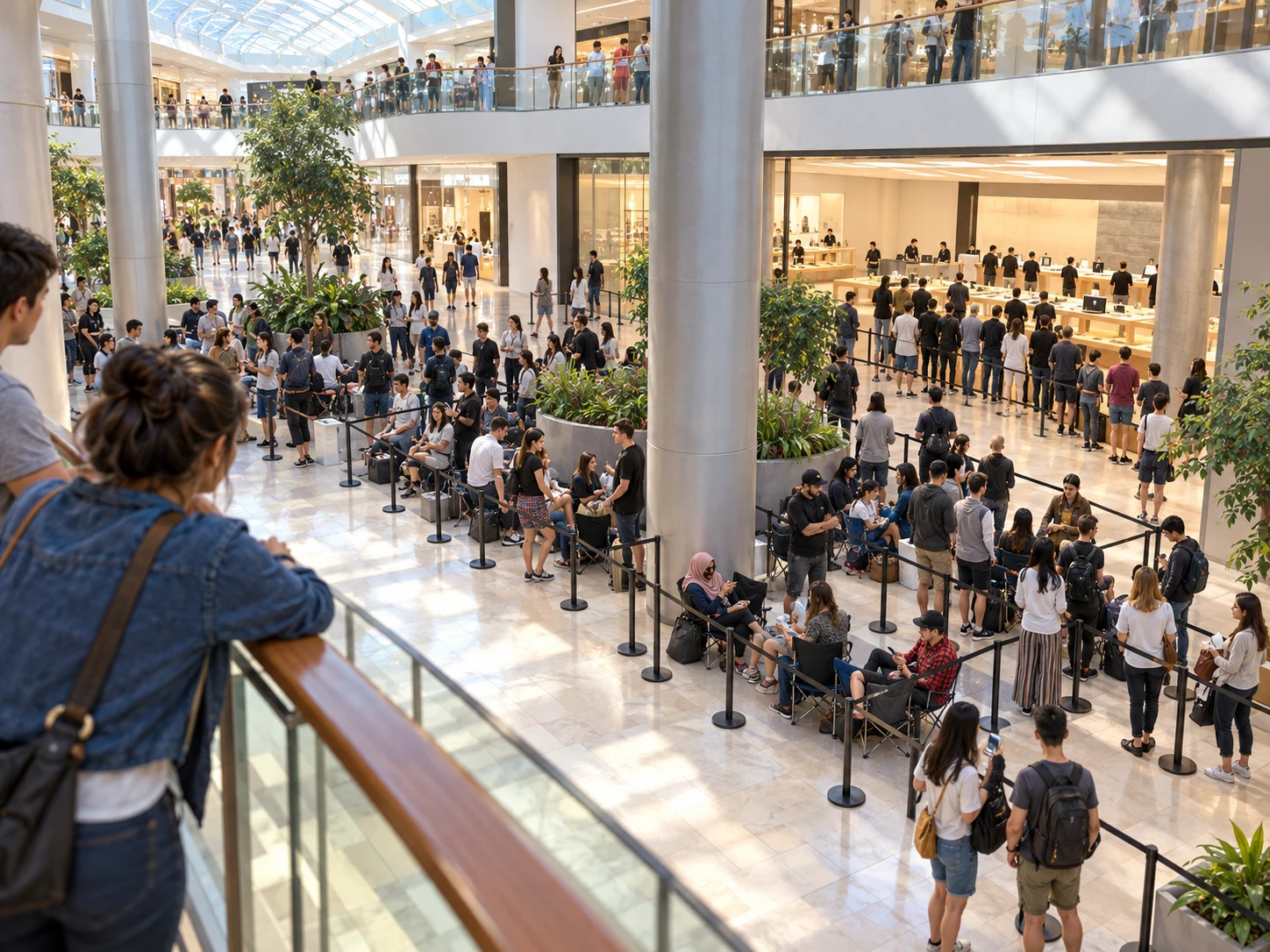
On 25 September 2015, the Sydney line for the iPhone 6s included one customer who was not physically human. Reuters recorded “Lucy,” a telepresence robot carrying an iPad and controlled by a marketing executive who could not spend two days away from work. The robot held her place while dozens of other buyers waited in the rain for the launch.
Sydney’s time zone makes it one of the first major cities to reach Apple’s release hour. News crews gather to film early buyers, so the front of the queue offers both rapid access to the product and a place in the worldwide launch image. The phone introduced features including a pressure-sensitive display, yet the queue’s most memorable device was the screen-on-wheels waiting to purchase another screen.
A physical line normally treats bodily presence as proof of a claim to place. Lucy disrupted that assumption. The buyer did not hire an anonymous substitute; she projected her face and voice into a machine while continuing her day elsewhere. In a queue for technology advertised as connecting people from anywhere, she demonstrated that promise before reaching the counter.