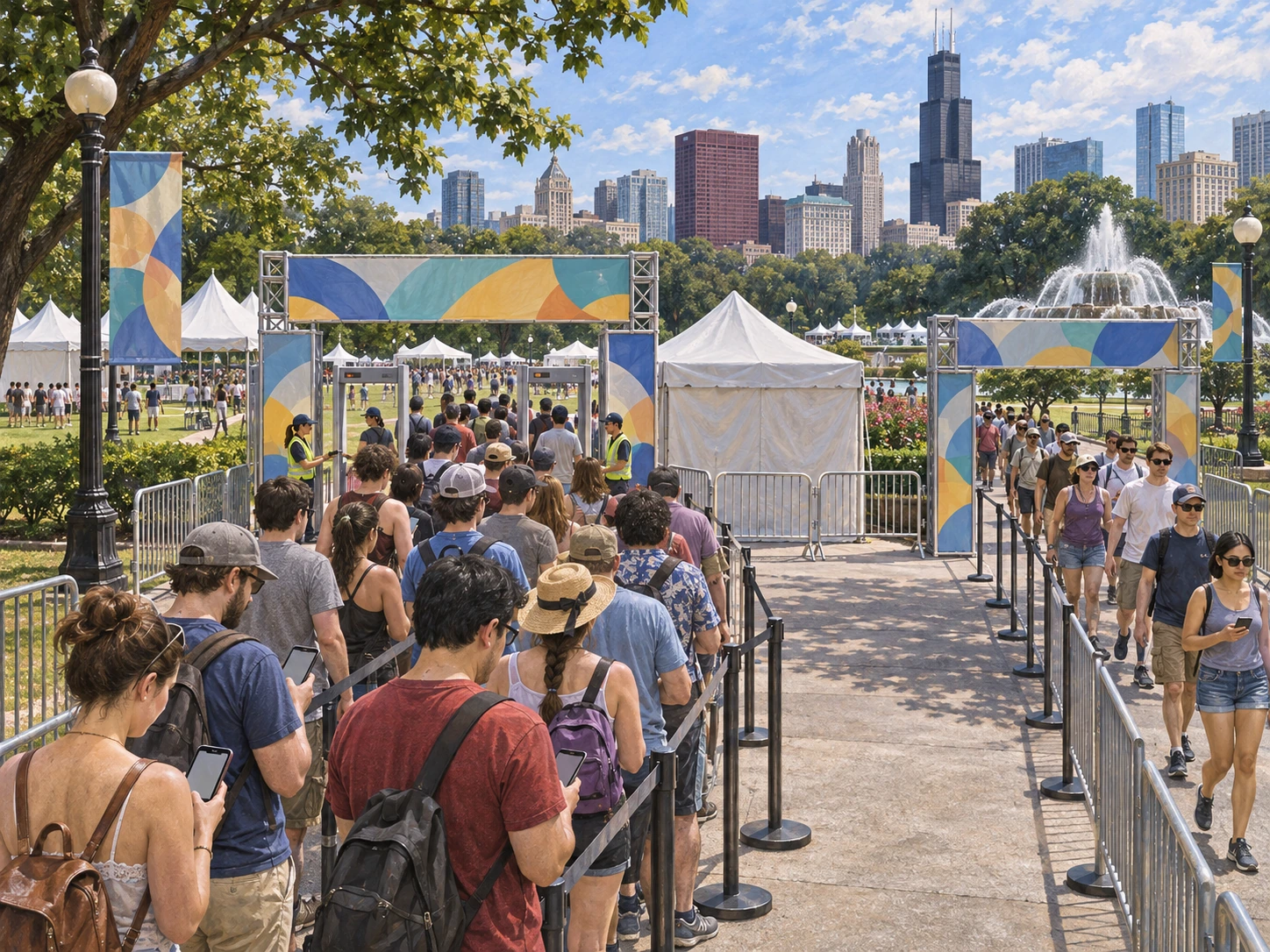
On July 22, 2017, the first official real-world Pokémon GO Fest was held in Chicago’s Grant Park. The one-day event announced by the game’s organizers drew roughly 20,000 people from around the world and produced lines lasting more than an hour. One attendee told reporters that he had begun waiting for the festival to open at 6 a.m.
What awaited many people beyond the entrance was not the reliable network needed to play a location-based game. So many users tried to connect in one place that mobile service and the game servers failed. About 15,000 tickets had sold out within minutes, yet many visitors who cleared the long entry and exit lines still could not take part in the promised experience.
The queue captures the moment when a game built around movement through digital space created its first huge physical gathering. Before searching for virtual creatures, players had to wait their turn in a real park. It was a line where online success collided with the material limits of network capacity and event management.