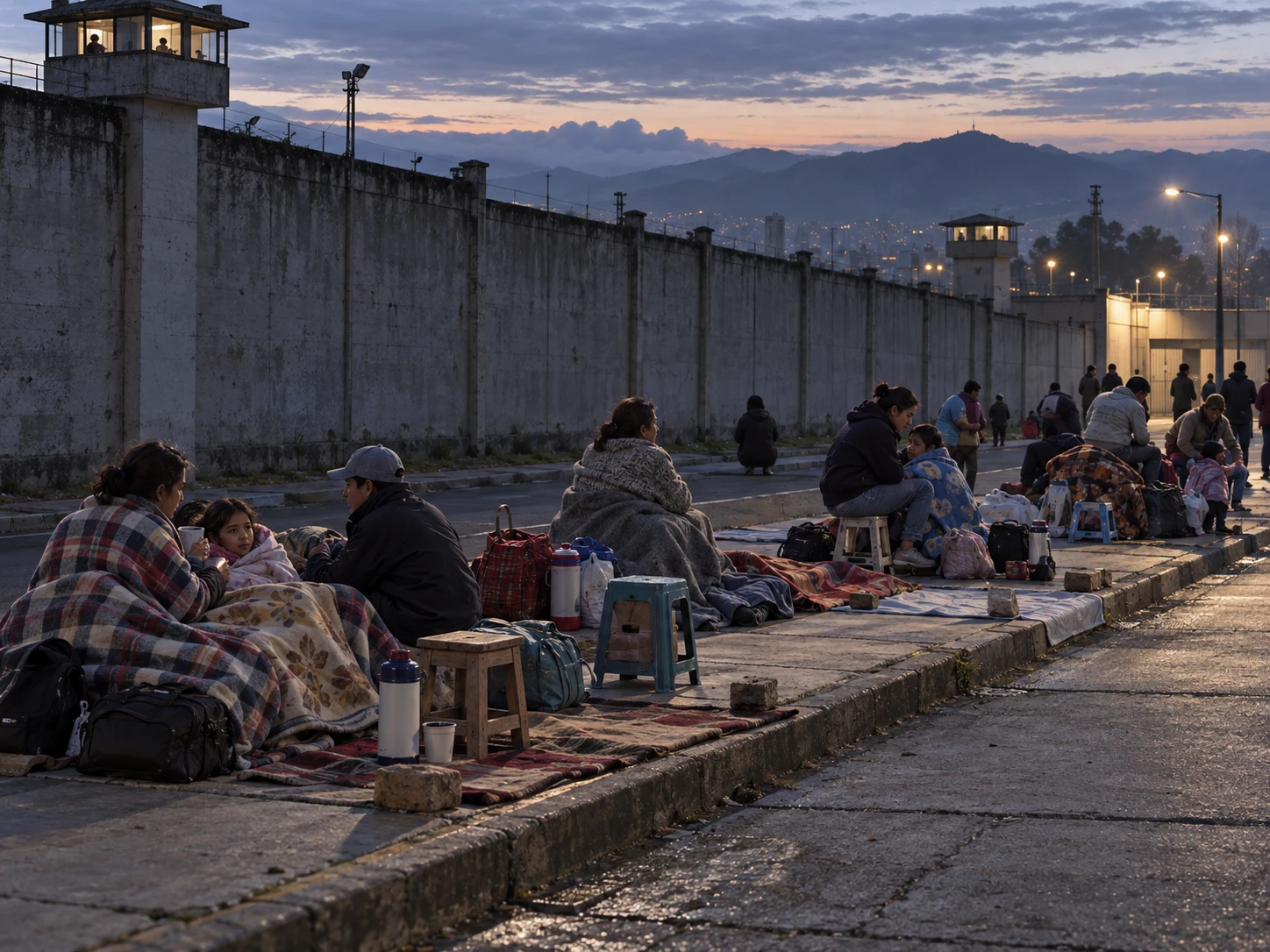
At La Modelo prison in Bogotá, Colombia, families visiting detainees formed lines from midnight on the preceding night. A local health assessment by the city government records families—including children, women and older people—arriving with sleeping mats from about 9 p.m. Places in the queue were reportedly sold for 40,000 to 150,000 Colombian pesos, with the price depending on position.
An informal economy developed around the overnight wait: food sales, rented clothing and sandals, package storage and improvised childcare. The assessment also itemized transport, food, containers, footwear and storage among the costs borne by an average visiting family. This is not a queue whose endurance should be admired. Scarce visiting access and inadequate control imposed both time and financial costs on relatives, turning even a place in line into something that could be bought and sold.