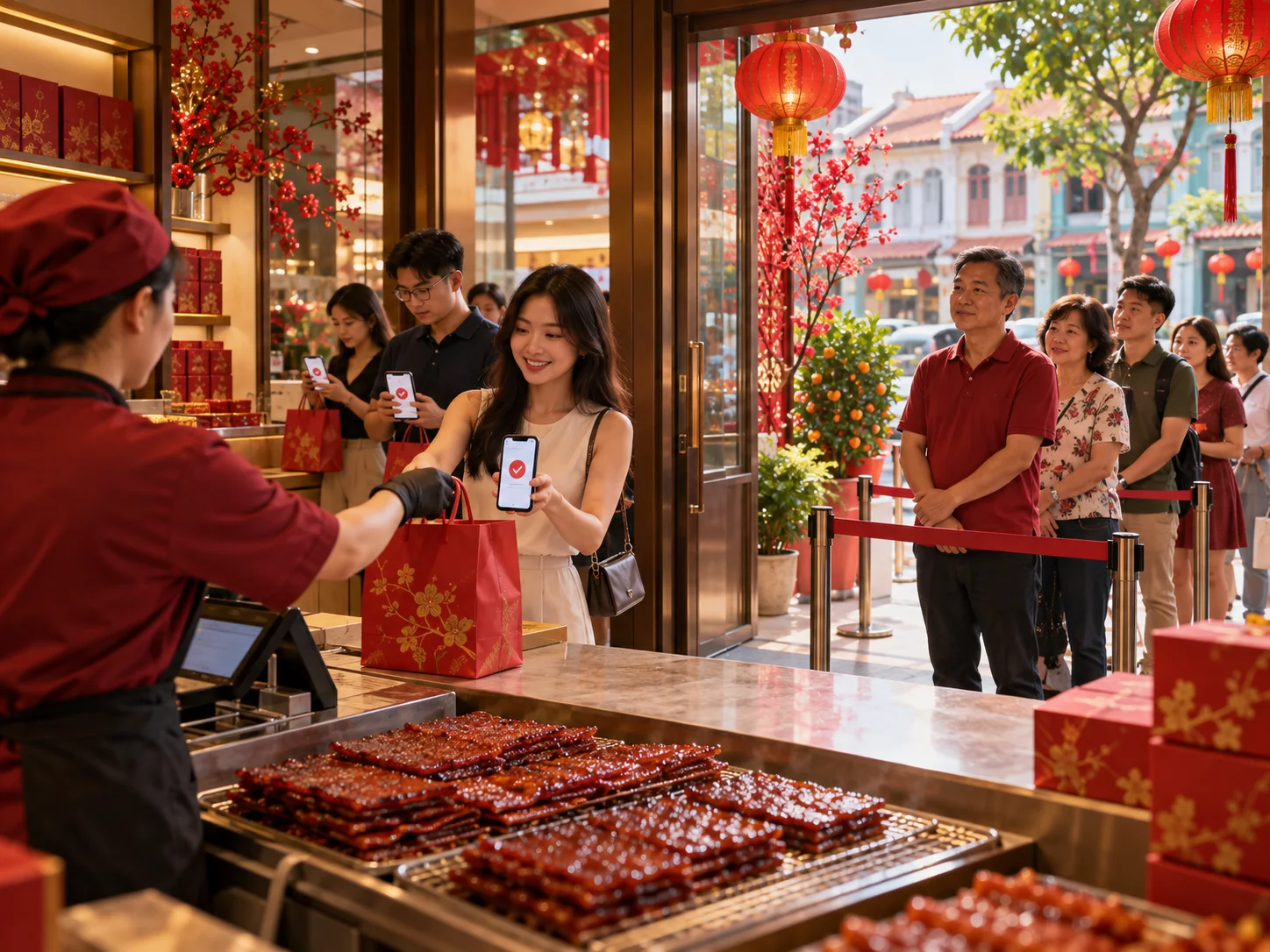
In December 2022, customers queued at Lim Chee Guan in Singapore’s Chinatown for bak kwa ahead of Chinese New Year. The Straits Times counted about fifteen people at the New Bridge Road shop on December 26; an 80-year-old customer recalled waiting for hours in previous festive seasons and had seen about twenty people in line the week before. She bought 2.5 kilograms early for relatives and friends, deliberately avoiding the much longer queue closer to the holiday.
That same morning, the company website experienced heavy traffic and placed online customers in a virtual queue. Several products were already sold out for dates leading up to Chinese New Year. Pre-ordering, intended to avoid the pavement line, had therefore created a second digital wait. This is the queue’s distinctive feature: order existed simultaneously outside the shop and on the screen. Buying early was not only a response to price increases or possible shortages. It was a way of managing future waiting time. A seasonal gift tradition made customers calculate which queue—physical, virtual, or postponed—would cost them least.