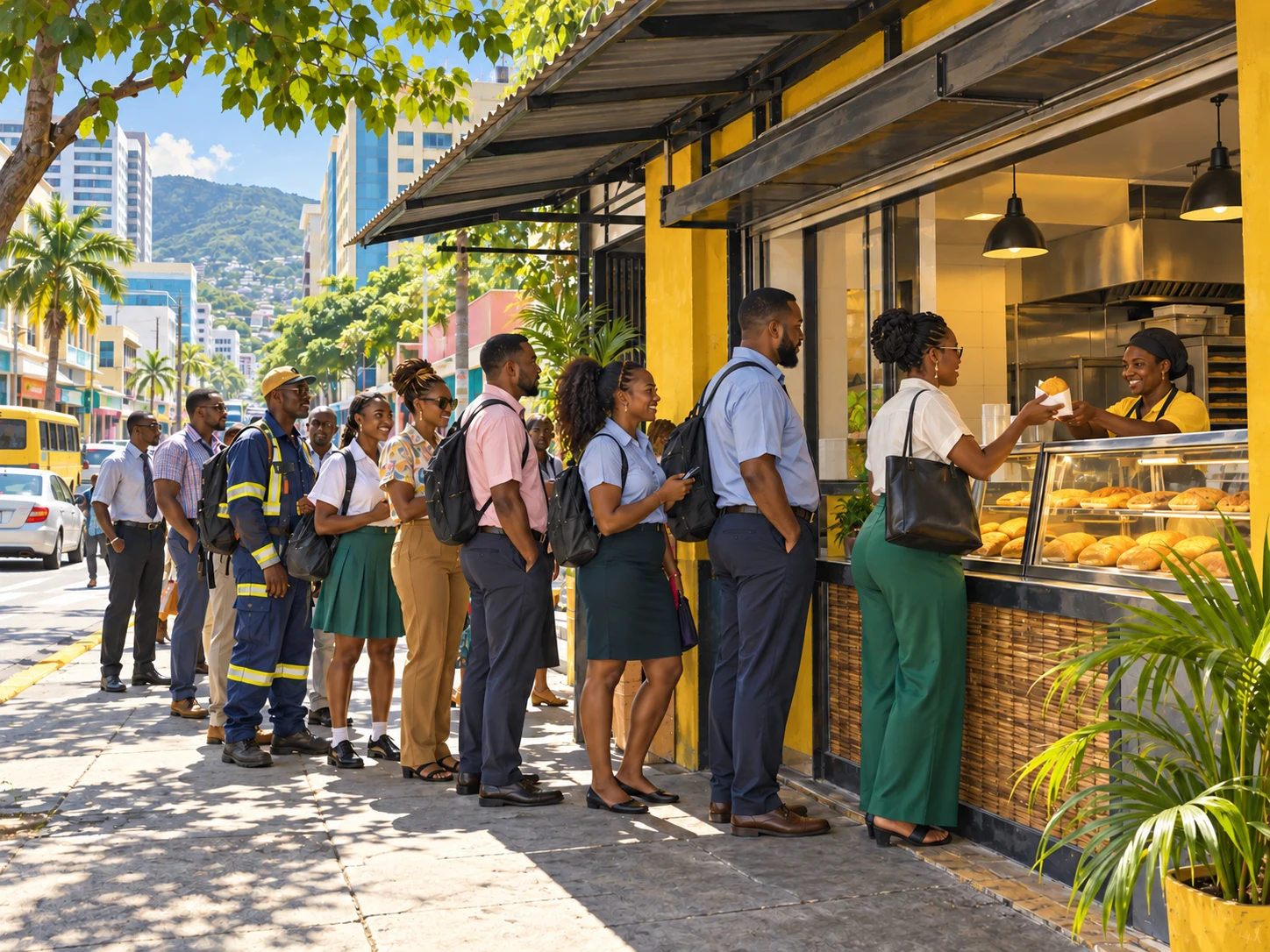
Jamaica’s official tourism board calls the patty the country’s unofficial lunch of choice and explicitly notes that long lines snake outside outlets such as Juici Patties and Tastee. The reason is practical as well as culinary. A spiced filling is sealed inside a flaky pastry that can be eaten by hand; tucked into coco bread, it becomes an inexpensive and filling meal. These are therefore not merely sightseeing queues formed by visitors trying a famous food. They are lunchtime lines, shaped by the short interval in which people need to buy an ordinary meal.
The same tourism source places the patty within a layered food history: a relationship to the Cornish pasty, seasonings associated with Indian influence, and flavours developed in Jamaica’s African-descended culture. People at the counter need not be thinking about that history as they wait. Yet the queue shows what happened after those influences were absorbed into daily life. A food produced through movement and cultural mixing now organizes a repeated part of the Jamaican day. The distinctive discovery is not simply that patties are popular, but that their national importance is visible in a mundane social measurement: how far the line extends beyond the shop at lunch. Here, something close to a national dish appears not at a ceremony or banquet, but as a practical queue for a portable meal.